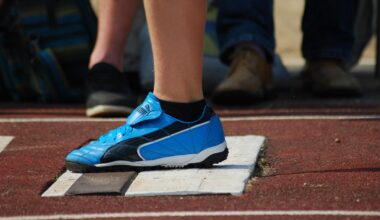
The Importance of Foot Strength in Sports Balance Training
Foot strength plays a vital role in achieving optimal performance in sports. Strong feet support athletes’ balance, stability, and overall coordination. This strength enables individuals to maintain their posture during dynamic movements, crucial for sports like basketball, soccer, and gymnastics. Athletes often overlook foot conditioning; however, it is essential for maximizing efficiency and power during activity. Proper foot strength allows for better force production, giving athletes an edge over competitors. Furthermore, developing foot strength directly influences an athlete’s proprioception – the body’s ability to sense its position in space. Enhanced proprioception boosts agility and reaction times. Integrating foot strength training into a balanced workout regime can prevent injuries, particularly among athletes engaged in sports with high-impact landings. Strengthening the arches, toes, and overall foot structure can decrease the risk of common injuries such as ankle sprains. Sports-specific balance training programs should include exercises that focus on the foot. Types of training include toe curls, heel raises, and agility drills that involve balance challenges. By prioritizing foot strength, athletes can ensure greater success and longevity in their sports careers.
Key Benefits of Strong Feet
Investing time in foot strength training provides numerous benefits for athletes. A primary advantage is enhanced balance and stability while moving. Strong feet act as a stable base, minimizing the risk of losing balance during multidirectional movements often seen in competitive sports. Additionally, adequate foot strength contributes to effective shock absorption when landing, further safeguarding musculoskeletal health. Stronger feet can improve overall performance through more explosive movements and quicker direction changes. This ability to redirect energy efficiently is crucial for sports that require constant accelerative and decelerative efforts. Athletes also experience improved grip on surfaces, which is particularly important in outdoor sports where conditions can vary. A solid grip is essential, improving safety and performance. Strong feet also lead to better biomechanics, allowing athletes to expend less energy and exert more power. Improved foot strength can help in reducing fatigue during prolonged activities, maximizing endurance. Last but not least, it strengthens not only the foot but also the lower body, leading to overall athletic enhancement. Emphasizing foot health and strength represents a commitment to long-term success and injury prevention.
Foot strengthening exercises are diverse, making their integration into regular training simple and effective. Athletes can perform several specific drills targeting different foot areas. One popular exercise involves standing on one leg while maintaining balance. This drill not only strengthens the feet but also challenges the ankle muscles, ensuring they work cohesively. Another beneficial exercise is to toe raise in which one lifts the toes while keeping the heels grounded. This exercise focuses on the smaller muscles of the foot while also improving flexibility. Furthermore, using resistance bands is a fantastic way to engage the feet in various motions involving flexion and extension. Incorporating balance boards and wobble cushions into workouts can significantly enhance foot coordination. By practicing these exercises consistently, athletes can enhance their foot strength, positively impacting their performance. Additionally, utilizing varying surfaces during foot workouts promotes adaptability and combat adaptability challenges athletes might face during competitions. Each of these exercises contributes to building resilience in both feet and ankles, further minimizing the probability of injuries becoming a barrier to success.
Understanding Proprioception
Proprioception is the body’s ability to perceive its own position and movement in space. In sports, excellent proprioceptive awareness is indispensable, as it helps athletes make precise and swift adjustments. Strong feet are fundamental to developing proper proprioception, enhancing athletes’ capabilities in reacting to sudden changes in the competitive environment. The better an athlete can sense their body’s position, the more adept they will be at coordinating their movements and maintaining balance. Training focused on foot strength, therefore, ultimately contributes to improved proprioceptive skills. Proprioceptive training can include exercises such as single-leg balances, dynamic movements on unstable surfaces, and plyometric activities. Each of these activities forces the athlete’s body to respond and adapt, enhancing neural pathways responsible for balance and coordination. Improved proprioception leads to better body control, enabling athletes to execute complex movements with greater precision. This is exceptionally vital for sports demanding sharp cuts, jumps, and lateral movements. Thus, integrating foot strengthening with proprioceptive drills yields compounded benefits, giving athletes the competitive edge they strive for.
Proper footwear is another essential aspect that complements foot strength during sports training. Shoes designed specifically for various sports can enhance foot performance and overall comfort. Athletes must select appropriate footwear that supports foot structure while providing adequate cushioning. Shoes with specialized features can improve grip, flexibility, and stability. Using rigid or worn-out shoes can hinder foot strength development, effectively doing more harm than good. Athletes should continually assess their shoes’ condition and make changes when needed. Investing in high-quality footwear suited to their sport is paramount, as this avoids unnecessary injuries and promotes proper foot biomechanics. Furthermore, orthotic inserts provide additional support for athletes with unique foot shapes or needs. Custom orthotics address individual requirements, optimizing foot functionality and preventing injuries. Remember, enhancing foot strength and performance is a multi-faceted approach that includes exercise, proper footwear, and supporting equipment. By prioritizing each aspect, athletes can honor their commitment to peak performance and longevity. Overall, foot strength, balance, and stability directly influence athletic capabilities, and thus should be primary goals during training.
Conclusion and Next Steps
In conclusion, foot strength is a key component of successful balance training in sports. Athletes who prioritize robustness in their feet generally experience enhanced stability, improved performance, and a reduced risk of injuries. By implementing specific foot exercise routines into their training programs, athletes can develop much-needed strength and proprioceptive skills. A committed focus on foot support through appropriate footwear also amplifies these benefits. Moreover, ensuring exercises challenge both strength and balance, particularly through drills on unstable surfaces, fosters adaptive responses crucial in competition. To achieve sustained success throughout an athlete’s career, these foundational elements must not be overlooked. Coaches and trainers should regularly evaluate and incorporate relevant feedback regarding foot health and performance improvement strategies. Educational workshops on foot strength, injury prevention, and effective balance training are also beneficial for aspiring athletes and coaches alike. Athletes should remain proactive in addressing foot health, positioning themselves for success and longevity. Small lifestyle adjustments in foot conditioning can lead to significant performance improvements. The journey towards stronger feet ultimately bolsters physical capabilities, supporting athletes striving for excellence in their chosen sports.
This article emphasizes the importance of strong feet in sports balance training. Integrating foot strength exercises into athletes’ routines facilitates better performance, injury prevention, and improved coordination and stability. Recognizing the multifaceted approach needed to strengthen feet releases athletes’ full potential and enhances their competitive capacities. Comprehensive training regimens incorporating proprioceptive and balance drills, coupled with the right footwear support, maximize foot health. As athletes invest in their foot strength, they cultivate a solid foundation upon which their athletic success can thrive. The road toward optimal performance begins with the basic yet often overlooked aspect of foot training. By revisiting and rediscovering foot strength as a pivotal element in training, athletes can unlock their potential and achieve remarkable results in their respective sports. A sincere commitment to foot health amplifies training effectiveness, driving enduring improvements. Consistency in practicing foot-specific exercises will yield dividends in overall performance. Ultimately, the wisdom of embracing foot strength as a priority is the pathway to a brighter and more successful athletic future.
This article emphasizes the importance of strong feet in sports balance training. Integrating foot strength exercises into athletes’ routines facilitates better performance, injury prevention, and improved coordination and stability. Recognizing the multifaceted approach needed to strengthen feet releases athletes’ full potential and enhances their competitive capacities. Comprehensive training regimens incorporating proprioceptive and balance drills, coupled with the right footwear support, maximize foot health. As athletes invest in their foot strength, they cultivate a solid foundation upon which their athletic success can thrive. The road toward optimal performance begins with the basic yet often overlooked aspect of foot training. By revisiting and rediscovering foot strength as a pivotal element in training, athletes can unlock their potential and achieve remarkable results in their respective sports. A sincere commitment to foot health amplifies training effectiveness, driving enduring improvements. Consistency in practicing foot-specific exercises will yield dividends in overall performance. Ultimately, the wisdom of embracing foot strength as a priority is the pathway to a brighter and more successful athletic future.