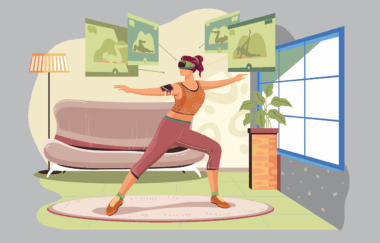

The Psychological Effects of VR Balance Training on Motivation
Virtual reality (VR) has emerged as an innovative method for enhancing balance and coordination training. As this technology becomes more accessible, its psychological impact on motivation is gaining attention. Engaging in balance-related exercises within VR environments can transform mundane practices into immersive experiences. This transformation provides users with a blend of challenge and enjoyment that keeps them engaged. Furthermore, the interactive elements present in VR can lead to an increase in adherence to training regimens. Motivation, often influenced by the perceived enjoyment of an activity, can be significantly elevated through the use of VR. Fitness and rehabilitation programs utilizing VR can incorporate various gamified elements that make the training experience more appealing. Participants may perceive improvements in their coordination and balance skills more readily in a simulated environment that provides feedback. This type of reinforcement fosters motivation and encourages persistence in practice, ultimately supporting long-term health goals. In summary, leveraging VR for balance training creates a unique platform that boosts motivation while enhancing physical skills, setting the stage for future developments in therapy and training. These advantages underscore the potential of VR in balance-focused training routines.
The use of VR technology in balance and coordination exercises not only lifts motivation but also positively impacts mental well-being. Users often experience a sense of accomplishment as they navigate through various challenging scenarios. Engaging in a virtual world allows individuals to push their limits without the fear of real-life consequences. This push can lead to significant psychological benefits, providing a safe space to improve skills and build confidence. Many users report enhanced focus and concentration when using VR, as the immersive elements capture their attention effectively. The mind tends to engage deeply with the virtual context provided, creating an experience that seems real. Furthermore, the element of competition, whether against oneself or others, can stimulate further motivation. Many VR applications incorporate ranking systems or progress tracking to enhance competitiveness. Such features encourage users to set and achieve personal goals, which can be a tremendous motivational boost. Engaging with VR allows individuals to break away from traditional regimes, leading to increased enjoyment and commitment to their training routines. Thus, the psychological benefits of VR for balance training are multi-faceted, promoting ongoing participation and improvement.
Enhancing Experience Through Gamification
Gamification plays a crucial role in the effectiveness of VR-based balance and coordination training. By integrating game design elements, trainers can enhance user engagement and motivation. Users are often driven by the desire to complete levels, achieve high scores, or unlock new challenges. This competitive spirit not only makes the training more enjoyable but also reinforces a sense of accomplishment upon completion of tasks. The variety of scenarios presented in gamified VR applications ensures that users remain engaged over extended periods. Participants can encounter different environments such as obstacle courses, sports simulations, or imaginative landscapes, making each session unique. Additionally, VR systems can offer adaptive difficulty levels that match the user’s capabilities, promoting sustained interest. Providing rewards for challenges completed can significantly boost self-esteem and promote a sense of progress over time. Users might find themselves more motivated to practice regularly while enjoying the digital experiences. This method caters to different learning styles, ensuring that training sessions are both effective and enjoyable. Thus, gamification strategies have been shown to enhance not only psychological engagement but improve physical outcomes in training.
Moreover, VR balance training can contribute to breaking down barriers to participation in physical activities. Many individuals, especially those with disabilities or chronic conditions, may feel constrained in real-life scenarios. However, VR offers an escape from these limitations, providing an equal playing field for everyone. For those hesitant to engage in physical exercise due to past injuries, VR can be a gentle reintroduction to movement. These adapted environments create a sense of normalcy, allowing individuals to practice essential skills without apprehension. Furthermore, trainers can customize VR experiences to cater to the specific needs of their clients, making balance training truly personalized. Such adaptability not only builds competence but also encourages engagement through progress tracking. Participants can clearly see improvements in their skills and overall balance, fueling motivation to continue their training. Furthermore, these experiences can lead to a sense of community among users who are overcoming similar challenges. Engaging with others, even in virtual setups, fosters camaraderie that can enhance motivation and enthusiasm. Consequently, this supportive environment within VR can have a profound impact on promoting continuous participation in balance training programs.
The Role of Feedback and Progress Monitoring
Feedback is an essential component of any training program, and VR enhances this aspect through real-time performance monitoring. Users can receive immediate feedback on their balance and coordination during exercises, which fosters motivation and targeted improvements. The combination of visual and auditory cues aids the learner in understanding areas needing attention. This immediate reinforcement is crucial for maintaining motivation and focusing efforts on specific skills. Additionally, tracking progress through VR systems can lead to significant psychological benefits. Users can visually see enhancements in their performance, leading to a heightened sense of accomplishment. Setting benchmarks within the VR framework encourages users to strive for continuous improvement, keeping them motivated throughout their training journey. Moreover, this feedback loop creates opportunities for goal-setting, which is an essential motivator. Establishing achievable targets can bolster confidence, promoting further engagement with the program. As users reach their targets, they can establish new ones, perpetuating a cycle of motivation. Furthermore, sharing progress with peers or trainers can enhance accountability and encourage supportive feedback, reinforcing positive behaviors and sustaining motivation in balance training.
Another essential factor to consider is the role of social interaction in motivation during VR training for balance and coordination. Many applications allow users to interact with peers, engaging in cooperative or competitive exercises. This social element can greatly enhance the motivation levels of those training. People often feel more compelled to participate actively when they are part of a community. Sharing experiences and achievements with others creates an environment of accountability and encouragement. Moreover, participants are likely to invest effort in their training if they see peers making progress, driven by a shared desire to succeed. Virtual group challenges or competitions can instill a sense of urgency and excitement. This social aspect can relieve feelings of isolation often associated with isolated training routines. Many users report higher motivation levels when they can celebrate wins and struggles together within a virtual community. Additionally, trainers can facilitate interaction through virtual coaching, leading to more engaging and supportive experiences. In conclusion, the blend of social interaction and competitive elements in VR significantly boosts motivation during balance training.
Conclusion: Future Implications
In summary, the psychological effects of VR balance training on motivation demonstrate the technology’s potential to revolutionize physical training. By leveraging immersive experiences, users can engage, learn, and improve their skills in ways not achieved through traditional methods. The motivational enhancements through gamification, feedback, and social interaction provide compelling reasons to utilize VR in balance training regimens. As researchers continue to explore the benefits of VR, future applications may further refine techniques to maximize engagement and effectiveness. Understanding how motivation can be influenced through innovative training programs will ensure that VR proves to be a valuable tool in promoting balance and coordination. Additionally, such research may pave the way for increased accessibility to physical training, empowering more individuals to participate. By continuing to focus on the psychological components associated with these experiences, it is possible to create programs that are both beneficial and appealing. VR is not merely a technological advancement; it is a pivotal framework for future physical training strategies centered on enhancing user motivation and promoting lasting improvements in balance.
By utilizing VR in balance training routines, it becomes increasingly possible to redefine how individuals approach physical activity. Combining enjoyable experiences with essential skills encourages participants to engage regularly with their training. Furthermore, as users become more skilled and confident in their ability, they are likely to carry over these improvements into daily life, reflecting positively on their overall well-being. Over time, consistent participation will inevitably yield tangible results in various aspects of life, including emotional and physical health. VR balance training presents a powerful, forward-thinking opportunity to harness technology for mental and physical enhancement. This potential can be a game changer not only for rehabilitation but also for fitness programs at large. As previous barriers are dismantled and innovative models emerge, the scope of improvement in motivation and skill development becomes clearer. Clearly, the psychological implications of such advancements will deserve ongoing focus and exploration. Over time, we will witness the evolving relationship between technology and training, reminding us that motivation can be cultivated in extraordinary ways through innovative methods. Each advancement in VR can serve as a building block for the future of balanced coordination training.