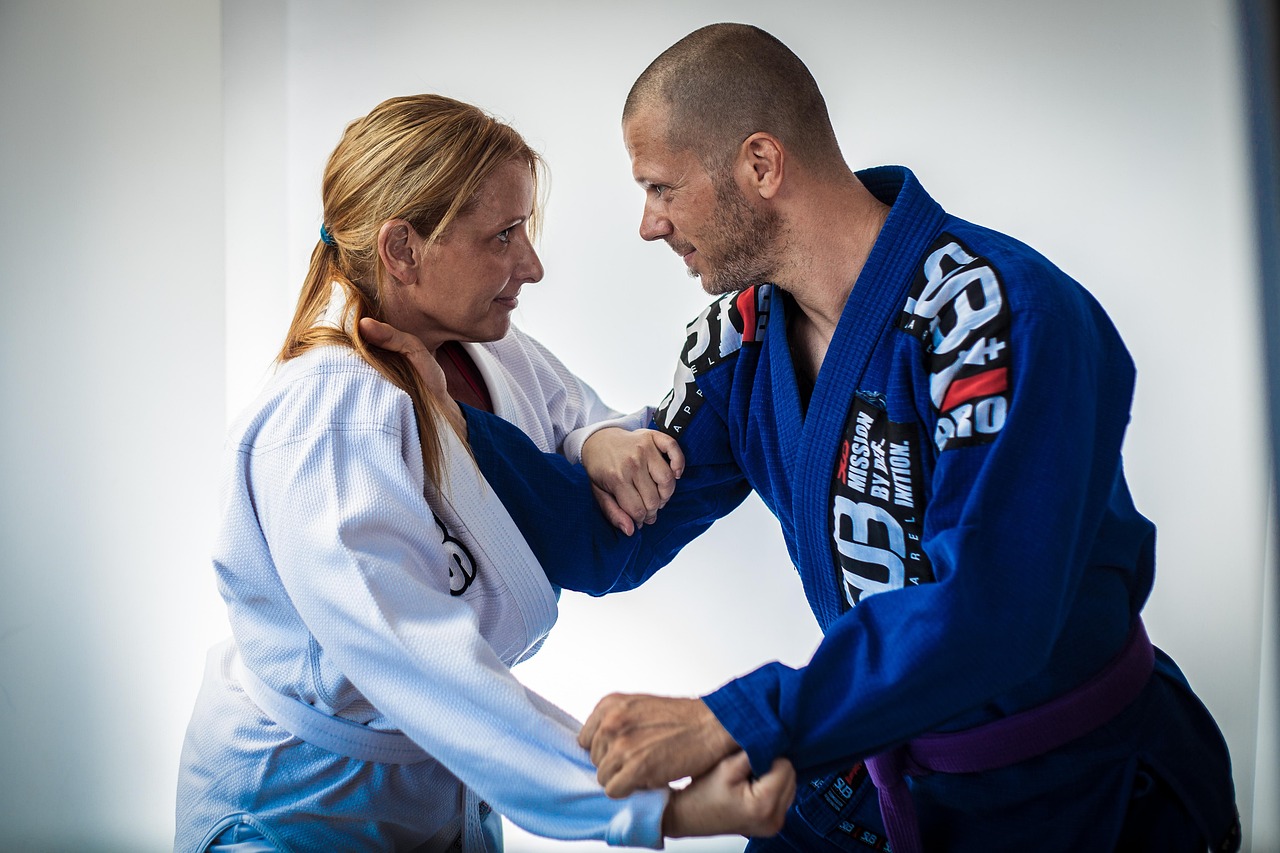

Why Brazilian Jiu-Jitsu is Ideal for Smaller or Weaker Individuals
Brazilian Jiu-Jitsu (BJJ) is often highlighted as the perfect martial art for smaller or weaker individuals. This self-defense strategy focuses on technique over brute strength and empowers practitioners to defend themselves against larger opponents. The emphasis on leverage allows individuals to employ body mechanics effectively, making it an excellent choice for anyone. The mental aspects, including the strategic thinking required, promotes confidence and resilience. Training in BJJ builds not only physical skills but also mental acuity, which can be vital in self-defense scenarios. This martial art encourages practitioners to use their surroundings to their advantage, an essential skill for anyone facing a larger aggressor. The sport’s grappling techniques rely on skillful positioning and timing, which can be effectively mastered by practitioners of all sizes. To train effectively, students must consistently practice and apply these techniques during rolls and sparring. As practitioners unlock their potential, they gain not just self-defense skills but also a profound sense of self-efficacy. This holistic approach can help individuals transition from a perceived lack of capability to unwavering confidence in their abilities, making BJJ suitable for everyone.
Training in Brazilian Jiu-Jitsu immerses individuals in a supportive and inclusive community. This environment encourages learning and personal growth, which is critical for those who may not feel confident in their physical abilities. Many BJJ academies foster camaraderie, helping students develop connections with peers. These relationships often extend beyond the mats as individuals encourage one another through each unique journey. Practicing with diverse partners also enhances adaptability, as one learns to deal with varying body types and skill levels. The challenge of navigating these differences bolsters one’s techniques and confidence, vital for effective self-defense. Additionally, the sense of belonging provided by a BJJ community can create a crucial emotional support system that encourages continued participation and improvement. This community aspect is often transformative; students frequently report feeling more competent and capable in various life areas. Moreover, women and individuals from underrepresented groups find BJJ to be a welcoming space that champions inclusivity. This further reinforces the idea that with the right training, anyone can effectively learn to protect themselves, no matter their physical stature or initial skill level. Thus, Brazilian Jiu-Jitsu is truly for everyone.
Effective Techniques for Self-Defense
The structural framework of Brazilian Jiu-Jitsu centers around effective grappling techniques, providing smaller or weaker individuals with the tools they need to defend themselves. Techniques such as guard, mount, and back control leverage positional superiority to control an opponent without relying on excessive strength. This methodology allows practitioners to neutralize threats efficiently. Rather than focusing purely on striking, BJJ teaches students how to manipulate an adversary’s movement and energy, using their force against them. Students learn to remain calm during confrontations—crucial for any self-defense situation. This poise is achieved through repetitive practice, developing instinctual responses to various attacks. Moreover, the emphasis on real-world scenarios in training allows individuals to prepare for encounters realistically. Developing these martial skills not only increases physical strength but also enhances mental fortitude. Consequently, practitioners cultivate an understanding of self-awareness and situational awareness. These supplementary skills can be invaluable in avoiding potential confrontations or de-escalating volatile situations before they escalate. BJJ becomes an empowering journey that fundamentally alters how individuals view themselves and their capabilities, strengthening both body and mind.
Dynamic movement plays an integral role in Brazilian Jiu-Jitsu, emphasizing fluidity and adaptability in technique applications. Practitioners progress by learning to execute movements that suit their unique body types and preferences. These adaptations may include varying grips and angles to find the best alignment for their physical capabilities. As individuals train, they develop physical attributes such as balance, flexibility, and coordination—all vital to self-defense, particularly for those without brute strength. This focus on adaptability aids in overcoming personal limitations and ensures that anyone can execute techniques effectively. Furthermore, BJJ cultivates stamina and endurance, showcasing how consistent training improves overall physical fitness. This enhanced fitness translates into more energy reserves during physical confrontations. Individuals often notice significant health benefits beyond martial proficiency, including weight management and improved cardiovascular health. These lifestyle improvements reinforce the notion of self-defense not just as a practice but as a means to enhance overall well-being. The path of learning BJJ fosters a holistic view of fitness, merging self-defense with health benefits that provide individuals with the tools to excel physically and mentally.
Building Confidence and Resilience
The self-discovery journey within Brazilian Jiu-Jitsu often leads to increased confidence and resilience among practitioners, particularly individuals who may initially feel insecure due to their size or strength. Each training session reveals personal strengths and abilities that may have previously gone unnoticed. As practitioners experiment with different techniques, they learn what works best for them, equipping them with self-confidence to handle various situations intelligently. This gradual buildup of skills fosters an individual’s ability to face challenges, both on and off the mat. Students become more adept at persisting through difficult situations, a valuable trait that transcends martial arts. The shared experience of overcoming obstacles creates a unique bond within BJJ classes. Repeatedly navigating discomfort and pushing limits cultivates a mindset geared toward growth and self-improvement. Furthermore, through sparring and rolling, individuals learn to accept failure as part of their journey, transitioning from frustration to productive learning. Such experiences foster the understanding that resilience is built through dedication and perseverance, equipping them to face not only confrontations but also life’s challenges with newfound determination.
Another significant instance showing how Brazilian Jiu-Jitsu can benefit smaller or weaker individuals lies in its focus on mental discipline. Each training session demands mental and physical coordination, teaching students to maintain focus under pressure. This crucial mental training enhances the ability to respond properly during high-stress situations encountered in self-defense. By regularly practicing drills and techniques, students develop greater awareness and quick reflexes, both essential in potential confrontations. Brazilian Jiu-Jitsu’s conceptual complexity encourages a deep understanding of one’s body movements and limits. This awareness translates into enhanced coordination, making movements efficient rather than relying on force. Moreover, the problem-solving aspect of BJJ fosters creativity, enabling individuals to think outside the box when tackling challenges. This mental toolbox can be essential in self-defense, wherein creative solutions can mean the difference between danger and safety. Trainees learn not only how to react effectively but also how to anticipate an opponent’s moves. Hence, BJJ not only develops physical skill sets but sows the seeds of mental discipline that practitioners can carry far beyond the mat into everyday challenges.
Conclusion: A Path for All
In conclusion, Brazilian Jiu-Jitsu stands as an exemplary martial art tailored for smaller or weaker individuals looking for a form of self-defense. Its reliance on technique, leverage, and mental discipline allows practitioners of all sizes to defend themselves effectively. The supportive community, coupled with the multifaceted benefits ranging from physical fitness to psychological resilience, makes BJJ a unique self-defense option. Individuals embarking on the BJJ journey find a persistent sense of empowerment, overcoming personal and physical limits. Experiences on the mat strengthen confidence, adaptability, and mental acuity, shining a light on how Brazilian Jiu-Jitsu transcends mere physical grappling. Instead, it builds a holistic framework that intertwines physical mastery with psychological robustness. Whether facing physical challenges or life’s unpredictabilities, the skills gained provide practitioners with essential tools to navigate their world confidently. Ultimately, embracing BJJ serves as a reminder that self-defense is not just about physical capability but about personal growth and empowerment for oneself and the broader community. Regardless of one’s size or initial reservations, Brazilian Jiu-Jitsu invites all to pursue self-defense and mastery on their own unique terms.