
Understanding Common Freerunning Tricks and Their Names
Parkour and freerunning incorporate a variety of unique terms and tricks, crucial for anyone interested in this exciting discipline. Each movement has its own name, helping practitioners communicate clearly about techniques. This glossary serves to illuminate some of these common tricks, enhancing understanding for beginners and experienced athletes alike. Fundamental techniques like the “vault” allow practitioners to navigate obstacles efficiently, while movements such as the “roll” help in safely landing from heights. Other essential terms include the “cat leap,” which involves grabbing an object with both legs, and the “kong,” where both arms land on the obstacle. Understanding these terms can drastically improve practice sessions and learning. Asparkour athlete assimilates these names over time, contributing to a rich culture within the community. Here’s a brief overview of essential tricks and terminologies for newcomers, ensuring they grasp both the physical and linguistic aspects of the sport. The following sections will delve deeper into each trick, illustrating their movements and applications. By familiarizing with this vocabulary, athletes can progress better, practice with clarity, and develop their techniques confidently across various urban landscapes.
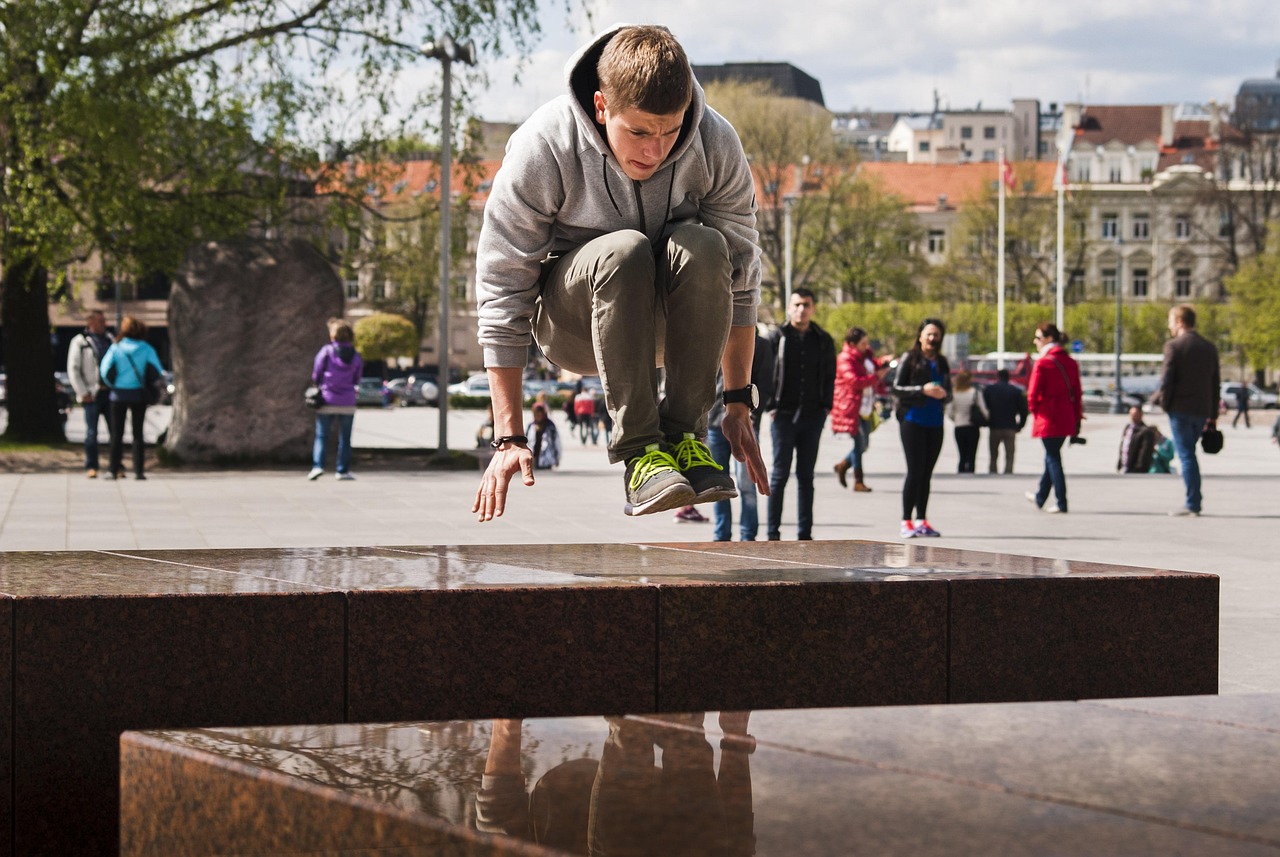
The “vault” is one of the foundational moves in parkour, providing a way to pass over barriers swiftly. There are several variations of this trick, including the “lazy vault” and the “speed vault.” The lazy vault involves placing one hand on the obstacle while swinging the legs through, creating a fluid motion that is useful for crossing lower barriers. The speed vault, on the other hand, emphasizes momentum and speed, with both legs taking off simultaneously, allowing for a quick transition over the obstacle. Performing a vault not only showcases agility but also composure, artfully harnessing body mechanics. Practicing these moves frequently aids in muscle memory, which is essential in high-pressure situations during freerunning. Mastering the vault technique often serves as a precursor to more advanced moves, establishing a solid foundation for athletes. Regular drills focusing on technique and form can elevate overall performance. Joining a local freerunning community or training group can also enhance learning and encourage skill development through shared experiences. As you practice these variations, take note of your progress and aim to refine your execution to achieve optimal efficiency.
Key Freerunning Movements Explained
A key movement in the parkour repertoire is the “roll,” which is essential for safely absorbing impacts when landing from jumps. The roll helps distribute the force across the body, diminishing the chance of injury during a fall. The optimal way to perform a roll includes tucking the shoulder into the ground and rolling diagonally across the back, allowing for smooth transitions from landing to standing. Equally important is the “cat leap,” a skillful technique where the athlete uses both hands to grab a surface while drawing up their legs behind them. This move not only displays strength but also requires precise timing and coordination. Practitioners will often progress to performing more complex variations of these moves as their skills develop. Other significant terms for lovers of freerunning include “precision jumps,” which necessitate landing with accuracy on a specific point during a jump. Engaging friends to practice these moves together can foster a fun and effective learning environment. Always remember to warm up adequately to prevent injuries when practicing these difficult maneuvers, ensuring your body is ready to embrace the demanding physical challenges.
Another vital trick in the parkour toolkit is the “kong” which stands out for its versatility and application across various scenarios. The technique begins with a running approach, where both hands land on an obstacle while the legs follow through in a forward motion. This move allows freerunners to vault over high barriers, asserting control and elegance in execution. Often combined with a roll for safety during descent, the kong can greatly enhance flow and movement continuity. Additionally, practitioners often encounter the term “dive roll.” This advanced variant involves diving towards an obstacle with the arms extended and rolling upon impact. The dive roll tends to be utilized in situations requiring more horizontal speed and momentum while navigating barriers. As athletes grow more comfortable with basic techniques, they are encouraged to experiment with incorporating tricks like the kong and dive roll into their routines. Engaging in regular practice sessions focused on these specific movements can lead to heightened self-assurance. Finding videos or tutorials online can aid in learning these intricate techniques effectively, as visual demonstrations give valuable insights into form and execution.
Advanced Techniques for Mastery
As skills deepen, freerunners will often experiment with stunts like the “webster” and the “backflip,” each showcasing exceptional agility and spatial awareness. The webster begins with a run-up and requires a solid jump, where the athlete flips backwards while rotating into a landing position. This dynamic movement demonstrates control and finesse, making it a coveted technique among advanced practitioners. Similarly, the backflip holds its place as an essential trick in the freerunning community, characterized by a synchronized backward rotation leading to a safe landing. Mastering both the webster and backflip adds an exciting flair to the performance, providing unique style points during demonstrations or competitions. These advanced moves require confidence, practice, and focus, emphasizing the necessity of safety measures. Athletes are encouraged to train these stunts on softer surfaces initially, utilizing mats and padded areas to minimize injury risk. Regular practice and a supportive training environment can bolster confidence while developing these advanced skills. Training with experienced mentors can enhance your capability and understanding, often leading to quicker mastery of these spectacular techniques.
The “cat pass” is another impressive technique that involves a combination of both jumping and climbing movements. As the name implies, the trick is named after a cat’s graceful ability to leap onto high ledges. The cat pass allows a freerunner to scale obstacles efficiently while preserving momentum. Often executed when approaching a wall or fence, it requires both strength and spatial awareness to succeed. Similarly, the “precision landing” involves landing securely on a small surface, typically one foot wide or smaller. This technique highlights balance and competence while executing jumps effectively. The practice of precision landing demands consistent attention as it influences stability during movement routines. Regular training improves accuracy and sharpens reflexes, allowing freerunners to tackle increasingly difficult obstacles. To foster improvement, athletes often utilize various training drills that specifically target both the cat pass and precision landing. Setting up courses that mimic real-world obstacles can also sharpen skills while providing an engaging training environment. Joining parkour organized events can also further develop one’s aptitude, allowing peer observation and feedback to inform practice and adaptations.
Conclusion and Summary of Freerunning Dynamics
In conclusion, understanding parkour and freerunning terminology empowers both newcomers and seasoned enthusiasts to connect within this dynamic community. Mastering essential tricks, from the basics like the vault and roll to advanced movements like the webster and backflip, is crucial. Familiarity with terms such as precision jumps, dive rolls, and the cat pass enables clearer communication during training. Regular practice, innovation, and adaptability are foundational to the continuous improvement of skills in parkour. Although the techniques may seem daunting at first, with time, commitment, and appropriate methodologies, any aspiring athlete can enhance their abilities. Establishing camaraderie with fellow parkour practitioners fosters a supportive environment for learning and growth. Engaging in local workshops and events allows individuals to cultivate relationships while gaining insights from experienced athletes. Whether practicing solo or in groups, remember to prioritize safety and progressive learning. The journey of mastering parkour is uniquely personal, influenced by dedication and passion for movement. As you embark on this thrilling chase of self-improvement, always keep pushing forward to redefine your limits while enjoying every aspect of this extraordinary sport.
It is important to recognize that progress takes time, and patience is essential in mastering freerunning. Whether you’re just starting or looking to refine your skills, focus on embracing the journey rather than just the destination. Celebrate your successes, no matter how small they may seem, as they contribute to your overall development as a freerunner. Always remember to listen to your body, taking breaks when needed and avoiding pushing beyond limits. Each trick learned adds to the tapestry of knowledge and experience you gather along the way. Parkour isn’t merely about executing tricks; it’s about understanding movement and developing a unique style that resonates with you. Embrace creativity, experiment with different techniques, and most importantly, enjoy the balance between enjoyment and improvement in this exhilarating activity. Documenting your practice via videos can facilitate recognition of areas needing refinement. Likewise, drawing inspiration from experienced freerunners can provide new insights into techniques and creativity in movement. Ultimately, your journey in parkour will be filled with challenges and triumphs that will shape you as a distinguished athlete in this exhilarating world of freerunning.