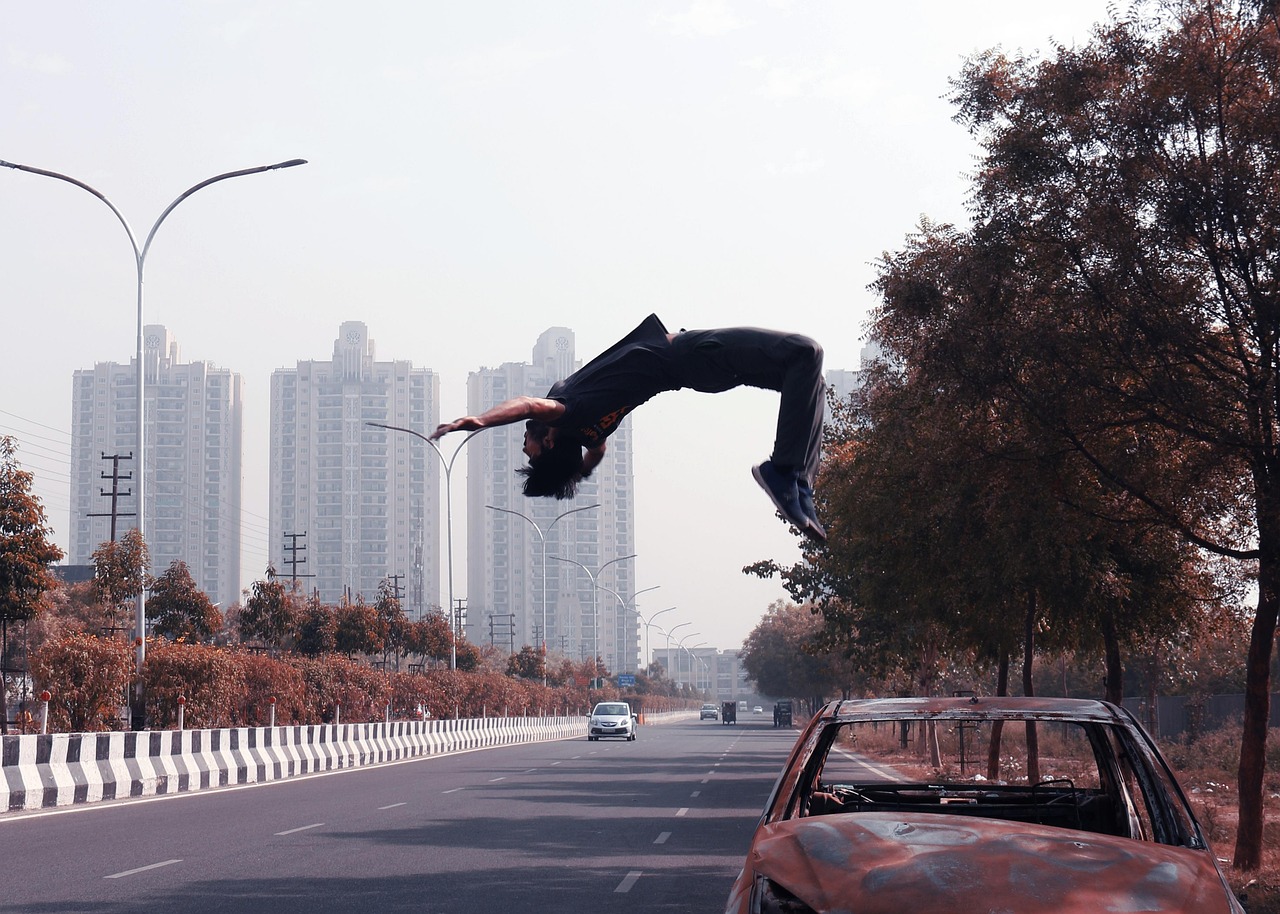

Urban Spotting: The Essential Guide for Parkour Practitioners
Urban spotting is crucial for parkour practitioners seeking to enhance their skills safely. It involves assessing urban environments to find suitable locations to practice various techniques. This process ensures that athletes can engage in parkour effectively while minimizing risks. Urban spotting requires keen observation, creativity, and an understanding of one’s abilities. To begin, one must scout locations that offer diverse surfaces, heights, and layouts. Ideal spots should present a variety of challenges such as walls, rails, and gaps. In addition, practitioners should prioritize safety by choosing areas with soft landings or forgiving surfaces. Always consider potential hazards like traffic or unstable structures. This thoughtful approach aids in skill development while encouraging exploration. Building a mental map of available spots can lead to discovery and improvement in performance. Photographs can be taken for reference, allowing athletes to visualize moves beforehand. Ultimately, urban spotting plays a foundational role in the parkour community, providing a platform for innovation and camaraderie among practitioners.
One effective technique for urban spotting is to survey the area systematically. Begin by walking through the location and observing potential obstacles. Look for elements like walls, handrails, and benches that can be utilized for various movements. Consider the flow and layout of the environment, as well as the nearby surroundings that might offer additional features or landing areas. It’s also essential to assess the surface materials and ensure that they are suitable for parkour practice. For example, concrete, asphalt, and grass can all have different implications for landings and jumps. Practitioners should also look at the height of structures, as some may present thrilling but challenging opportunities. Depending on the level of experience, attempting moves on higher structures might not always be advisable. Remember that safety should always be the first priority. Documenting impressive urban spots can also provide inspiration for future training sessions. Share images and experiences with your fellow practitioners to create a more connected community. This sharing of knowledge promotes growth within the sport and fosters friendships.
Assessing Safety and Challenges
Evaluating safety is paramount in the urban spotting process. Parkour practitioners must consider not only their physical limits but also the security of the environment. Always inspect spots before practice, looking for signs of wear and any dangers that may not be immediately visible. By evaluating each potential location, one can develop a clearer understanding of which stunts are achievable without injury. Additionally, inspect the area for bystanders or traffic, particularly in busy urban settings. A safe practice environment is crucial for improving confidence and skillset. It is advisable to train with experienced spotters, as they can provide insights on safety and technique. Engaging with a mentor or joining a parkour group can enhance learning opportunities. Practitioners should not hesitate to retreat if a jump seems excessively risky. Understanding limitations is key to growth, and no one should feel compelled to attempt moves that feel beyond their capabilities. Establishing good communication within a training group can prevent accidents and keep everyone informed about potential risks while enjoying urban exploration.
Examining the varied surfaces across urban environments is another vital aspect of spotting for parkour. Different surfaces can alter how practitioners perform techniques such as vaults, flips, and landings. Concrete can be unforgiving, while grass might provide a softer landing, making it an ideal area for practice. Surfaces like wooden park benches can help in mastering precise landings, while rails can offer opportunities for unique tricks. A diverse range of surfaces enables practitioners to diversify skills effectively. Familiarity with local terrains plays a crucial role in adapting techniques proficiently. Experimenting with different surfaces also promotes muscle memory, allowing for more consistent performances during training. Furthermore, understanding how weather conditions impact surfaces is essential. Wet or icy surfaces can pose significant risks that discourage practice. Always remain vigilant and opt for consistent surfaces when the weather changes. Being aware of seasonal variations helps prepare for safe training. Gradually pushing boundaries while practicing helps develop confidence, which is key in progressing as a parkour athlete. The practice environments should stimulate growth while ensuring safety at all times.
Mapping Your Urban Environment
Once an urban spot has been identified, mapping it can greatly increase the effectiveness of your practice. Create a visual representation of various locations, documenting features that will serve as practice aids. Sketching maps or utilizing smartphone applications can enhance spot visibility during training. Develop a comprehensive list of favored spots, detailing their specific characteristics and challenges. Indicate suitable techniques and variations applicable for each location. This process not only creates a personalized training database but also improves accountability in practicing parkour. Having maps allows you to navigate your surroundings more confidently and can encourage outdoor exploration. New challenges can be identified through mapping, fueling creativity. Engaging with other practitioners when mapping can lead to the revelation of underrated spots. Each member of a training group may possess valuable insights that enrich the diversity of the mapped resources. This collaborative approach strengthens the community, welcoming new practitioners looking for guidance. Sharing unique spots among fellow athletes fosters a culture of growth, creativity, and support throughout the parkour community.
Urban spotting for parkour also serves as an opportunity to develop community connections. Practitioners can share favorite spots, explore together, and build relationships uniquely through their love for parkour. Group training sessions often yield valuable feedback regarding spotting locations, as well as technique improvements. Regular meet-ups can allow for the examination of new areas while ensuring safety through collaborative practice. Moreover, finding moments to capture experiences, whether through photographs or videos, aids in documenting personal growth while inspiring others. Establishing accountability among peers guarantees that everyone follows safety practices alongside individual growth. Such shared experiences strengthen bonds and encourage athletes to push their limits collectively. As practitioners navigate various environments, they can exchange ideas, techniques, and create lasting friendships rooted in their mutual experiences. This exchange of knowledge improves personal skills while also expanding the parkour network. Therefore, collective urban spotting experiences can serve as a network, empowering members within the parkour community. This connection lays the foundation for teamwork, progress, and enjoyment in pursuing the discipline bravely.
The Future of Urban Spotting
Looking to the future, urban spotting will continue to evolve alongside parkour as a sport. Emerging technologies offer the possibility of interactive applications to aid practitioners in identifying suitable spots more efficiently. As parkour further integrates itself into urban settings, municipalities may increasingly recognize the discipline and support the establishment of designated training areas. Consequently, the development of urban spots catering to parkour practitioners could result from collaborative efforts between communities and athletes. Additionally, sustainability practices within urban environments play a role in shaping future parkour spots. Using environmentally friendly methods to maintain urban spaces can significantly enhance parkour practice. The next generation of practitioners will likely benefit from improved infrastructure that embraces the sport. Furthermore, fostering inclusivity within urban spotting creates a welcoming environment for newcomers. Offering potential workshops or beginner classes at spotting locations cultivates a broader appreciation of parkour and its values. By supporting growth, safety, and creativity, the future of urban spotting holds promise for athletes everywhere, transforming cities into playgrounds that nurture the parkour spirit.
In conclusion, urban spotting remains a fundamental element of parkour training that directly impacts athletes’ safety and potential. Creating a thorough awareness of your surroundings while developing a keen eye for opportunities can enhance one’s practice experience. Through assessing features, practicing with partners, and drawing maps, enthusiasts can explore urban spots effectively while minimizing risks. By documenting experiences and collaborating with fellow athletes, the parkour community can continue to thrive through shared knowledge and support. Furthermore, the focus on safety and technique ensures that as parkour continues to grow, athletes can push their boundaries. As the landscape of urban environments changes over time, so too will the opportunities for parkour practitioners. Emphasizing creativity, safety, and connection can propel these athletes to new heights. Identifying previously overlooked spots can inspire new moves, friendships, and possibilities within the community. Ultimately, the art of urban spotting enriches the overall experience of parkour, allowing individuals to embrace their potential while enjoying the exhilarating pursuit of overcoming obstacles. Together, practitioners can explore and shape the future of parkour, enhancing their connection to urban spaces and fostering a sense of belonging.