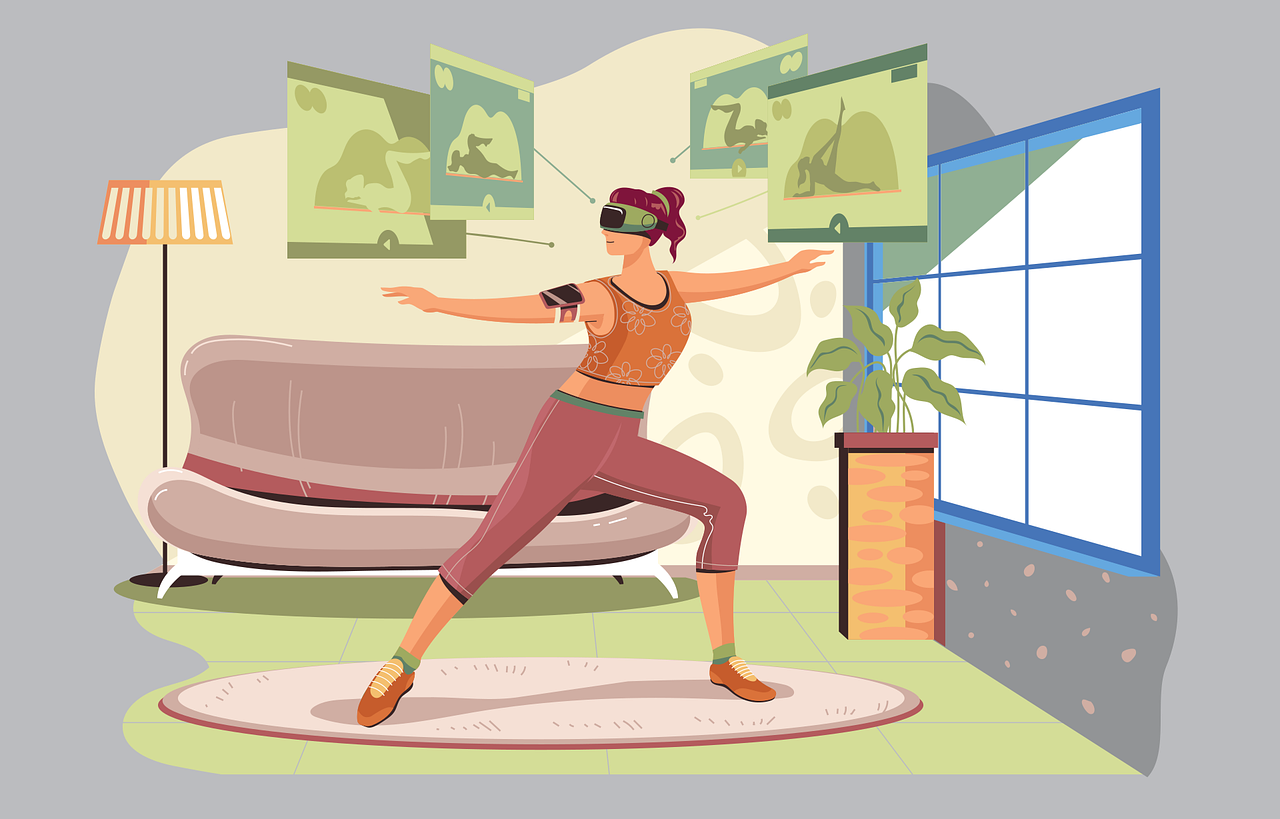

Top Virtual Reality Exercises for Boosting Coordination
Virtual reality (VR) has emerged as a powerful tool for improving physical coordination and balance. Users engage in immersive environments that require both mental and physical responses. One excellent VR exercise for boosting coordination is the balance beam activity. This simulation challenges users to walk along a narrow beam, demanding focus and precision. The visual cues provided in VR help participants maintain their balance, while their body works on stabilizing muscles. Additionally, integrating hand-eye coordination exercises, such as virtual basketball shooting, enhances motor skills. Users must time their movements to hit virtual hoops, promoting effective coordination. Another engaging exercise involves playing rhythm games, where users need to hit notes corresponding to on-screen prompts. These activities not only improve coordination but also make workouts enjoyable. The varying levels of difficulty in these VR exercises allow for gradual improvement without overwhelming the user. Users frequently notice faster reflexes and better overall coordination by consistently practicing in a virtual environment. To maximize benefits, setting specific coordination goals and tracking progress within the VR platform can enhance the training experience further.
Fitness-based VR experiences are another area that significantly contributes to coordination improvement. While many associate VR with casual gaming, there’s a growing trend towards structured fitness programs. Many VR platforms now include workout routines specifically designed to enhance physical fitness, endurance, and coordination. High-intensity interval training (HIIT) in a VR environment can be quite exhilarating. Engaging movements such as jumping, ducking, and dodging in response to virtual obstacles develop both core strength and coordination. For example, games like Beat Saber require users to swing their controllers rhythmically while avoiding barriers, thus improving timing and precision. Also, incorporating team-based VR games can elevate coordination skills through social interaction. Players must communicate and move as a unit, enhancing not only team coordination but also individual skill sets. These interactions help players become more aware of their surroundings and spatial relationships. Furthermore, users enjoy the social aspect of VR training, as many people find themselves more motivated when working out with others. With the right mindset and consistent practice, the coordination improvements seen through VR can translate into real-world applications.
Exploring different VR environments can also enhance one’s ability in balancing activities. For instance, users can engage in virtual skateboarding or surfing simulations, which demand complex movements and a strong sense of balance. These activities immerse users in real-world scenarios, allowing them to practice essential coordination skills without the risks associated with traditional sports. In these simulations, individuals must shift their weight and adjust their limbs to maintain stability while performing tricks or avoiding obstacles. Such exercises promote muscle memory, which is crucial for balance and coordination. Similarly, VR yoga sessions instruct participants on body alignment and posture, fostering improved control over their muscles and coordination. This holistic approach not only strengthens physical abilities but also enhances mental focus, essential for maintaining balance in dynamic environments. The immersive aspect of VR aids in adherence to fitness routines, as users often find the experiences entertaining and challenging. Lastly, regular practice with these balancing VR exercises can effectively build confidence in one’s ability to maintain stability in everyday activities, ultimately leading to improved performance in other physical pursuits.
Utilizing Feedback Mechanisms in VR
Another key advantage of VR-based coordination training is the capability to provide instant feedback to users. Many modern VR systems come equipped with technology that can track movements and performance, allowing participants to receive real-time insights on their balancing techniques. For example, after completing a series of coordination challenges, users can view their scores, completion time, and overall efficiency. This feedback enables them to identify areas for improvement and adapt their techniques accordingly. Users can also see their progress over time, motivating them to push their boundaries. Additionally, the gamification of VR exercises leads to a more engaging experience, ensuring users remain committed to their training regimens. Features such as leaderboards, personal bests, and unlocking new levels create a competitive environment. This interactive aspect makes coordination training in VR appealing to a wider audience. Furthermore, integrating social features, like sharing achievements with friends, can bolster motivation and encourage users to work harder. As they enjoy the challenge, users can boost their overall fitness and coordination levels through sustaining engagement with the VR platform.
Practicing coordination exercises in virtual reality attracts users of all ages. For instance, VR platforms often include customizable profiles catering to the needs of diverse age groups and physical abilities. Children can benefit from interactive games that promote hand-eye coordination through colorful animations, while older adults may find simpler tasks that emphasize balance and stability much more beneficial. Development of coordination in younger individuals helps establish a foundation for physical literacy that will serve them throughout their lives. When engaging in VR coordination exercises, participants also enjoy the immersive experiences that distract them from challenging movements. The interesting graphics and engaging soundtracks create an enjoyable setting that can lead to longer sessions and consistent practice. Furthermore, VR technology allows family members and friends to participate together, thus enhancing social interactions through shared goals. By practicing together, users can motivate one another while reinforcing the importance of maintaining physical fitness. This inclusive approach toward coordination training fosters a supportive community environment built on teamwork. With mapping capabilities, VR devices can even suggest personalized exercises based on an individual’s skill level and preferences.
Long-Term Benefits of VR Coordination Training
Consistent VR coordination exercises yield long-term benefits that contribute to improved physical condition and general well-being. Participants find that enhanced coordination directly impacts their daily lives, from improved athletic performance to reduced risk of falls, especially in older adults. Engaging in regular VR workouts helps build muscle strength and enhances cognitive function, as users learn to process visual information quickly and accurately. The duality of motion and mental engagement creates a holistic training approach that enhances overall physical literacy. Furthermore, incorporating exercises that improve core strength can have profound effects on stability and posture, critical for optimal coordination. As individuals develop muscle memory through regular practice, their reflexes improve, enabling quicker responses in everyday activities. Enhanced coordination ensures individuals can maintain balance while performing complex tasks, ultimately improving overall confidence. Participants in VR coordination exercises often report increased enjoyment in their physical activities, leading to more active lifestyles. A prolonged commitment to VR training establishes a solid foundation for lifelong fitness. This commitment further reinforces the importance of staying physically active, encouraging users to pursue their fitness goals in an enjoyable and engaging manner.
Virtual reality technology is continuously evolving, offering innovative ways to enhance coordination training. Companies are designing new VR setups equipped with cutting-edge motion tracking and interactive feedback systems. These advancements will enable further customization of workouts to better meet individual needs. As VR technology progresses, the potential for more personalized training experiences will rise, allowing users to tailor their sessions based on specific coordination challenges. Future developments could introduce biometric sensors, providing insights on physical exertion and encouraging participants to push their limits. This capability would further enhance users’ motivation to improve and stay consistent in their training regimen. Moreover, as VR becomes more integrated with other technology trends, like artificial intelligence, users could receive even more dynamic and responsive feedback. The combination of AI with VR will pave the way for adaptive learning environments where training programs adjust in real-time to match individual performance. Ultimately, the future of VR in coordination training is filled with potential, transforming how people approach fitness. With continued innovation in wealth generation technology, the possibilities for enhancing coordination and fitness through VR are vast, influencing future practices on physical training methods.
In conclusion, virtual reality holds immense potential in revolutionizing coordination training. It has transformed how individuals engage in fitness, making it an accessible and enjoyable experience. The combination of immersive environments, interactive feedback, and customizable exercises fosters better coordination skills across various demographics. VR exercises cater to all ages and skill levels, promoting inclusivity in physical training. The social aspect of VR can encourage individuals to pursue their fitness journeys alongside one another, thereby enhancing motivation and commitment. As the technology continues to advance, so does the ability to enhance coordination, balance, and overall fitness levels. The future prospects for VR in physical therapy and rehabilitation are promising, with possibilities for creating targeted programs for those recovering from injuries or surgeries. Leveraging VR’s capabilities can provide unique training methods that help bridge the gap between rehabilitation and traditional fitness. As a result, more individuals will likely embrace VR fitness as a vital component of their training routines. Embracing this innovative technology will continue shaping how fitness and health enthusiasts interact with their progress, maximizing improvements in coordination and balance.