
Training Body Mechanics for Quick Defensive Transitions
In self-defense training, understanding body mechanics is essential for creating effective defensive strategies. Body mechanics refers to how the body moves, balances, and coordinates actions to ensure maximum efficiency and effectiveness. For those engaged in self-defense, employing the correct body mechanics ensures that movements are not only natural but also powerful. Proper mechanics culminate in smoother transitions between offensive and defensive positions, which are essential in real-life situations. Learning how to shift weight effectively, rotate the hips during strikes, and maintain balance during an encounter greatly enhances one’s capability. It is also crucial to practice specific drills that emphasize body mechanics. These may include footwork drills, striking drills, and even ground defense techniques. However, understanding the theory behind these movements is equally important; just physically practicing without understanding can lead to poor outcomes. Therefore, instructional videos, books, and seminars can offer significant insight, highlighting how proper biomechanics can drastically enhance one’s defensive skills and overall self-defense capabilities. Over time, with consistent training and mindfulness, individuals can deeply integrate these principles into their practice and react quickly and effectively during confrontations.
Essential skills in body mechanics come down to three key areas: awareness, form, and movement. Developing awareness means being cognizant of your body’s alignment and how it interacts with your surroundings. This involves recognizing how your body’s position can help or hinder your defense. With awareness, you can anticipate your movements, making quick adjustments as necessary for optimal defense. Correct form is equally vital; using appropriate stances and postures not only power up your defenses but also minimize the risk of injury during a confrontation. Engaging your core and maintaining a low center of gravity can significantly improve stability and strength in defensive maneuvers. Lastly, efficient movement combines optimal speed and fluidity in transitioning between techniques. Practice transitioning between movements, such as switching from a blocking stance to a striking position smoothly, allows you to respond more quickly to various attacks. When practicing, it’s beneficial to use mirrors or video recordings to analyze your body mechanics and make appropriate adjustments. Additionally, seeking feedback from an instructor or training partner can help refine these essential skills, leading to improved confidence and effectiveness in self-defense situations.
Understanding the Importance of Weight Distribution
A critical component of body mechanics in self-defense training is the concept of weight distribution. Proper weight distribution essentially involves being aware of how the body’s weight is spread during various movements. In any defensive or offensive action, the position of your weight directly affects your balance and speed. Distributing your weight correctly can enhance agility, allowing quicker reactions to threats. For instance, when preparing to deliver a strike or evade an attack, distributing weight toward the connected foot allows a solid foundation from which to launch movements. Engaging in balance exercises, such as yoga or martial arts forms, can be instrumental in understanding how to shift weight appropriately while still maintaining poise. Moreover, practicing different stances can help a defender adapt their weight distribution depending on various situations. For example, utilizing a forward stance with more weight on the leading foot might be beneficial for an immediate attack, while sliding back into a more relaxed stance might help evade contact. By mastering weight distribution, individuals can improve their ability to transition quickly from one self-defense technique to another without losing balance or momentum.
In addition to weight distribution, physical conditioning plays a significant role in mastering body mechanics. A strong and fit body is better equipped to execute the necessary movements involved in self-defense effectively. Establishing a fitness regime that emphasizes strength, flexibility, and endurance will ultimately improve your reaction times and overall performance in self-defense scenarios. Strength training, incorporating resistance exercises targeting core muscles, arms, legs, and back, will provide the necessary muscle support to maintain powerful strikes and withstand impacts. Flexibility training through disciplines such as yoga or dynamic stretching assists in enhancing range of motion, making defensive movements more fluid. Lastly, endurance training helps keep energy levels high during longer encounters, enabling the practitioner to maintain focus and agility. As such, integrating these different components into your training regimen will establish a competent physical foundation for executing body mechanics. Additionally, combining physical training with mental conditioning, including focus and visualization techniques, ensures that you are prepared to react decisively under stress. With this approach to conditioning, your body mechanics can become second nature, allowing for rapid and effective defensive transitions.
Practicing Defensive Drills for Enhanced Mechanics
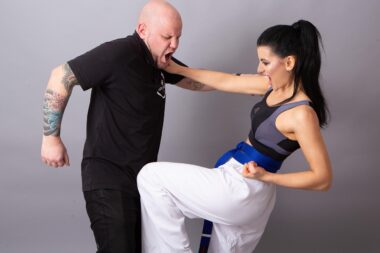
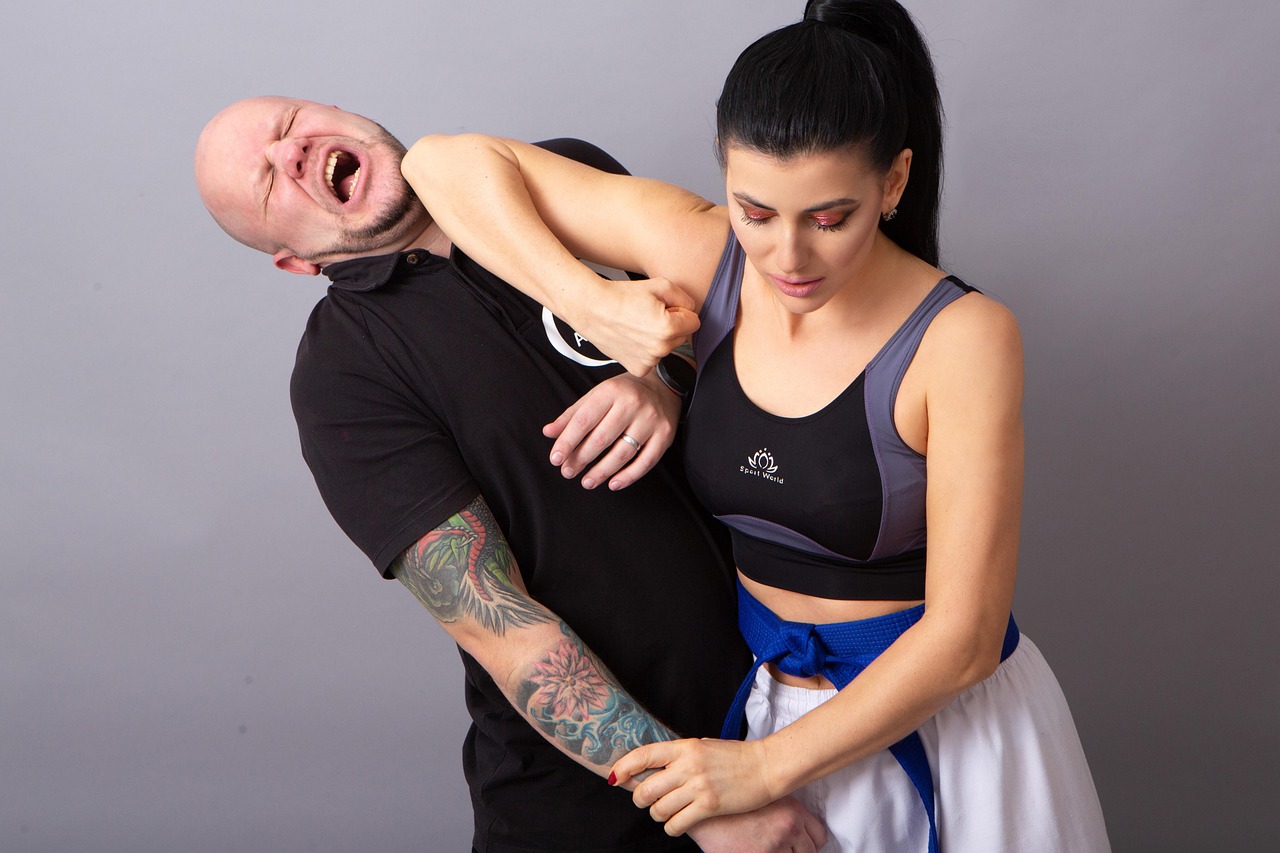
Incorporating specific defensive drills into your self-defense regimen is crucial for training body mechanics. These drills allow individuals to focus on the precise movements essential for quick defensive transitions in controlled environments. Start with shadow boxing to develop speed and reflexes while maintaining perfect mechanics. In shadow boxing, practice various defensive maneuvers, such as slipping, blocking, and countering strikes. It enhances muscle memory and allows practitioners to develop a deeper understanding of how body mechanics affect performance. Another beneficial drill is practicing with a partner to simulate real-life scenarios accurately. Partner drills can involve one person committing to an attack while the other person focuses on defending adequately through appropriate body mechanics. This setup helps both practitioners experience how bodyweight and positional shifts impact their defenses. Additionally, adding a third party, such as a coach, to observe and provide feedback can refine one’s body mechanics further. Over time, the repetition and intensity increase the speed and smoothness of transitions, ultimately resulting in a stronger and more instinctive defense that translates into real-life situations.
To reinforce the importance of feedback, documenting your progress is also beneficial during training sessions focused on body mechanics. Keeping a training journal can enhance your understanding of your strengths and weaknesses over time. Note different drills, how your body felt during each practice, and any adjustments they made afterwards. This reflection will provide insight into how body mechanics are evolving as you progress. Analyzing videos of training sessions can also be insightful, allowing you to pinpoint areas that may require refinement. This practice of documenting and analyzing can significantly enhance body awareness, making practitioners more attuned to their movements and mechanics in real-time situations. Additionally, developing achievable goals related to body mechanics can help maintain motivation. For instance, aim to master a specific transition within a particular timeframe, which can encourage purposeful practice. Communicating with fellow trainees about experiences and discoveries can also foster mutual improvement and insight. Ultimately, fostering a culture of feedback and reflection not only boosts confidence but allows for a more profound understanding of personal mechanics, leading to improved defensive capabilities over time.
Integrating Body Mechanics into Real-Life Scenarios
Finally, to excel in self-defense, it is essential to translate your learned body mechanics effectively into real-life scenarios. Practicing techniques in an isolated environment, such as a dojo or training hall, is vital; however, it does not encapsulate potential external stresses during actual confrontations. Role-playing different scenarios where body mechanics play a significant role can bridge the gap between theory and practical application. Examples include practicing how to defend against common attacks or utilizing body mechanics to escape holds. Introduction to controlled resistance can also help acclimate to unpredictability. By simulating situations where an opponent actively resists, practitioners can train their bodies to adapt and flow naturally from one movement to another. Moreover, focus on situational awareness during these training sessions; recognizing environmental factors can also affect mechanics. Performing self-defense techniques outdoors or in crowded spaces can add complications that mimic reality, enhancing adaptation skills. Ultimately, the goal is to develop such a comprehensive understanding that the mechanics become innate responses. It simplifies and streamlines the decision-making process during high-stress encounters, ultimately enhancing safety and security in vulnerable moments.
In summary, mastering body mechanics through dedicated training provides critical advantages in self-defense situations. Key aspects include understanding weight distribution, prioritizing physical conditioning, and practicing specific defensive drills to hone your skills. The interconnection between these elements not only reinforces movement efficiency but also enables rapid transitions during combat scenarios. Training sessions should emphasize developing awareness, form, and fluid movement to prepare practitioners for real-life encounters. Moreover, documenting progress, seeking feedback, and integrating learned mechanics into everyday scenarios are essential for continuous improvement. Through consistent reflection and adaptability, individuals can align their training with their self-defense goals. Whether learning striking techniques or grappling skills, focusing on body mechanics creates a solid foundation for lasting effectiveness. Thus, make it a point during practice to mix in strategies that combine the benefits of traditional self-defense training with modern body mechanics insights. With dedication and mindfulness, self-defense practitioners can transform their ability to respond quickly and effectively to a variety of attacks, showing the true value of integrating proper body mechanics into their skillset. Enhancing your defensive capabilities will ultimately lead to greater confidence and security in potential situations of danger.