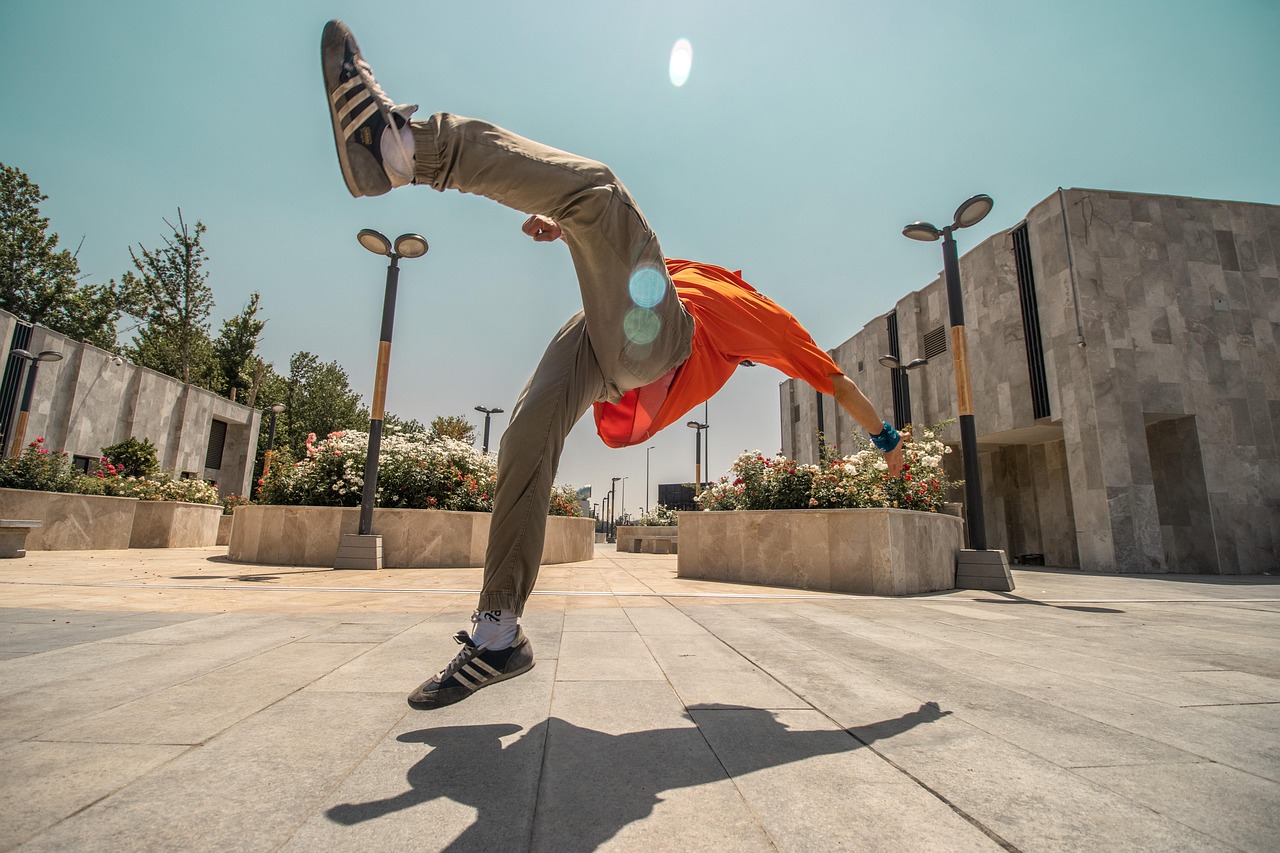

Full-Body Parkour Workout Routine for Maximum Performance
Parkour is an exhilarating form of movement that combines skill, agility, and strength. Engaging in parkour workouts enhances physical prowess and boosts overall fitness. When considering a full-body parkour workout routine, it’s important to approach each session with a plan. Focus on key areas such as strength, endurance, and agility for optimal results. Start with a warm-up to prepare your body. Include dynamic stretches that target major muscle groups. For instance, try leg swings, arm circles, and torso twists. A balanced routine allows for quicker recovery time and better performance during your sessions. After warming up, set aside ample time for conditioning exercises. Bodyweight movements, such as push-ups, pull-ups, and dips, build upper body strength crucial for various parkour movements. Incorporate lower body exercises, such as squats and lunges, to improve your jumping and landing capabilities. Don’t forget core workouts, like planks and mountain climbers, as they provide stability and strength during vaults and flips. With consistency, you will see significant improvements and experience the thrill of mastering parkour even more.
Next, let’s discuss essential skills you’ll need to master your parkour workout routine. Precision landing, rolling techniques, and the ability to vault are foundational skills in parkour. To improve these abilities, incorporate drills into your warm-up. For example, practice precision jumps on various surfaces, varying distances to build confidence and accuracy. Rolling techniques allow for effective energy absorption upon landing; this helps minimize the impact on your joints, preventing injuries. Start with a basic shoulder roll to learn the correct form, ensuring you are rolling diagonally across your back. As you progress, practice rolling on harder surfaces to adapt to real situations. Vaulting skills are critical for overcoming obstacles. Begin practicing basic vaults such as the safety vault. Gradually increase the complexity of vaults as you enhance your technique. Incorporating agility ladder drills enhances speed while training to vault over obstacles. These drills also develop footwork patterns essential for fluid transitions between movements. Regular practice of these core skills not only reinforces strength but also contributes to increasing your confidence during parkour workouts, pushing you to try new and exciting challenges.
Building Strength and Endurance
In your parkour workout routine, building strength and endurance is paramount. Specific exercises play a crucial role in achieving this. Focus on a combination of strength and conditioning workouts that effectively enhance muscle performance. Include circuit training sessions for optimal results, featuring compound lifts and bodyweight exercises. Aim for 3-4 rounds of 5-8 exercises such as burpees, squat jumps, and box jumps. These compound movements target multiple muscle groups, ensuring an enhanced overall strength. Progressing from basic to advanced options enables continuous challenge and adaptation, which is necessary for growth. Similarly, for endurance, incorporate long-distance running or interval training sessions 2-3 times per week. The goal here is to develop cardiovascular fitness that supports sustained efforts during more demanding parkour sequences. Additionally, integrating plyometric exercises elevates heart rate and builds explosive strength. Methods like jump squats and split jumps prepare your muscles for dynamic movements associated with parkour. Elevate your training with focused Core workouts, reinforcing the stability necessary for achieving fluid motion during complex parkour moves while aiding your recovery and preventing injuries.
It’s also crucial to integrate flexibility training within your full-body parkour workout routine. Enhanced flexibility aids in executing various movements proficiently, thereby improving your overall performance. Aim to dedicate time for flexibility work at least three times weekly. Focus on major muscle groups such as hip flexors, hamstrings, quads, and shoulders. Utilize dynamic stretches identified earlier during your warm-up and static stretches post-workout. Alternatively, incorporating yoga sessions improves your balance and control while enhancing your flexibility. Poses such as the pigeon pose target your hips, aiding in better mobility required for parkour maneuvers. Splits and lunges also offer deep muscle stretches, progressing your ability to perform complex movements. Stretching not only enhances flexibility but reduces muscle stiffness. Remember to breathe steadily during stretches, maintaining a relaxed state. Always listen to your body; if you feel pain while stretching, modify the position or ease up. Consistency in flexibility training enhances your range of motion, enabling you to perform parkour movements with confidence. Consequently, you become more agile, efficient, and formidable in overcoming obstacles.
Incorporating Skills Training
Incorporating skills training into your parkour workout routine will augment your overall performance tremendously. Skills such as wall runs, cat leaps, and precision jumps are vital to building your repertoire. Start with wall runs, a fantastic exercise for gaining vertical height and improving your explosiveness. Begin by running towards a vertical wall and use one foot to push off, propelling yourself upwards. Initially, practice this movement at lower heights, gradually increasing the challenge as you gain confidence in your technique. Precision jumps allow for improved control and distance management when overcoming obstacles. Set two markers of varying distances and practice jumping from one to the other, emphasizing landing softly and accurately. Another essential skill, the cat leap, involves jumping towards an obstacle, gripping it with your hands. Progressively practice this on different heights to enhance grip strength and confidence. Ensure you have a soft landing surface when starting out to minimize the risk of injury. Combining skills training with strength sessions creates well-rounded performers adept in both technique and athleticism essential for parkour success.
Recovery plays an integral role in any workout routine, especially in demanding disciplines like parkour. Implementing recovery strategies fosters muscle repair and minimizes fatigue, preparing you for your future workouts. Start by prioritizing sleep; aim for at least 7-9 hours per night which is crucial in supporting your body in recovery. Incorporate active recovery days into your weekly cycle; engage in light exercises such as walking, swimming, or gentle yoga to keep the blood flowing while promoting healing. Post-workout nutrition is equally important. Delivering adequate protein and carbohydrates post-training helps replenish depleted energy and rebuild muscle. Consider nutritious meal options rich in protein like chicken, fish, and legumes. Additionally, hydration is critical. Ensure that you are drinking enough water throughout the day to maintain optimal performance and recovery. Consider supplementing with electrolytes after intense workouts particularly in warmer conditions. Listening to your body is essential; if you begin to feel fatigued or experience muscle soreness, take the necessary rest to avoid injury. Adopting a proactive approach to recovery allows you to maximize your workout gains while promoting longevity in your parkour practice.
Consistency and Goal Setting
Establishing consistency along with effective goal setting guarantees long-term gains in your parkour workout routine. Create a structured schedule prioritizing workouts while allowing time for recovery. Consistency is key; aim for 3-5 training sessions weekly, mixing various aspects of strength, skills, and conditioning workouts. Track your progression by logging workout details. Incorporate a journal or a fitness app to maintain a record of completed workouts, noting improvements in agility, strength, and endurance. Setting realistic and achievable goals also provides motivation. Consider short-term goals relating to skill acquisition or fitness benchmarks. Additionally, create long-term goals that inspire you to surpass your limits. Not only does proper goal setting offer direction to your training efforts, but it also cultivates a sense of accomplishment upon reaching them. Celebrate your milestones to keep yourself motivated. Engage with fellow parkour enthusiasts through social media or local communities for support and accountability. Surround yourself with like-minded individuals within the parkour scene, helping you persist through challenges and encouraging personal growth. A strong community fosters learning, sharing techniques, and inspiring each other to reach new heights.
In conclusion, embracing a structured full-body parkour workout routine accelerates your journey towards mastering this dynamic discipline. Focus on improving strength, endurance, and flexibility through carefully selected exercises tailored for parkour. Reinforce your skills with consistency and goal setting to overcome obstacles confidently. Don’t forget to incorporate essential recovery strategies, ensuring your body can perform at its best. Continuous practice allows you to enhance your techniques, building a community with others who share similar passions. As you immerse yourself deeper into parkour, you will discover immense satisfaction through mastering new movements and improving fitness levels. Remember that progress is gradual, and embracing the journey is essential. Allocate sufficient time each week to dedicate towards honing your skills, and celebrate all achievements, big or small. Stay motivated through overcoming challenges, and never shy away from seeking help or resources to improve your techniques. The rewards of parkour are boundless; they extend beyond fitness into a lifestyle characterized by creativity and resilience. With dedication and passion, you can reach new performance peaks in the exhilarating world of parkour.