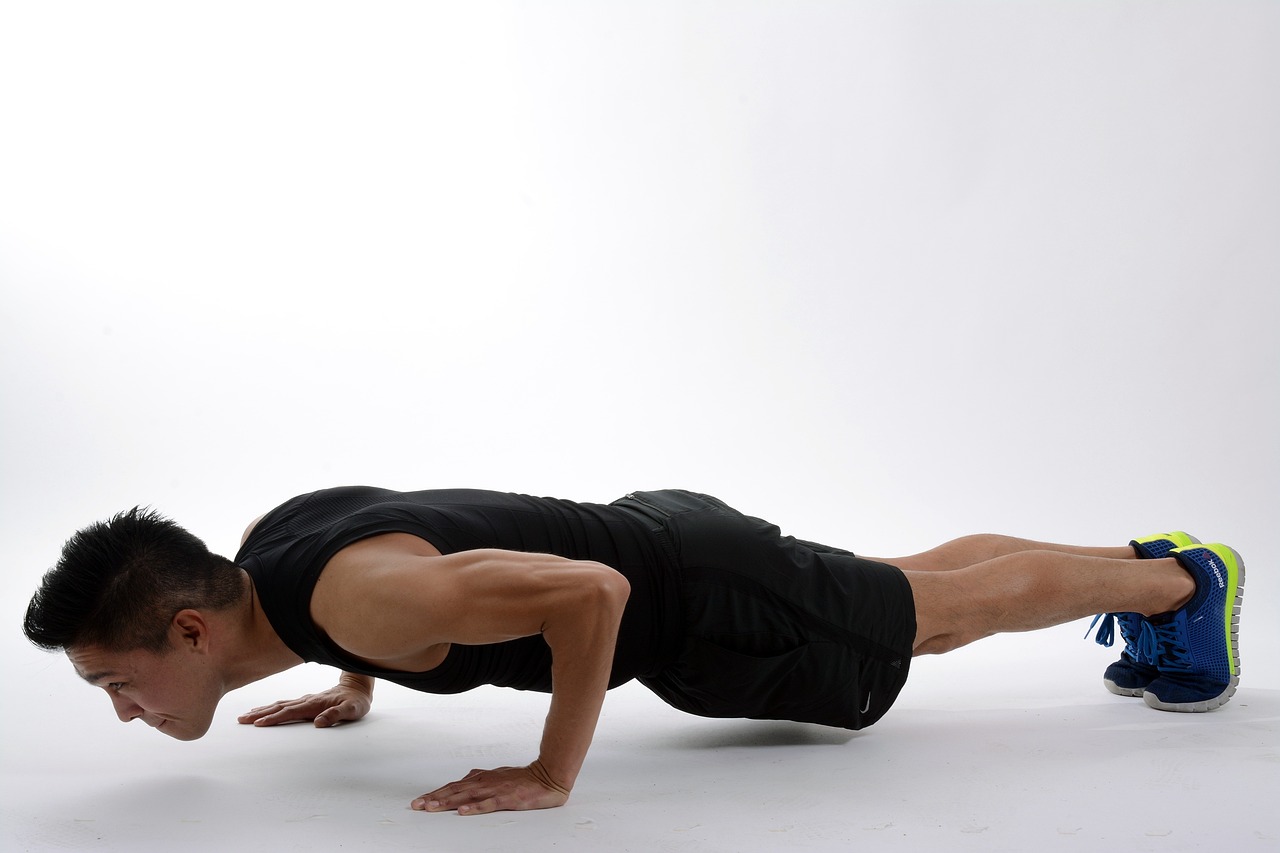

Feet-on-wall Push-ups: A New Variation
The feet-on-wall push-up is an innovative exercise that elevates traditional push-ups to new heights. By placing your feet on a wall, you shift your body into an angle that targets your chest, shoulders, and triceps differently. This variation increases the intensity compared to standard push-ups, allowing for greater muscle engagement while simultaneously enhancing core stability. To perform this exercise correctly, start by placing your feet shoulder-width apart against the wall, and positioning your hands on the ground slightly wider than shoulder-width apart. As you lower your body, maintain a straight line from your shoulders to your ankles. Not only does this movement engage your upper body muscles, but it also challenges your stability and balance significantly. In addition, this variation enables gradual progress towards more advanced exercises, including one-arm push-ups. Overall, the feet-on-wall push-up serves as an important transition for individuals aiming to enhance their strength and proficiency. Before trying it, ensure you’re comfortable with conventional push-ups and have a solid foundation of strength and technique.
Benefits of Feet-on-wall Push-ups
Incorporating feet-on-wall push-ups into your training regimen provides numerous benefits. Primarily, this exercise enhances upper body strength while also improving your core stability. As you perform the movement, your core works significantly harder to maintain proper alignment. This ensures that both your lower and upper body engage effectively throughout the movement, resulting in comprehensive strength development. Additionally, this variation allows for a greater range of motion, which can lead to increased muscle hypertrophy over time. By targeting the chest, shoulders, and triceps from a new angle, you provide your muscles with the diversity they need to grow and adapt. Furthermore, performing wall-assisted push-ups can aid in improving muscular endurance. As you gradually increase the number of repetitions, you build stamina in your upper body. This approach also helps in progressing towards more challenging variations, ultimately leading to improved overall strength. Including feet-on-wall push-ups in your workout routine can generate effective results, especially if your goal is to achieve advanced push-up variations in a safe and controlled manner.
Before attempting feet-on-wall push-ups, practicing proper form for standard push-ups is critical. Master the basic push-up technique, ensuring that your body remains in a straight line from head to heels. Focus on engaging your core while lowering and pushing your body away from the ground. Additionally, it’s vital to keep your elbows slightly tucked in rather than flaring them out excessively. Once you feel confident with the standard push-up, gradually introduce the feet-on-wall variation. Start with your feet positioned at a comfortable height on the wall, adjusting until you find a balance that feels manageable. This gradual progression will help minimize the risk of injury while allowing your body to adapt to the increased difficulty. Listen to your body, and if you experience discomfort, ensure you adjust your position accordingly. Ensure to maintain controlled breathing throughout the movement to deliver optimal benefits. Being patient and allowing time for skill development is essential to successfully implement this exercise into your routine.
How to Incorporate Feet-on-wall Push-ups into Your Workout
Integrating feet-on-wall push-ups into your existing workout regimen can be straightforward and effective. Consider incorporating them into your upper body or full-body workouts for optimal results. Starting with three sets of 8-12 repetitions provides an excellent balance for strength training while allowing your muscles to adapt sufficiently. Make sure to include warm-ups involving dynamic stretches and movements relevant to your upper body to ensure you’re prepared for the added intensity. Consider supersetting feet-on-wall push-ups with complementary exercises targeting your core or back, such as planks or rows, to diversify muscle engagement. Side planks or seated rows can help enhance core engagement and support muscle development in tandem with push-ups. For more advanced users, experiment with varying the placement of your feet against the wall. Elevating them higher or lowering them closer to the ground creates different resistance levels. You may also include this variation in circuits, helping to improve endurance and overall athleticism.
Aside from physical benefits, adding feet-on-wall push-ups to your exercises can provide psychological advantages as well. As you master this push-up variation, you will experience a sense of accomplishment, boosting your confidence. Setting achievable goals, such as increasing the number of repetitions, can greatly enhance your motivation levels. Focusing on progression helps keep your workouts fresh and exciting, making it easier to stick with your routine. Challenge yourself with various forms of push-ups and track your progress to maintain motivation. The key is consistency; a routine devoted to exercising will yield results over time. Therefore, create a workout schedule that allows you to incorporate feet-on-wall push-ups regularly. Remember to celebrate your progress, no matter how small, as each step contributes to your overall fitness journey. Engaging with workout communities or sharing your achievements with others can provide additional motivation to push through challenges while celebrating every victory, big or small.
Common Mistakes to Avoid
While performing feet-on-wall push-ups, it’s essential to be aware of common mistakes that can hinder your progress or lead to injury. One common issue is misalignment of the body. Make sure to maintain a straight line from head to heels in order to effectively engage your core and upper body muscles. Allowing your hips to sag or rise excessively compromises form and can lead to discomfort in your lower back. Additionally, another common error involves improper hand placement. Ensure your hands are placed slightly wider than shoulder-width apart for proper muscle engagement. Avoid flaring the elbows out too much, as this can lead to shoulder strain. Pay attention to your breathing, as forgetting to breathe can reduce your performance. Exhale while pushing your body up and inhale as you lower it. Lastly, don’t rush through the repetitions; maintain control during each movement. Focus on quality rather than quantity to experience the full benefits of this exercise. Being mindful of these common mistakes can ultimately contribute to safer and more effective training experiences.
In conclusion, feet-on-wall push-ups serve as a formidable addition to any calisthenics routine, providing a new challenge that fosters strength and stability. By shifting your body position and utilizing your core, this variation empowers individuals to progress toward more advanced push-up variations. As you build confidence and strength, don’t hesitate to increase the intensity by adjusting the height of your feet or incorporating varied repetitions. Integrating feet-on-wall push-ups into your workouts can significantly improve upper body strength while boosting core engagement. Remember the importance of proper form and technique to maximize the benefits of this exercise. Alongside maintaining enthusiasm and motivation, this push-up variation can enhance your existing workout routine. Embrace the process of gradual improvement, and celebrate each accomplishment, no matter how minimal. With time, commitment, and consistent practice, you will undoubtedly notice improvements not only in push-up performance but also across your overall fitness journey.