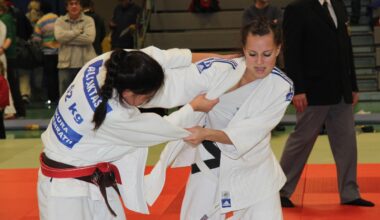

Kuzushi: The Art of Unbalancing Your Opponent
Kuzushi, pronounced as “koo-zoo-shee,” is essential for success in judo. It refers to the technique of unbalancing an opponent, creating opportunities for throws or takedowns. Understanding kuzushi requires discipline and practice, as it demands both physical and mental strategies. The art of unbalancing hinges on timing, angles, and body positioning. By skillfully using these elements, judokas can lead their opponents into vulnerable situations. Effective kuzushi involves not just the act of pulling or pushing; it requires sensing the opponent’s weight distribution and shifting it to create instability. This understanding transforms how practitioners approach judo. Recognizing these delicate balances can enhance a judoka’s effectiveness in competitions and practice alike. Importantly, kuzushi is an integral part of judo philosophy, emphasizing the idea that strength alone does not determine success. Rather, technique and understanding of one’s opponent play pivotal roles. Developing kuzushi skills is fundamental for judokas of all levels, from beginners to advanced competitors looking to refine their technique. By focusing on kuzushi, you’re not only improving your throwing techniques but also acquiring a deeper appreciation for judo itself.
To master kuzushi, judokas must first learn how to apply it effectively in various scenarios. Timing is key; practitioners must wait for the opportune moment to apply pressure or create an opening. Masters often teach their students about the two types of kuzushi: physical and psychological. Physical kuzushi involves manipulating the opponent’s body position through forceful connection, while psychological kuzushi focuses on the mental aspect, tricking the opponent into expecting a different move. As students progress, they should practice drills that enhance their kuzushi techniques alongside their foundational skills, such asŕ footwork, gripping, and movement. These drills should not solely concentrate on upper body movements, but also involve entire-body coordination. To achieve this, judokas can engage in activities that promote balance and agility. Incorporate balance exercises, partner drills, and situational sparring, to apply kuzushi in real-time situations. By combining these exercises, students develop their ability to unbalance opponents effectively. Additionally, understanding how kuzushi applies to different grips and stance variations allows for a more versatile toolkit. Thus, each judoka should continuously examine their approaches, refining their techniques on the mat to achieve success in any match.
The Importance of Timing in Kuzushi
Timing plays an instrumental role in mastering kuzushi. It involves both the judoka’s and the opponent’s movements. A skilled practitioner anticipates the moment when the opponent is off-balance, utilizing their momentum to create an effective throw. Recognizing a window for kuzushi requires keen observation. Training often includes sparring, where timing can be practiced in real matches. Practitioners explore how the opponent reacts and what movements create instability. Personalizing timing during practice sessions fosters a deeper understanding of each technique. A common drill involves practicing with a partner to gauge responses. Gradually, judokas build their reactions to developments in training. These timely responses turn into instinctual actions during competitions. Furthermore, training various techniques emphasizes each judoka’s unique timing. Learning how to synchronize movements with an opponent is crucial, as this leads to seamless execution of throws. Gaining proficiency in timing not only improves kuzushi application but enhances overall judo skills. Therefore, evaluating personal timing and practicing consistently can yield significant results. The goal is to synergize all aspects of judo techniques harmoniously and develop expertise within the sport.
Practicing kuzushi isn’t limited to just sparring; it can also be explored through solo drills. These drills enhance body awareness, coordination, and balance. Individuals can employ footwork exercises that simulate movements encountered during a match. By emphasizing the shifting of weight and balance as they move, practitioners can imitate the sensations experienced while employing kuzushi techniques. Examining how the body moves helps in understanding and implementing kuzushi more effectively. Solo training might include using mats or boundaries to mark correct stances and body movements. Furthermore, various exercises can strengthen lower body muscles, crucial for executing kuzushi and achieving effective balance. Incorporating these practices into regular training sessions prepares judokas for competition. Additionally, video analysis serves as a valuable tool to identify areas for improvement. Watching techniques in real-time or analyzing your matches provides insight into timing and effectiveness. This holistic approach fosters awareness of how kuzushi integrates with the entire judo technique arsenal. As practitioners refine their movements over time through deliberate practice and reflection, they not only unlock kuzushi’s potential but also embrace the underlying principles of judo itself.
Applying Kuzushi in Competition
During competitions, the ability to apply kuzushi effectively can be decisive in securing victory. Opponents quickly assess each other’s movements, searching for signs of imbalance to exploit. A judoka’s success hinges on remaining calm and confident while assessing their opponent’s stance and techniques. Applying kuzushi should be instinctual, allowing practitioners to react swiftly to opponent’s shifts. Competitors often start by employing their favorite techniques, integrating kuzushi to off-balance their opponents during set-ups. Consistent practice ensures that application comes naturally during bouts. Moreover, a judoka’s understanding of various kuzushi strategies enhances adaptability in different situations. Registered technique catalogues serve as mental reference points for quick decision-making in competitions. Vigilance among opponents means that any successful kuzushi application can quickly lead to a throw. Thus, continuous practice improves responsiveness and builds confidence. While the goal is to execute techniques flawlessly, anticipating an opponent’s action and properly timing kuzushi becomes equally important. A confident judoka can readily unbalance opponents while remaining balanced themselves. In doing so, they not only exhibit superior technique but adeptly showcase the art of judo.
Furthermore, emotional readiness is essential in applying kuzushi during matches. Practitioners should cultivate a strong, positive mindset, free of distractions. When competitors are focused and composed, their reactions become sharper and more precise. It aids in reading the opponent’s movements, determining whether they are vulnerable enough for a throw. The psychological aspect is integral to judo. More advanced techniques in kuzushi often involve misdirection and feints. A judoka might feign an attack to draw reactions, inducing an opponent to become off-balance. This mental game demands heightened awareness. Practitioners can incorporate visualization techniques during preparations, envisioning how kuzushi will unfold in specific scenarios. These mental strategies prepare for high-pressure situations and allow judokas to maintain composure. The ultimate goal is to create moments that allow for a successful throw. A calm disposition combined with solid kuzushi techniques can turn the tide in competition. Therefore, aspiring judokas must remember the importance of remaining mentally engaged while refining their kuzushi skills, cultivating both physical and mental agility to excel in judo.
Mastering Kuzushi Through Continuous Learning
To truly master kuzushi, knowledge must be complemented by practical experience. Continuous learning plays a vital role in improving skills over time. As practitioners explore advanced techniques and strategies, attending seminars, workshops, or training camps enhances their understanding of judo. Experts often share insights that broaden one’s perspective of kuzushi. Engaging in discussions with other judokas allows opportunity for sharing experiences and troubleshooting difficulties. Additionally, studying lineage and history strengthens the understanding of foundational principles. Many classic techniques utilize kuzushi effectively, inspiring judokas to expand their repertoire. Engaging with the community fosters learning from peer experiences, continuously fine-tuning your application. Regular feedback from coaches is essential too; they help assess performance and guide improvements. Encouragement to evolve techniques ensures practitioners embrace growth. Moreover, judo enthusiasts may explore different styles or techniques, adding layers of versatility to their skillsets. All these explorations enhance the application of kuzushi in various situations. Importantly, practitioners should adopt a growth mindset, encouraging personal progress as their understanding deepens. Continuous learning shapes each judoka’s journey, where every class presents an opportunity to learn, refine skills, and embody the spirit of judo.
In conclusion, kuzushi stands as a fundamental component of judo that emphasizes the importance of balance, timing, and technique. Mastery of kuzushi opens doors for judokas to unlock their true potential on the mat. The principles of unbalancing an opponent intertwine with advanced techniques, inviting practitioners to tap into their creative energies. By remaining committed to consistent practice, judokas gain invaluable insights into their bodies and opponents. Each class and competitive experience enhances proficiency, ensuring that practitioners are able to unbalance their opponents instinctively. Furthermore, the journey of mastering kuzushi is a continual process, blending both physical and mental capacities that sustain lifelong growth in judo. Over time, the understanding of each art form becomes intricately connected with a practitioner’s personal journey, while fostering camaraderie among others in the judo community. As you develop your skills through every practice session, remember the deeper philosophy and spirit that judo embodies. Ultimately, embodying the principles of kuzushi will not just shape your judo journey but elevate your experience in martial arts as a whole, fostering a deeper appreciation for this unique form of self-discipline.