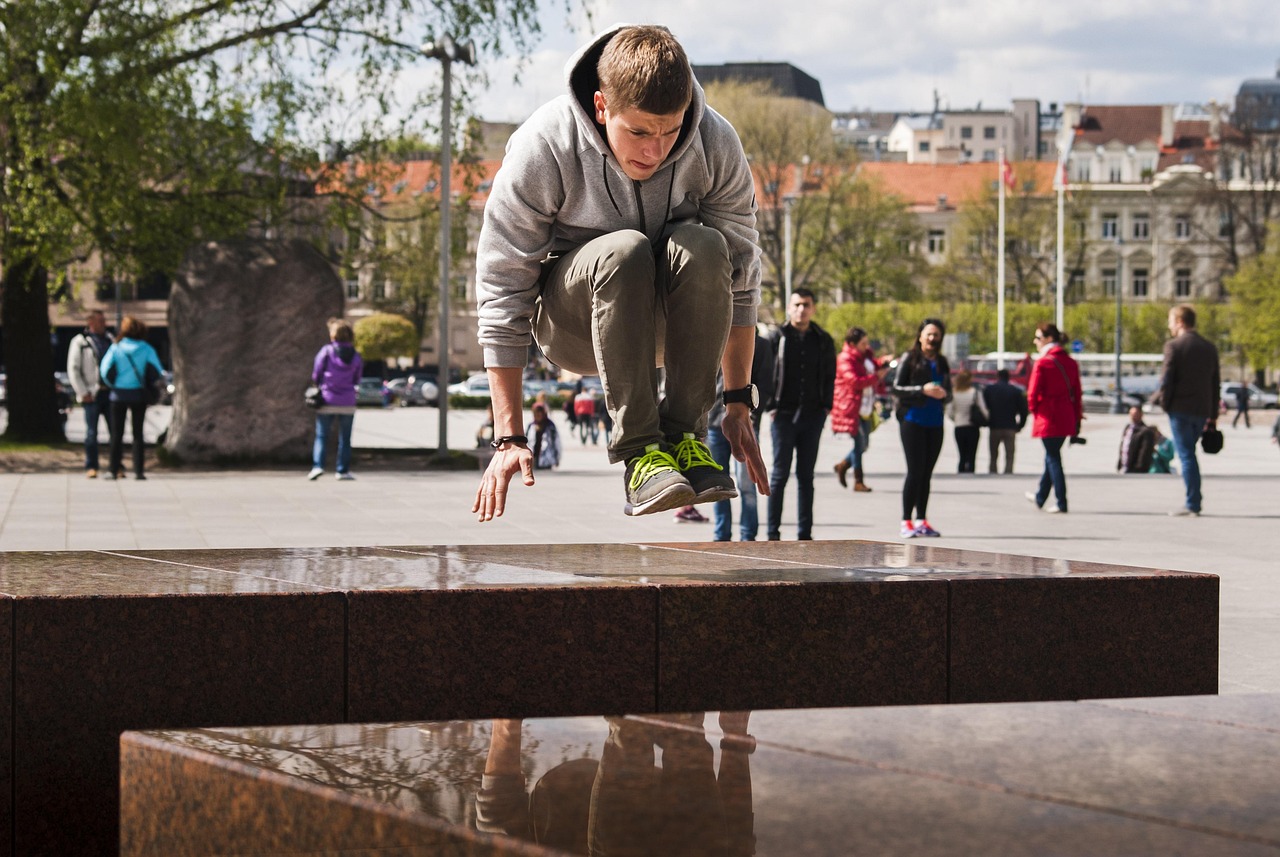

Incorporating Wall Runs into Your Parkour Routine
In the world of parkour and freerunning, wall runs are vital skills that can significantly enhance your movement and performance. These maneuvers allow practitioners to traverse vertical surfaces with agility and style, providing a unique way to navigate urban environments. To effectively incorporate wall runs into your training regime, first, familiarize yourself with the basics of the technique. This involves understanding your body mechanics and the proper foot placement required for executing a successful wall run. Ideally, practice on a soft surface, like grass or a padded floor, to minimize injuries while you learn. Start by establishing a strong starting position, and focus on generating the necessary speed before making contact with the wall. The angle of your approach is crucial for a successful execution. Once you master these initial skills, look to integrate wall runs into your obstacle courses. This process not only builds your confidence but also improves your ability to flow seamlessly between different movements while maintaining your speed. Remember, consistency and practice are key to mastering wall runs, and with time, your agility will surely elevate your overall parkour skills.
Second, understanding your physical conditioning plays an essential role in performing wall runs effectively. Strengthened legs and core muscles provide the necessary power and stability for these maneuvers. Implement a training routine focused on lower body strength exercises, such as squats, lunges, and calf raises. Additionally, incorporating plyometric workouts can improve your explosion and reaction time, essential attributes for executing dynamic wall runs. Focus on exercises like box jumps, burpees, and depth jumps to develop the explosive power needed for your runs. Furthermore, integrating balance and flexibility workouts like yoga or dynamic stretching can significantly enhance your agility and movement fluidity. Improved flexibility helps you adapt to varying surfaces and angles during wall runs. To ensure safety, also include injury prevention strategies in your training, such as comprehensive warm-up exercises and cooldown routines. Always listen to your body and be mindful of any discomfort during practice. This careful attention to conditioning and preparation will only improve the efficiency of your wall runs. Consistency in these workouts will lead to higher performance capabilities, allowing you to execute complex elements of parkour with confidence.
Building Momentum for Wall Runs
Creating momentum is fundamental for successfully executing wall runs. A strong, forward-moving momentum allows your body to connect efficiently with the vertical surface, increasing your chances of making it smoothly. To build this momentum, practice running toward the wall at a controlled speed. Before initiating the wall run, focus on your stride length and speed. The faster and more dynamically you approach the wall, the greater your success in executing the technique. As you make contact with the wall, push off with your foot while keeping your body aligned to gain further height or distance. This combination of speed and technique is particularly effective in urban settings, where obstacles often require precise and quick movements. Furthermore, experimenting with different wall heights may also enhance your adaptability when practicing wall runs. Start with a wall that matches your comfort level, then incrementally introduce more challenging heights as your skills improve. Finally, don’t forget to practice your landing technique, as it is just as essential for a successful wall run as the ascent. A soft, controlled landing will help you maintain flow and minimize risk of injury.
Moreover, wall runs are not just about height; they also include lateral movements that extend your parkour capabilities. By incorporating side wall runs into your training, you expand your repertoire of techniques, enabling more versatile navigation through urban landscapes. Start with basic lateral wall movements to familiarize yourself with the technique. Stand close to a wall, take a few running steps, and push off the wall with your side foot, using your arms for momentum and balance. At first, focus on your foot placement and body alignment, maintaining a controlled motion as you practice. Gradually increase the wall height as you become comfortable with your lateral motion. These lateral wall runs will help you learn the importance of body angles and directional changes as needed in freerunning scenarios. Experimenting with lateral combinations will further enhance your versatility, as they create exciting possibilities for transitioning between moves. As you grow more adept, include these lateral runs in your sequences. With practice, this incorporation will add flair to your technique, showcasing your dynamic abilities as a parkour artist.
Diversifying Your Movement Patterns
Incorporating wall runs in your parkour training is an opportunity to execute diverse movement patterns that enhance both skill and style. By fusing wall runs with other techniques, you create fluid combinations that can define your personal style. One effective strategy is to practice transitioning smoothly from a wall run into flips or rolls. This integration enables you to maintain momentum while utilizing the height gained from the wall run effectively. Select a comfortable height, approach at a steady pace, and execute the wall run before transitioning into a flip or a roll to complete your move. Another great combination is using wall runs preceding jumps over gaps or obstacles, allowing for added flair in your sequences. Consider propelling yourself off the wall to clear a gap or prepare for landing on a lower surface with a clean transition. As you increase your skill level, focus on incorporating various styles, such as twists or spins, into these movements. Creativity in executing wall runs will keep your training fresh and engaging, helping you stand out as a parkour practitioner.
Finally, mastering wall runs should be accompanied by careful consideration of safety measures to prevent injuries. Understanding your physical limits allows you to avoid pushing yourself beyond what is sustainable. Always begin your sessions with dynamic warm-ups to prepare your muscles effectively for intense training. Additionally, consider wearing appropriate gear, such as supportive shoes and padded clothing, during practice sessions. The surfaces on which you train also matter; choose areas that minimize impact, lowering injury risks. While practicing, focus on landing techniques that absorb shock, such as rolling after impacts. Constantly evaluate your training to ensure correct methods and maintain a keen awareness of your surroundings and surfaces. This mindfulness can help you adapt quickly if anything unexpected arises during training. Seek feedback from experienced parkour practitioners or join communities to share tips and advice on safety. Ultimately, a combination of skillful execution and safety awareness will contribute significantly to your parkour journey. With persistence, you will develop into a proficient practitioner who skillfully incorporates wall runs into your repertoire, enjoying both the freedom and excitement of the sport.
In conclusion, incorporating wall runs into your parkour routine is an exhilarating way to enhance your skills and movement repertoire. By mastering this essential technique, you open new avenues for challenging yourself, thereby increasing your overall performance and agility. As you practice wall runs, remember to develop a solid foundation of strength, flexibility, and endurance, which are vital for executing these dynamic moves. Ultimately, wall runs can transform your navigation of urban landscapes into an art form, showcasing your creativity and agility. Stay consistent with your practice, embrace the learning process, and gradually build upon your skills. This approach will not only increase your confidence in performing wall runs but also positively influence other aspects of your parkour training. Celebrate your successes and keep challenging yourself to combine wall runs with unique transitions and movements to build your personal style. Engaging with a parkour community may provide valuable insights and inspiration to push you forward. As your journey unfolds, remain dedicated to continuous growth and embrace the thrill of exploring new challenges within the world of parkour. Your journey into incorporating wall runs will undoubtedly enrich your experience and skills.