
Footwork Patterns Every Kickboxer Should Know
Effective footwork is the foundation of kickboxing, enabling fighters to maintain balance, evade strikes, and land powerful blows. A strong understanding of footwork patterns greatly enhances a kickboxer’s ability to move fluidly around the ring. By mastering the essential stances and footwork, one can significantly improve performance during sparring sessions and competitions. Keeping your weight balanced is crucial in all movements, whether advancing, retreating, or sidestepping. The right footwork patterns help maintain optimal distance from your opponent while setting up for various strikes, including kicks and punches. It is imperative to practice footwork drills diligently to develop muscle memory and increase your speed and agility. Footwork can easily determine the outcome of a match, thus understanding these patterns will give you the upper hand against an opponent. Recognizing different stances and their applications is equally crucial for every aspiring kickboxer. As you progress, you will find that the ability to swiftly change direction, adjust your stance, and time your movements creates opportunities for effective offense and defense. Remember, staying light on your feet is essential for successful kickboxing performance.
One of the most fundamental stances in kickboxing is the “Orthodox stance,” which is often adopted by right-handed fighters. In this position, the left leg is positioned forward while the right leg is back. This allows for optimal balance and power during strikes. The weight distribution is shifted slightly towards the back foot, enabling quick movements without compromising stability. On the other hand, left-handed fighters typically use the “Southpaw stance” where the right foot is forward. Understanding both stances is essential, as it enhances your adaptability in the ring. Training in both stances can aid in confusing opponents, making your attacks unpredictable. It is advisable to practice engaging in both the Orthodox and Southpaw stances regularly. Besides these primary stances, it is crucial to understand the “Squared Stance” as well, where the feet are parallel, and the body is squared towards the opponent. The squared stance provides better balance while increasing your offensive capabilities. Each stance requires practice to control foot placement and pivoting, which aid in effective movement and striking during a match. Mastery of these stances forms the groundwork of your kickboxing journey.
Footwork Techniques for Defense
Defensive footwork is an essential aspect of kickboxing, allowing your fighter to evade strikes effectively. By practicing movements like slipping, bobbing, and weaving, you can create openings for your counterattacks. Slipping involves moving your head to the side to avoid punches, while bobbing and weaving entails bending at the knees and shifting your weight to evade incoming strikes. Mastering these techniques will provide greater defensive capabilities during matches. Additionally, lateral movements—such as side-stepping—help create distance from aggressive fighters. Maintaining a low stance during these movements increases stability, crucial for executing counterstrikes. Evasion techniques can be refined through focused sparring sessions and combinations. Regularly practicing these techniques trains your reflexes and increases your overall agility. Always stay light on your feet to build the speed necessary to maneuver effectively. Drill these techniques repetitively to build muscle memory, helping you react instinctively during bouts. The ability to evade strikes effectively prevents unnecessary damage while providing opportunities for countering your opponent. Integrating these defensive strategies into your training regimen will significantly improve your footwork and overall kickboxing abilities, ensuring enhanced performance during fights.
An effective footwork pattern involves constant movement, ensuring you remain dynamic and unpredictable. The key is to maintain a slight bend in your knees and stay on the balls of your feet. This positioning allows for quick pivots and transitions between stances, essential for engaging and disengaging with your opponent. Additionally, mastering the “shuffle step” can enhance your ability to swiftly reposition yourself. The shuffle step involves moving both feet simultaneously while maintaining your stance, enabling rapid advances or retreats. Another crucial element is to practice the “pivot step,” where you pivot on your lead foot to change directions while maintaining your position. This technique can create angles for striking while remaining in a defensive position. Always focus on your angles to avoid being an easy target. Engaging in shadow boxing with an emphasis on footwork patterns helps solidify these skills. Incorporating footwork into your daily training sessions ensures you develop speed and fluidity necessary for effective kickboxing. Practicing with a partner allows you to better understand distance and timing, further enhancing your overall capabilities in the ring. Consistent practice will lead to better performance in competitive scenarios.
Staying Balanced During Movement
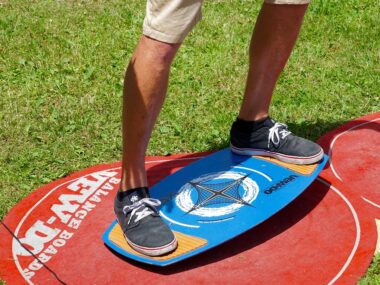
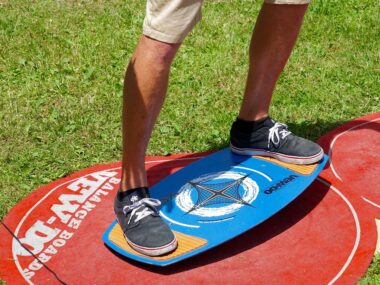
Balance is a crucial component of effective footwork in kickboxing. When transitioning between various positions, maintaining an even weight distribution ensures that you can react to your opponent’s movements. One effective practice is to engage in balance drills, such as standing on one foot or using balance boards to improve stability. These exercises help you develop core strength, contributing to better control during movements in the ring. Additionally, strengthening your lower body through specific workouts can help enhance your balance. Exercises such as lunges and squats are effective for building the necessary muscle groups that support your kickboxing performance. Furthermore, it is essential to pay attention to your breathing while working on footwork. Controlled breathing keeps your energy levels consistent and maximizes performance. This helps you stay composed, especially during intense exchanges with your opponent. Remember to focus on your foot placement while striking; a well-placed foot can impact the power of your kick significantly. Continue to train your balance regularly; maintaining proper body alignment ultimately aids in executing effective strikes and avoiding unnecessary penalties, creating a more successful kickboxing strategy.
Incorporating agility training into your kickboxing footwork regimen is vital for enhancing your overall performance. Agility ladders and cones can be effective tools for developing quick direction changes, which are essential during bouts. Implementing exercises that involve lateral hops or diagonal runs can improve responsiveness when an opponent launches an attack. Furthermore, plyometric exercises can effectively increase your speed and power, making your movements light and explosive. Consider integrating interval sprints into your training routine; they can help in conditioning your body for rapid movements during fights. These drills encourage cardiovascular fitness, ensuring you maintain peak performance levels throughout a match. Alleviating fatigue is crucial, as exhaustion can diminish your overall footwork effectiveness. Always introduce variations to your training to prevent monotony; you might want to include unique footwork patterns or celebrate small accomplishments. Collaboration with a training partner can fast-track your agility improvements, as it forces you to adapt to different fighting styles. The better you become at reading your opponent’s movements, the more effective your footwork will be. Ultimately, agility is the key to maintaining the element of surprise in any kickboxing match, ensuring you stay one step ahead of your opponent.
Conclusion on Footwork Mastery
Mastering footwork patterns is an ongoing journey essential for developing a successful kickboxing career. With continued practice and dedication to improving footwork, you’ll find yourself becoming a more complete fighter. Employing various techniques, including quick lateral movements, pivots, and angle adjustments, can significantly enhance your offensive and defensive capabilities. Moreover, understanding the nuances of both Orthodox and Southpaw stances will add versatility to your fighting style. A well-rounded kickboxer must blend footwork with striking techniques, ensuring both offensive and defensive strategies are fluid. Furthermore, focus on balance and agility, as these factors greatly influence performance during a match. Remember that the essence of kickboxing lies in fluidity; ensuring seamless transitions between movement and attack will leave lasting impressions on judges and opponents alike. Continually refine your footwork through targeted training and regular sparring. Always set both short-term and long-term goals to measure your progress. Embrace the learning curve, seek feedback, and remain open to improvement. Ultimately, dedication to footwork mastery sets the foundation for a successful kickboxing career, paving the way for future achievements in the sport.