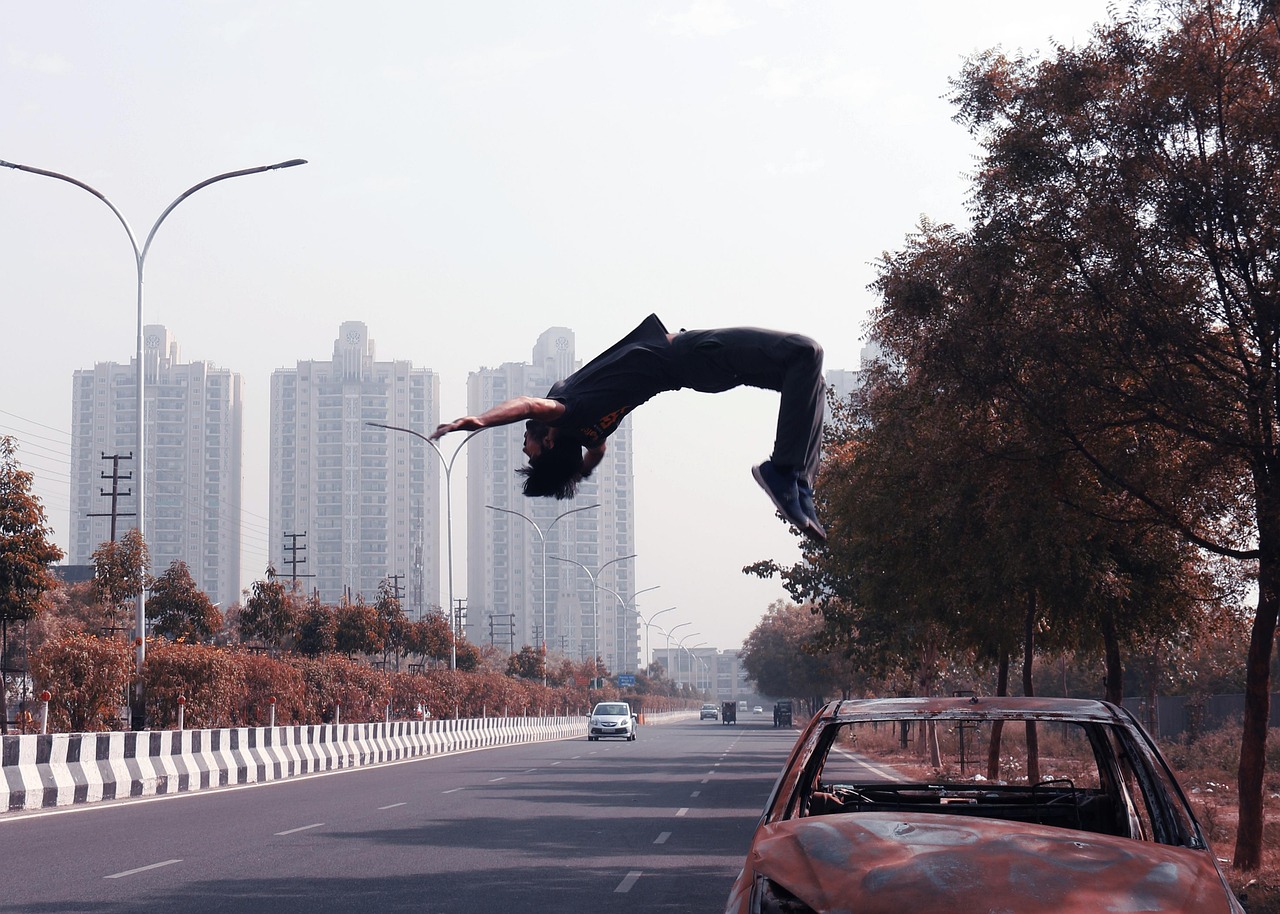

Overcoming Fear: The Mental Challenges of Parkour
Parkour is not just a physical discipline but also a profound philosophical journey. It encourages participants to confront and conquer their fears, both physically and mentally. The practice demands a unique mindset that embraces challenges, thus facilitating personal growth. In essence, parkour can be viewed as a metaphor for life. Each leap, each vault symbolizes overcoming the hurdles that life presents. However, understanding the mental challenges inherent in parkour requires introspection. This introspection often leads practitioners to explore deeper philosophical questions regarding risk, failure, and success. At its core, parkour teaches us to fall and rise again, to adapt to our environment, and to confront our limitations. For many, these lessons translate beyond parkour and significantly influence their day-to-day lives. It is about encouraging resilience and cultivating mental strength, both crucial to personal development. As individuals engage with their fears while practicing parkour, they learn that failure is an inevitable part of progress. Each misstep during training offers valuable insights, allowing practitioners to refine their techniques. Through consistent practice, fear can transform from an obstacle into a gateway for self-discovery.
In the world of parkour, fear manifests in various forms, often emerging from the unknown or unfamiliar. When faced with a daunting jump or a complex obstacle, practitioners may initially experience hesitation. This hesitance can stem from the instinctual fight-or-flight response that is hardwired into human beings. Acknowledging this fear is crucial in transforming it into motivation. With conscious effort, athletes learn to analyze these moments of doubt, utilizing them as opportunities to make calculated decisions. The deeper you engage with parkour, the more you begin to realize that every challenge is essentially a choice between fear and courage. Embracing discomfort, rather than shying away from it, becomes integral to mastering parkour. In this sense, practitioners not only develop physical prowess but are also trained in mental agility. Through repetition and experience, parkour athletes redefine their limits and discover new capabilities. This transformative journey reinforces the idea that overcoming fear equips individuals with unique coping mechanisms. As the practice progresses, what once seemed intimidating often morphs into achievable goals. With each success, participants chip away at their internal barriers and gradually build confidence, paving the way for continual growth and improvement.
The Role of Mindfulness in Parkour
A critical aspect of engaging in parkour is the element of mindfulness. This is where the physical and mental components synergistically come into play. Mindfulness teaches practitioners to be present in the moment, grounding themselves in their immediate experiences. By focusing on one movement at a time, parkour athletes learn to detach from the distractions of fear or self-doubt. This shift in focus allows for greater concentration, ultimately enhancing performance. When a practitioner is mindfully engaged, they can execute movements with precision and clarity. The connection between mind and body becomes vital during challenging runs. Enhanced body awareness gained through mindfulness quickly translates into improved decision-making skills. In this ever-changing urban landscape, athletes must stay aware of their surroundings and the implications of each action. This heightened awareness can diminish the hold fear has over them, transforming it instead into a source of excitement. As attention centers on the task at hand, the focus shifts away from fear and onto the joy of exploration. Through this approach, parkour becomes a joyful practice rather than an activity steeped in anxiety and pressure, fostering a healthier mental approach.
The nature of parkour also emphasizes the importance of community. Practicing with others creates a supportive environment where individuals can share their fears and triumphs. The strength that comes from social bonds ensures participants feel less isolated in their struggles. When practitioners collaborate, they can exchange insights and strategies on tackling challenges effectively. This collective problem-solving approach enhances the learning experience, fostering a sense of belonging. Witnessing peers overcome their fears serves as powerful motivation. It shifts the perspective from individual limitation to a shared journey in pursuit of growth. Moreover, watching others succeed encourages a belief that one’s fears can also be overcome. The significance of community is not to be underestimated. Parkour groups often foster strong friendships, adding an emotional dimension to the practice. They create a safe space to explore fears without judgment. As members cheer each other on or offer constructive feedback, confidence grows within the group. Consequently, the fear of failure lessens as practitioners know they have a support system. This camaraderie extends beyond the physical act of parkour, promoting overall mental well-being and resilience.
Practical Techniques to Manage Fear
Managing fear in parkour is a skill that can be developed through various practical techniques. One approach involves breaking down complex movements into manageable steps. By simplifying challenges, practitioners can gradually acclimate themselves to high-risk maneuvers. This lowers anxiety, allowing for incremental progress. Visualization is another prominent technique, where athletes mentally rehearse their movements before executing them. This mental practice enables individuals to familiarize themselves with the desired outcomes, creating a sense of preparedness. With repeated visualization, the anxiety surrounding fear-inducing jumps tends to dissipate, replaced by confidence. Another useful practice is recording oneself while training. Reviewing footage can provide valuable insights into one’s technique and areas for improvement. Observing oneself can demystify the fear, unveiling how achievable a task truly is when broken down. Similarly, setting realistic goals that gradually increase in difficulty allows for continuous growth. This encourages practitioners to embrace their challenges instead of retreating from them. Through disciplined reflection and open feedback, parkour enthusiasts can cultivate an environment where fear becomes a manageable factor on their journey.
Failure is an inevitable aspect of mastering parkour. Each fall presents an opportunity for growth and reinforces the reality that setbacks are part of progress. Many practitioners adopt a mindset that embraces failure as a valuable teacher. This approach fosters resilience while enhancing problem-solving capabilities. Notably, when faced with failure, the reaction to the incident often shapes an athlete’s mental state. Rather than dwelling on mistakes, a constructive analysis allows for valuable lessons to emerge. For many, the art of getting back up signifies a crucial mental battle; overcoming the urge to shy away from risks characterizes growth. In this sense, parkour practices cultivate a culture of persistence. Through practice, athletes learn to reframe their perspective on failure and mitigate the fear surrounding it. This resilience translated into everyday life strengthens mental fortitude in other pursuits. As individuals take on various challenges outside of parkour, the lessons learned serve as a foundation for approaching life’s uncertainties. With each hurdle crossed within the practice, athletes develop the confidence needed to confront fears in diverse aspects of life beyond physical challenges.
The Transformative Power of Parkour
The journey of overcoming fear through parkour is profoundly transformative. As individuals engage with their physical and mental limits, they discover strength they may not have previously realized existed. This process extends beyond physical ability; it encapsulates personal growth and emotional resilience. The philosophical dimensions of parkour encourage practitioners to confront their fears head-on instead of avoiding them, cultivating a stronger self-identity. Each successful challenge faced in training contributes to a personal narrative of courage and achievement. Parkour ultimately becomes a living philosophy, highlighting the interconnection between movement, mind, and emotion. These experiences equip individuals with skills necessary to navigate life’s complexities with greater ease. Furthermore, the lessons learned through parkour enable one to maintain balance amidst adversity. The holistic nature of practice nurtures a profound understanding of fears, illuminating paths for growth. This awareness invites practitioners to reflect on their values and aspirations, further enhancing their personal journeys. Consequently, the transformative power of parkour resonates deeply, affirming its role as a practice that not only nurtures physical ability but profoundly influences mental landscapes as well.
In conclusion, parkour emerges as a unique blend of physical activity and profound philosophical exploration. Engaging with fear through this discipline equips individuals with the tools necessary for personal transformation. The mental challenges encountered within parkour facilitate resilience and foster community connections. Embracing mindfulness and practical techniques, athletes learn to navigate their fears in constructive ways. Parkour is a journey; it offers insights into overcoming life’s hurdles and emphasizes the importance of persistence, collaboration, and joy. Each moment in practice becomes an invitation to explore and redefine boundaries. Through the experiences shared in the parkour community, practitioners gain perspectives that resonate beyond the physical act. The practice embodies a rich philosophy that empowers individuals to tackle fear head-on and evolve in their respective journeys. Ultimately, parkour encapsulates the mindset of lifelong learning, reinforcing that both physical and mental challenges can be gateways to growth and self-discovery. Those who commit to this practice ultimately find themselves embarking on a journey towards balance, harmony, and resilience in all areas of life. Each leap mirrors the journey of life, filled with uncertainties yet brimming with opportunities to rise stronger.