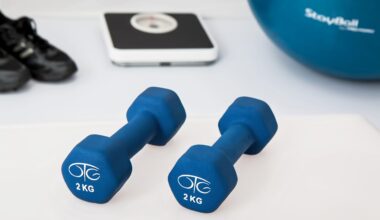

Core Workouts for Tennis Players: Stability and Power
When it comes to tennis, having a strong core is vital for both stability and power during matches. Core workouts are designed to strengthen the muscles around your abdomen, back, and pelvis, which plays a crucial role in athletic performance. By integrating specific exercises into your fitness routine, you can improve your balance and rotational strength, essential for executing powerful serves and groundstrokes. The stability gained from core workouts not only enhances your performance on the court but also helps in preventing injuries. Elements such as planks, Russian twists, and medicine ball rotations should be staples in your regimen. Aim for at least three dedicated core sessions each week to see progressive improvements. This frequency allows for muscle recovery and promotes strength development. Remember, a solid core supports efficient movement patterns that can elevate your game. In this article, we will explore a variety of core workouts that are particularly beneficial for tennis players, offering guidance on how to effectively integrate them into your training schedule, while maximizing your results and learning how to engage your core effectively in each movement.
A common misconception is that core strength only refers to the abdominal muscles. In reality, it encompasses a much broader range of muscle groups. Your core includes not just your abdominals but also the obliques, lower back, glutes, and even the muscles of the hips and pelvis. Engaging these various muscle groups in unison can significantly enhance your overall stability. Effective core workouts for tennis players should involve exercises that promote strength, balance, and coordination. Functional movements are especially beneficial, as they mimic the types of actions you’ll perform during a match. By working on dynamic stability, you’ll have better control over your body when making sudden movements or changes in direction on the court. Incorporating exercises such as bird dogs, planks with arm lifts, or side planks can help engage these different muscle groups effectively. When designing your workout routine, consider alternating these exercises and ensuring that you challenge your body in new ways. Variety will combat plateauing and keep your workouts engaging, ultimately enhancing your performance in tennis. You’ll also develop muscle memory useful for on-court situations.
Essential Core Exercises for Tennis
Here are some essential core exercises that tennis players should incorporate into their workout routines. Each exercise focuses on different aspects of core strength and stability while enhancing overall athletic performance. Start with the traditional plank, which is excellent for building stability and endurance in the core. Progressive variations include side planks and planks with leg lifts, both of which intensify the workout. Another fantastic exercise is the Russian twist, an excellent choice for building rotational strength essential for powerful groundstrokes. To perform it, sit on the ground, lean back slightly, and twist your torso while holding a weight. Medial ball slams also provide explosive power while engaging your core actively. Additionally, the medicine ball throw is effective, particularly when done with a partner. It emphasizes agility and coordination, crucial for responsive tennis play. Lastly, incorporating leg raises can target the lower abdominal region and improve hip flexor strength. It is best to choose a combination of these exercises to create a well-rounded routine that effectively targets all key areas for performance and injury prevention.
When incorporating these exercises into your fitness regimen, pay attention to your form. Proper technique will not only enhance your results but also minimize the risk of injury. Start with lower repetitions and gradually increase them as you gain strength and confidence. It’s essential to listen to your body, taking breaks or modifying exercises as necessary. Focus on controlled movements rather than speed; slow and deliberate will yield better results and engage your core more effectively. If you’re unsure of the proper form, consider consulting a fitness professional or using instructional videos. These resources can provide valuable insights into the correct techniques. Schedule these core workouts into your weekly training plan, ensuring that they complement your other tennis workouts such as strength training and on-court practice. For optimal results, consider doing core workouts at the beginning of your training sessions when your energy levels are highest. This way, you’ll be able to execute your exercises effectively, giving your muscles ample time to recover before hitting the court again.
Core Stability and Resistance Training
Utilizing resistance training can significantly enhance core stability. Exercises like squats and deadlifts challenge your core strength while targeting larger muscle groups. When executed properly, these compound movements force your core to engage, promoting stability throughout your body. Incorporating stability balls and balance boards during your core workouts adds an extra layer of challenge. These tools force your body to stabilize itself during movements, effectively activating stabilizer muscles critical for tennis. Single-leg exercises are also highly beneficial; they mimic the unilateral movements required in tennis while maximizing balance and coordination. Examples include single-leg deadlifts and step-ups, both of which activate the core and promote functional strength. Remember that incorporating heavier resistance should come with a focus on maintaining form. Use lighter weights initially while perfecting your technique. Once comfortable, progressively increase the resistance to stimulate muscle growth and stability. Moreover, consider circuit training, which seamlessly incorporates aerobic exercises with strength movements. This workout style may help you develop endurance alongside core strength, ensuring that you stay physically strong and ready on the court.
Recovering from intense core workouts is just as crucial as the workouts themselves. Adequate rest allows your muscles to repair and grow stronger. Ensure you’re incorporating proper nutrition, especially protein intake, to support muscle recovery. Hydration is equally vital in facilitating recovery and maintaining optimal performance during workouts and matches. Stretching should also be part of your post-workout routine to improve flexibility and reduce muscle soreness. Focus on stretching the entire core region and surrounding muscles for maximum benefit. Incorporating yoga into your training can also aid in both flexibility and core stability. Yoga incorporates various poses that engage the core while promoting balance and deep breathing techniques. Additionally, listen to your body when it comes to recovery. If you experience persistent soreness or fatigue, consider taking an extra rest day or performing active recovery. Focus on gentle, low-impact activities that promote blood flow without overwhelming your already taxed muscles. Remember that muscle growth happens during rest, so prioritize your recovery to enhance your core strength effectively over time.
Conclusion
In summary, cultivating a strong core is essential for every tennis player aiming to improve stability and power. Core workouts can no longer be overlooked as a simple accessory in a tennis training routine. They are vital in enhancing on-court performance while minimizing injury risks. By incorporating a diverse range of effective core exercises into your fitness regimen, you can reinforce your strength and stability essential to your game. Remember to prioritize proper techniques and focus on progressively challenging yourself. Balance your core workouts with resistance training and maintain a strong emphasis on recovery strategies. With consistent effort and commitment, you’ll notice significant improvements in your game. The stronger your core, the more control you will have over your movements, allowing for powerful and precise shots. Tennis requires agility, strength, and keen responsiveness, and a robust core sets the stage for these attributes. So grab those resistance bands and medicine balls, and prepare to elevate your performance on the court. Make core workouts an integral part of your preparation, and you’ll unlock new levels of success in your tennis journey.