
Taekwondo Footwork Basics to Enhance Your Performance
In Taekwondo, mastering footwork is crucial for improving both offense and defense. Your positioning greatly affects your ability to perform techniques effectively. Proper footwork helps in landing kicks, quickly changing direction, and evading attacks from opponents. It comprises several key principles that practitioners must understand before advancing. Some of the fundamental styles of footwork include sliding, stepping, and pivoting. Focusing on these techniques allows students to move fluidly and keep balance during training or competition. Beginners should start with simple drills that emphasize these movements, gradually incorporating more speed and complexity. A strong foundation in footwork enhances overall performance, contributing to the effectiveness of a Taekwondo practitioner’s techniques. Regular practice of these movements allows the martial artist to gain muscle memory and confidence. Physical conditioning and flexibility also play significant roles in perfecting footwork. As students progress, they’ll find that mastering footwork not only improves their own skills but allows them to predict upcoming attacks from competitors. In turn, this creates more opportunities to counter effectively, applying skills in real-time sparring scenarios and enhancing overall effectiveness.
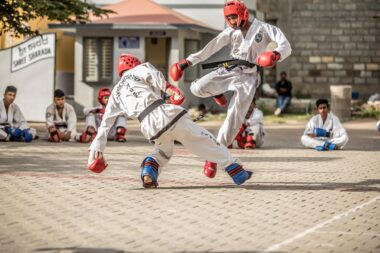
Footwork techniques in Taekwondo can be categorized into various types, each serving a different purpose. Among the most common techniques are the “step” and the “slide.” The step entails a precise lift of your foot, allowing you to cover ground quickly. The slide, on the other hand, is when you move both feet in a fluid manner, keeping your body low and maintaining balance. Proper posture during these movements is essential for maintaining stability. Another important technique is the pivot. Pivotal footwork enables fighters to quickly change directions while keeping their opponents confused. Practicing these footwork variations during sparring helps students understand how to implement them effectively. Focus on drills that integrate multiple techniques at once. For example, after a kick, landing firmly and executing a pivot can create a defensive stance. Likewise, engaging in footwork drills should not solely be limited to practice. Athletes should also analyze how professional fighters utilize footwork during matches, learning from real-world examples. This blend of training and observation prepares students for practical applications, enhancing agility and responsiveness.
Importance of Footwork in Taekwondo
Footwork plays a pivotal role in Taekwondo as it enhances both attack and defense strategies. It allows practitioners to maintain optimal distance, ensuring their safety while creating openings to strike. Effective footwork enables students to control the distance from their opponent, maximizing the potential for successful kicks or counters. Keeping a balanced stance ensures that martial artists can defend effectively against incoming attacks while remaining ready to counter. Furthermore, developing a keen sense of timing is critical in Taekwondo. Understanding when to move forward or backward, or side to side, can dictate the outcome of a match. This is why footwork drills are integral to any Taekwondo training program. They not only instill muscle memory but also improve the fighter’s instinctive reactions. Footwork is not merely about movement; it’s about establishing a rhythm and flow within the match. Practitioners should always be aware of their positioning as it significantly influences their techniques. Enhanced footwork translates into better performance, allowing students to evolve and sharpen their skills in competitive environments effectively.
Basic footwork drills are essential for building a strong foundation in Taekwondo. Incorporate simple exercises such as shadow fighting, step drills, and partner drills to build agility and precision in movement. Start with shadow fighting, which involves practicing footwork without a partner. This helps students visualize their movements and improve technique without distractions. Step drills, where martial artists practice advancing and retreating in a controlled manner, reinforce proper form and balance. Partner drills facilitate real-time adjustments, ensuring students develop a natural feel for movement. Challenge partners by varying the pace of movements, simulating real fight conditions. Additionally, focus on your breathing during drills. Synchronizing breath with movement maximizes performance and concentration. Recording footwork practice sessions allows practitioners to analyze their movements and track progress. Filming can reveal strengths and weaknesses, encouraging focus on areas needing improvement. As students advance their footwork skills, they’ll discover a tangible boost in their sparring abilities. Critical footwork practice, accompanied by consistent training, can result in a decisive advantage in competitive settings and enhance overall skill level.
Developing Quick Feet for Taekwondo
Another crucial aspect of Taekwondo footwork is speed. Quick feet can make a noticeable difference in executing techniques and dodging attacks. To develop rapid foot speed, incorporate various agility drills into training sessions. Using ladders, cones, and hurdles encourages rapid foot movement, improving quickness and coordination. Plyometric exercises, such as box jumps and burpees, also help in building explosive power and speed. Consistent training creates a muscle memory effect that translates into quicker responses during a match. Practitioners should incorporate sprinting exercises to enhance cardiovascular fitness as well. Combine longer sprints with shorter, high-intensity bursts for an effective workout regimen. Focus on mobility through stretching exercises as well, ensuring full range of motion during footwork. Flexibility keeps the joints loose, vital for maintaining speed without risking injury. Proper footwear will support footwork performance, leading to better results overall. Be sure to select shoes specifically designed for martial arts, as this enhances grip and stability. The convergence of speed, coordination, and flexibility ultimately defines the competency of footwork in Taekwondo, allowing practitioners to perform efficiently and adaptively.
As you refine your footwork, it becomes essential to connect it with other techniques in Taekwondo. Coordination between footwork and strikes enhances performance, creating seamless transitions between actions. When executing kicks, your foot placement and movement speed should align effectively for optimal results. This means that the foot that kicks needs to return quickly to its stance to defend against a counterattack. Practice combining footwork with various kick techniques, such as roundhouse kicks or front kicks, to maximize effectiveness. Incorporating footwork in drills enables practitioners to experience this dynamic harmony firsthand. For instance, practice moving in different directions while performing kicks; this will promote instinctual responses during sparring. Furthermore, it is important to remember that footwork can extend one’s reach in striking. Proper distance management can ensure effective strikes while maintaining a safe distance from opponents. Assessing an opponent’s distance visually helps adapt footwork strategies accordingly. The combination of footwork with other Taekwondo techniques allows for a more adaptable and harder-to-predict fighting style. As skills improve, confidence will also rise, inspiring Taekwondo practitioners to excel in their martial arts journey.
Conclusion: The Impact of Footwork
In conclusion, mastering footwork in Taekwondo is immensely significant for success in the sport. These fundamentals not only enhance performance but also provide survival techniques during sparring sessions. With consistently practiced footwork, students become adept at changing stances, moving strategically, and executing techniques efficiently. An emphasis on agility, speed, and precision defines a martial artist’s overall capabilities. Continued practice of footwork must be a priority for practitioners eager to improve their skills. Coaches and instructors can support this progress through tailored training programs focusing on these essential elements. Additionally, learning from experienced fighters can provide insights into situational footwork applications, adding depth to one’s understanding. This journey of footwork refinement leads to an increased awareness of a fighter’s environment and the ability to adapt during competition. Students should remember that footwork is an ongoing process and is likely to evolve as skills develop. Striving for better footwork will ultimately build a martial artist’s confidence and competitive edge. As such, it is a foundational element for any Taekwondo practitioner aiming for excellence in their overall performance and mastery of the martial arts discipline.