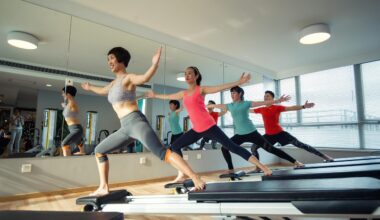

The Impact of Core Strength on Running Posture
Core strength plays a pivotal role in enhancing running posture. When runners develop a strong core, their stability significantly improves as it allows for better control over movements. An efficient core enables runners to maintain upright and aligned posture, which is crucial during long runs. While running, a strong core helps prevent excessive swaying of the torso, which can lead to fatigue and injury over time. This stability reduces the chances of developing imbalances that lead to compensatory motions, further compromising performance. Proper running posture sourced from core strength lessens the impact on joints, enhancing overall endurance. Ultimately, it allows runners to achieve their target distances with greater ease. The benefits extend not only to performance but also to safety. By improving posture through core training, runners can reduce their risk of common injuries that arise from poor body mechanics. Therefore, incorporating core strengthening exercises in training regimens is essential for all runners seeking to enhance their skills, stamina, and safety on the track. This practice also fosters a feeling of empowerment, making runners feel stronger and more capable.
Another significant aspect of core strength is its contribution to propulsion efficiency. A strong core distributes workload evenly across the body, making running feel easier. When runners possess good core stability, they harness energy more efficiently, propelling themselves forward without excessive exertion. This efficient energy management becomes especially vital during races, where every second counts. Core strength also facilitates better movement patterns necessary for lifting legs smoothly during the running stride. When runners integrate movements through the core, leg drive becomes more powerful and effective. Additionally, strong abdominal muscles support the diaphragm, improving breathing efficiency, essential for sustained stamina. As the run progresses, proper oxygen delivery becomes critical, ensuring that the muscles receive the required energy to keep going. Focusing on core training allows individuals to maximize their endurance. Simple exercises, like planks and bridges, play a foundation role in enhancing core strength. Runners should include these in routines to support posture but also to elevate overall performance. Thus, understanding the mechanics of core training enables runners to appreciate its full impact on their journey and enhances their engagement with training.
The Role of Core Training in Injury Prevention
Effective core training serves as a significant injury prevention strategy for runners. As they log more miles, many runners may become susceptible to common overuse injuries. A robust core can counteract muscle imbalances, which often lead to injuries in the hips, knees, and lower back. When the core muscles are weak, it creates undue stress on the muscles and joints, leading to misalignment and improper gait mechanics. Core exercises facilitate a balanced muscular system, ultimately distributing forces evenly during running. This balance significantly reduces wear and tear on vulnerable joints over time. Furthermore, a stable core improves coordination, making it easier for runners to react to uneven terrain or sudden obstacles. This responsiveness is critical for injury avoidance during dynamic running situations. Research indicates that runners who focus on core training are likely to experience fewer injuries compared to those who do not. By consistently integrating core exercises into their training, runners can build resilience and ensure longevity in their chosen sport. Taking steps to prioritize core workouts is crucial for those looking to enhance performance while minimizing risks as they run.
Moreover, the focus on developing core strength supports mental resilience as well. When runners feel physically stronger and more control over their movements, their confidence naturally increases. A solid core instills a sense of trust in their abilities, allowing them to tackle more challenging courses with determination. The psychological impact of a strong core can’t be underestimated in competitive scenarios. It encourages an improved mindset, transforming perceived limitations into new challenges to overcome. Additionally, core strength plays a vital role in recovery during runs, especially long-distance ones. A strong core supports an upright posture, which reduces fatigue in muscles during and after the run. Improved posture means less strain on the back and hips, allowing more energy to flow toward performance. With consistent core training, runners can significantly decrease recovery time after intensive workouts or events. Thus, this psychological and physical synergy can foster not only better performance but also enjoyment in running. This positive mental state can lead to enhanced motivation and commitment in the long run. Runners excited about training are more likely to achieve their goals.
Integrating Core Exercises into Training
Incorporating core exercises into regular training is essential for runners aiming to improve posture. While mileage and speed workouts are vital, core workouts should take precedence as well. Runners may be surprised to discover how little time they need to spend on core training to realize significant benefits. Short sessions, as brief as 15 minutes, focused on foundational core exercises can yield astounding improvements. Exercises like planks, Russian twists, and leg raises should be prioritized. Slowly increasing intensity over time engages the muscles effectively for optimal strength development. Moreover, utilizing balance and stability tools, such as exercise balls and stability disks, can add variety to workouts. These tools help engage auxiliary muscles that are crucial for maintaining excellent posture during runs. Consequently, effective integration of core training elevates running techniques significantly. Runners often benefit from setting specific core workout days in their training calendars to maintain consistency. Creating a varied routine keeps the workouts engaging, preventing boredom or complacency. As the core grows stronger, even the most seasoned running form can be enhanced, inspiring runners to approach their goals confidently.
Furthermore, runners should focus on posture during running itself. Awareness of body positioning can amplify core strength benefits achieved through training. Maintaining an upright position with activated core muscles helps position head, shoulders, and hips while running optimally. Correct posture during running aids in better breathing and ensures optimal oxygen intake. This involves actively engaging the core and practicing maintaining that engagement for sustained periods. Incorporating consistent reminders to check form during runs can solidify good habits while running. Runners may find utilizing video analysis useful in monitoring posture. Seeking feedback through observing professional runners or working with coaches can enlighten them about aspects to improve. Stronger core muscles translate beautifully into better form, resulting in overall improved athletic performance. By marrying training and awareness of posture, runners maximize their experience and generate positive cognitive responses. Above all, prioritizing posture should become an essential part of every runner’s training strategy. This awareness fosters growth and can lead to achieving previously unthought-of personal records.
Conclusion
In summary, strengthening the core is indispensable for runners interested in enhancing their performance and overall health. The relationship between core strength and running posture is profound and multifaceted. Core strength enhances stability, which directly influences running efficiency and injury prevention. Moreover, physiological and psychological improvements derive from investing time in core training. Runners not only experience physical strength but also cultivate a winning mindset that empowers them during workouts or races. Practical integration of core workouts helps maintain good posture, support recovery, and provide a substantial boost in overall performance. It’s important to remember that achieving a strong core does not happen overnight. Committed effort and consistent practice are key components of long-term success. Emphasizing core training creates a ripple effect throughout the entire running experience, reinforcing confidence and enthusiasm. Every runner can benefit significantly from understanding how core strength impacts performance. By making core workouts a priority, runners gain the necessary foundation for excellence. Sustained improvement reflects in time, distance, and overall enjoyment of running, making it a vital investment for all enthusiasts.
Ultimately, the journey toward optimal running posture hinges on the core, which fosters strength and resilience. With this understanding, each runner has the potential to enhance their abilities through diligent practice, leaving behind limitations and stepping into greater possibilities. As runners embrace this strategy, they embark on a path filled with empowerment and achievement, which leads to fulfilling experiences on the track.