
Training Tips to Improve Your BMX Riding Skills
BMX riding is not just about speed; it’s a blend of skill, balance, and confidence. To enhance your performance on the BMX track, consider these essential training tips that focus on various aspects of the sport. First, understanding your bike is crucial. Familiarize yourself with all the parts. This knowledge helps in maintaining and optimizing bike performance. Keep your tires inflated correctly, as this affects speed and ease of pedaling. Next, practice your riding stance. An ideal stance keeps you balanced, allowing for better control during jumps and turns. Incorporate strength and flexibility workouts into your routine, as they contribute to overall bike handling. Remember to include stretches targeting your legs and core. Regularly practice on various terrains, as this adjusts your riding technique to different conditions. Learning how to perform tricks is also vital. Start small with basics like bunny hops before advancing to more complex maneuvers. Experience through practice builds your confidence too. Finally, join local BMX groups. Riding with others can be motivating and can introduce you to new techniques that improve your skills.
Work on Your Balance and Control
Balance and control are fundamental elements in BMX riding. To build a solid foundation, start by practicing core exercises that enhance your stability. So exercises like the plank and side lunges can improve your ability to stay steady on your bike. It’s also helpful to spend time on a flat, open space. Focus on getting comfortable with your bike’s movement without any obstacles around. Try riding with one hand; this will challenge your coordination and increase your confidence. A fun way to enhance your control involves practicing skids. By initiating controlled skids, you learn to manage your bike’s balance. Furthermore, integrating slow-speed maneuvers, such as tight turns or figure eights, will enhance your handling skills while improving your ability to navigate tricky sections of a track. Stability can also be developed through specific drills on mini ramps or ski jumps. Riding these ramps enables you to practice lifts and drops in a controlled setting. Consistency is key. Therefore, include balance and control drills in every training session to ensure continuous improvement, which is essential for overall BMX competence.
Next comes the importance of proper body positioning when riding. Your body should be fluid, adapting to your bike’s movements. Keep your knees slightly bent and elbows out to maintain stability. Also, shifting your weight forward during acceleration and backward when descending steep slopes is essential. Practicing these position adjustments can lead to improved bike responsiveness and handling. Experiment with the placement of your feet on the pedals; sometimes, adjusting your foot position can radically enhance your grip and power transfer during pedaling. To further improve riding responsiveness, focus on your vision. Train yourself to look ahead, observing the path rather than focusing solely on your front wheel. This shift in focus results in better anticipation of upcoming obstacles. Make sure you are aware of your surroundings and other riders, as this can lead to safer riding experiences. In addition, consider setting specific training milestones. Goals can provide a direction, whether it’s mastering a new trick or completing a track without falling. Celebrate small victories along the way to maintain motivation and refine your BMX riding skills over time.
Developing Speed on the Track
Enhancing your speed on the BMX track is another area to work on to maximize performance. Begin by refining your pedaling technique. Employ a fluid, rolling motion when pedaling to maintain momentum. Avoid abrupt starts, instead focusing on smooth acceleration. Practicing starts consistently will help you develop an explosive takeoff, which is critical in races. Proper gear selection is also vital; choose a gear suited for your riding style and track conditions. To further increase speed, practice sprinting techniques, alternating short bursts of high-intensity pedaling with periods of rest. Interval training can significantly enhance your cardiovascular fitness, allowing for quicker recovery during races. Consider the terrain as well; downhill sections require a different pedaling approach than flat or uphill stretches. Remember to use your arms and legs effectively, distributing your weight appropriately to reduce drag from wind resistance. Evaluate your riding posture during high-speed runs, as it can contribute to your overall aerodynamics. Engage in regular speed tests, timing yourself over a set distance to measure improvements. Watching experienced riders can also provide valuable insights for optimizing your techniques.
Another essential aspect to boost your BMX riding proficiency is to master your braking techniques. Braking efficiently is crucial for maintaining speed while ensuring control during quick stops. Practice using both the front and rear brakes; this balance can prevent you from flipping over during aggressive deceleration. Familiarity with your braking response will offer smoother control through tight turns and downhill segments. Additionally, work on your bike’s responsiveness by gradually increasing your braking force with practice. A well-timed brake can significantly affect your performance. For trick riders, understand when to release brakes while airborne to avoid crashes. Incorporate braking drills into your sessions to ensure your control is reliable under pressure and enhances your confidence on the track. Similarly, ensure that you maintain your bike regularly. Clean and lubricate your chain and check for proper brake function consistently. A well-maintained bike contributes significantly to riding comfort and skills development. Moreover, don’t neglect safety gear, as it protects you while you learn and practice new skills. Invest in a quality helmet and pads to reinforce your safety during potentially risky tricks and maneuvers.
Focus on Trick Mastery
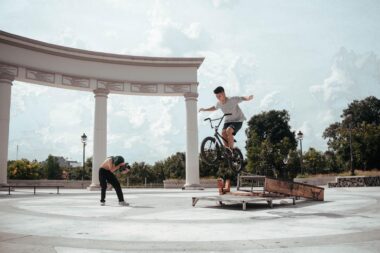
For many BMX riders, mastering tricks is what elevates the sport to another level. Begin with foundational moves like the bunny hop, which is the basis for many more advanced tricks. Practice launching off small obstacles to gain the muscle memory needed for higher jumps. Focus on your approach speed, jump timing, and body positioning while performing tricks. Gradually progress to more complex skills like 180s and bar spins. Patience is vital; undertake each trick step-by-step until the full movement feels comfortable. Take notes on particular tricks you are attempting; this documentation can highlight your progress and allow you to identify areas requiring more work. Consistency in practice can also lead to mastery. Allocate specific training sessions dedicated solely to tricks, allowing you to build confidence and expertise in each move. Consider recording your attempts; reviewing these can provide insights into your technique and improvements over time. Watching online tutorials can also introduce you to advanced tricks and tips from experienced riders. Joining local BMX clubs is helpful, as it provides a learning environment where sharing techniques can further enhance skills and motivation.
Lastly, never underestimate the importance of mental preparation in BMX riding. Mental focus can greatly affect your performance during training and competition. Start by setting clear and achievable goals, as a focused mindset leads to progress. Visualize your success before attempting new skills or tricks; this practice can enhance confidence and reduce anxiety while riding. Maintain a positive mindset during challenges, viewing setbacks as lessons instead of failures. Engaging in mindfulness or relaxation exercises can also help mitigate stress and sharpen focus, contributing to better performance on the bike. Regularly reflect on your riding experiences to identify areas of strength and weaknesses. Journaling about your sessions enhances self-awareness and directs your training for improvement. Additionally, surrounding yourself with supportive riding partners can create a positive influence that boosts morale. Mentorship from more seasoned riders may provide critical advice and encouragement to help you reach your objectives. Remain open to feedback; constructive criticism can foster growth and lead to significant improvements in your bike riding skills. Cultivating your mental game is vital to becoming a successful BMX rider.
Throughout your BMX journey, remain dedicated to refining your skills and challenging yourself to reach new heights. Embrace this exhilarating sport, filled with camaraderie, competition, and continuous learning. With discipline and perseverance, your BMX riding abilities will significantly improve over time. Enthusiasm for the sport will fuel your practice, leading to enjoyable experiences and lasting achievements. Connect with fellow riders to share knowledge, tips, and encouragement on your journey. BMX riding is about embracing the thrill in every thrilling jump, increasing your confidence on the bike, and honing your skills through focused training. Make sure to establish a well-rounded training routine addressing all aspects, from physical conditioning to mental resilience. Over time, commitment will enable you to tackle more ambitious skills and compute challenging tracks with confidence. Therefore, stay consistent, enjoy each ride, and keep striving for your personal best. The journey in BMX riding is lifelong, and each improvement signifies the dedication and passion for the sport. Let your BMX adventure unfold as you embrace every challenge and breakthrough, taking pride in your growth as a rider.