
Combination Drills for Tennis Fitness and Skill Improvement
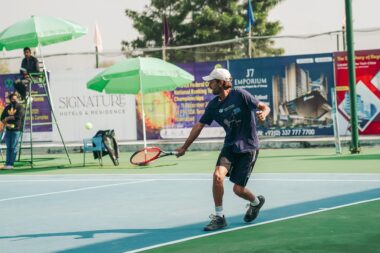
Combination drills are essential for enhancing both fitness and skill in tennis. These drills integrate various tennis skills with physical conditioning, fostering improved performance. A typical combination drill might involve baseline hitting, followed by lateral movements to simulate actual match scenarios. Players can benefit from this by developing endurance, agility, and coordination simultaneously. Incorporating footwork elements into drills not only improves movement efficiency but also increases cardiovascular fitness. One effective drill is the “Hit and Move” drill, where players hit a forehand or backhand and quickly move to the net or baseline, continuing to practice different shots while focusing on footwork techniques. As you implement these drills, consider varying the intensity levels to challenge both fitness and skill aspects. Tennis coaches emphasize the importance of making drills engaging, as motivation plays a key role in player development. Additionally, it’s beneficial to track progress in physical fitness and skill execution to identify areas needing improvement. This assessment process keeps players accountable and focused, fostering a mindset geared towards growth and success on the court. Introducing competitive elements can also create excitement during practice sessions.
One effective combination drill that players often find helpful is the “Sprint and Serve”. This drill consists of players starting at the baseline, sprinting to the net to volley, and then returning to serve. The repetitive nature of this drill caters to improving cardiovascular fitness while refining serving skills. Following this drill, players can implement a quick-paced rally, where they must maintain consistent shot accuracy under time constraints. Introducing simple time challenges in drills increases competition among players while enhancing physical stamina. Another valuable exercise is the “Defend and Attack” drill, where players alternate between defensive and aggressive shots. This exercise develops the mental adaptability necessary for real match scenarios. Furthermore, adding a partner to these drills can foster teamwork, ultimately enhancing communication skills on the court. Building intensity as players improve helps to maintain engagement and focus. As fitness levels rise, players can increase the frequency of their drills, allowing for consistent progress. Remember to keep hydration in mind during practice sessions, as intensive drills can lead to dehydration without adequate water intake. Maintaining attention to form and strategy during drills will also ensure long-term improvements in game performance.
Customizing Your Drills
Customizing drills to fit your skill level is crucial for maximizing effectiveness. Each player has unique strengths and weaknesses, thus tweaking drills can yield better results. This personalization may involve adjusting the complexity of a drill or the duration of each segment. For example, a beginner might benefit from slower-paced drills focusing on footwork, while more advanced players can tackle drills implementing quick reflexes and strategic shot selection. Effective communication with your coach or workout partner can help tailor drills to your needs. Players should also consider their specific fitness goals; some may focus on agility, while others emphasize endurance. Diverse drills not only maintain engagement but challenge multiple muscle groups simultaneously, fostering overall athleticism. Stations can be added to training routines for varying exercises like agility ladders, cones for lateral movement, and ball-hitting drills. Switching up exercises reduces monotony, making practices more enjoyable. It’s essential to continuously reassess and modify your approach based on performance feedback. This practice ensures progressive learning, creating successful long-term improvements. Ultimately, the goal is to create a balanced routine that excites players while effectively upgrading their skills and physical fitness.
Maintaining a consistent schedule when practicing combination drills is advantageous for improvement. Setting aside specific days or times for both on-court drills and fitness workouts allows for structured and disciplined training. This consistency not only builds muscle memory but also establishes a rhythm in executing tennis skills. It can also facilitate better focus and less distraction during practices. Keeping a training journal enhances accountability, marking progress through each session with reflections on what worked best. Players are encouraged to set objectives for each practice, whether it’s refining serves or boosting endurance levels. Writing down these goals gives players a clear, actionable framework. Moreover, assessing physical and mental feelings after each session equips players with valuable insights into their training methods. Players should also involve their support network, including coaches and fellow players, to attain feedback on their performance. Constructive criticism may bring forth new perspectives on skills needing enhancement. Combine this feedback with self-assessment to create a well-rounded understanding of strengths and weaknesses, paving the way for targeted improvements in drills. Integrating recovery methods like stretching and foam rolling post-practice can also optimize overall fitness outcomes.
Incorporating Competitive Elements
Integrating competitive elements into training can significantly elevate the intensity and engagement of combination drills. Friendly competition can drive players to push their limits while making drills more enjoyable. One method to include these competitive aspects is through setting up point-based challenges. For instance, players accumulate points during specific drills based on shot accuracy and speed. Points can also come from successful volleys or serves executed during drills. Another engaging way is to hold mini-tournaments among practice partners, where each player competes in various specified drills. Tracking individual progress during these mini-events aids in identifying personal growth over time. Assessing results not only highlights areas for improvement but also instills a sense of achievement, motivating players to persist with their training regimen. Adjusting the stakes can enhance engagement; for example, introducing light-hearted consequences or rewards based on drill results fosters an inviting environment. Creating such a spirited atmosphere navigates through the demanding aspects of practice, transitioning focus from pressure to enjoyment. As athletes experience the thrill of competition, they often discover hidden potential, ultimately advancing their court skills significantly while refining their fitness.
Consistency is crucial as it will help the adaptation of both skills and fitness levels. Practicing combination drills at least twice a week is advisable for significant advancements. Players should ensure that warm-up exercises precede any intense physical activity to avoid injuries. Warm-ups can include dynamic stretches, light jogging, or tennis-specific movements. Following combination drills, incorporating cooldown procedures aids recovery and flexibility, further empowering fitness over time. Hydration is another vital component during drills to maintain peak performance and prevent fatigue. Additionally, connecting with other players or coaches can provide new perspectives on effective training practices and approaches. Sharing training techniques and experiences spurs motivation among teammates while establishing potential collaborative improvement strategies. Embracing variety in your drills by tweaking exercises will cater to evolving fitness goals and skill enhancements. Engaging in social tennis events can also introduce new players, expanding perspectives on gameplay and strategies. It’s helpful to maintain a balance between competitive and casual practice sessions. Casual practices can enhance enjoyment, while competitive sessions keep adrenaline levels high. Ultimately, combining both elements can maintain a love for the game while consistently growing as a player.
Measuring Progress in Drills
Tracking progress in combination drills is vital to understanding improvements in both fitness and skill. Measuring specific metrics can provide insights into performance levels, fostering motivation and accountability. Players can monitor aspects such as serving speed, shot accuracy percentage, or times taken to complete drills. Implementing a simple progress chart aids in visualizing achievements, allowing players to witness their growth over time. Furthermore, filming practice sessions can provide visual feedback, illustrating strengths and areas needing further development. Reviewing these recordings sheds light on footwork and shot form that could enhance overall technique. Setting short-term and long-term goals based on these observations can keep players focused on their objectives. Celebrating milestones, even small ones, boosts morale and encourages sustained effort. Additionally, sharing progress with coaches and peers can inspire collaborative improvement strategies, reinforcing a sense of community. Regular progress evaluations help sustain motivation and prevent burnout, keeping players engaged over longer training periods. Remember that every improvement matters, and maintaining a positive outlook can lead players toward success on and off the court. By integrating these assessments, athletes can fine-tune their training paths and ensure a balanced approach to tennis fitness.
Utilizing technology to monitor performance during combination drills can further enhance training effectiveness. Many apps and devices allow athletes to track their metrics, thereby providing data on speed, accuracy, and endurance levels. Maintaining records from various practice sessions enables comparison, indicating areas that have improved or require additional work. Coaches may also use technology to analyze player movement patterns during drills, which can provide additional insights into optimizing footwork. Furthermore, incorporating sports science research into practice can refine drill design, ensuring that players are engaging with effective training methods. Understanding physical conditioning paired with tennis skill drills will facilitate further growth. Players are encouraged to share their results with coaches regularly, allowing for quick adjustments to training routines tailored to their needs. Collaborating with fitness professionals can produce a more comprehensive understanding of tennis training. Investigating methods such as interval training within drills can sharpen quick bursts of energy, mirroring match play situations. Utilizing heart-rate monitors during high-intensity drills may also gauge effort put forth successfully. Overall, combining technology with traditional training methods can maximize on-court fitness and skill improvement effectively while keeping the training engaging and fresh.