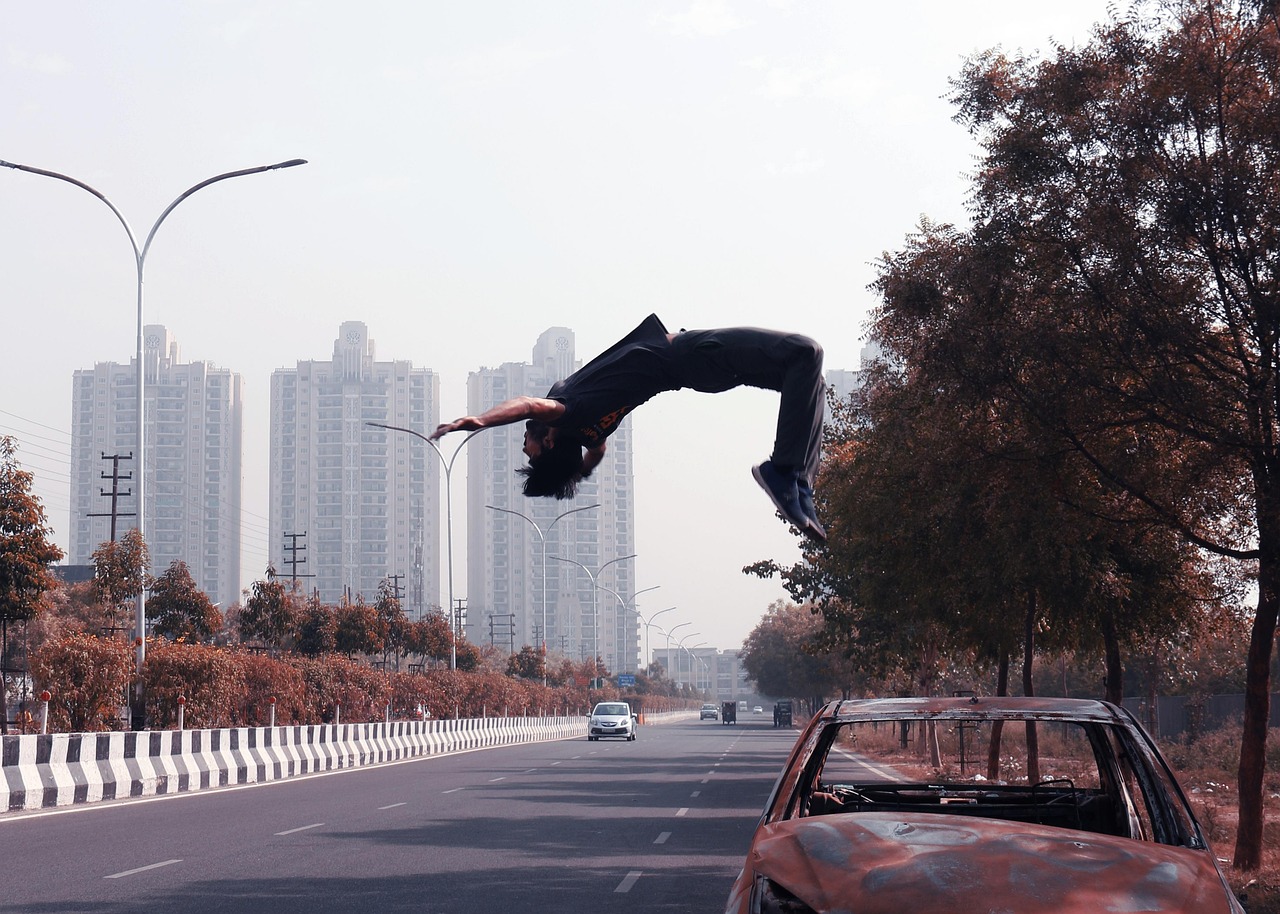

Balancing Speed and Control in Wall Runs
Wall runs are a fundamental component of both parkour and freerunning, requiring impeccable coordination and precision. These dynamic movements allow practitioners to traverse vertical structures and maintain momentum while moving swiftly. The essence of a successful wall run lies in the balance of speed and control. Achieving high speed while retaining control over the body can be quite challenging, especially for beginners. Important factors to consider include the angle of approach, foot placement, and timing. Practitioners must ensure their feet strike at the optimum angle to maximize propulsion. The stronger the push-off, the greater the upward momentum. This momentum helps maintain speed as one moves along the wall. Control becomes essential when executing tricks or maneuvering during the run. Without control, speed can lead to loss of balance and unsafe landings. Hence, a strong foundation in basic movements and techniques is imperative. Practicing wall runs on flat surfaces before gradually shifting to vertical surfaces can help build confidence. By focusing on these techniques and ensuring stability, one can master their wall runs efficiently. Training consistently will yield better results and establish a strong parkour foundation.
When it comes to enhancing wall run performance, conditioning also plays a pivotal role. Engaging in exercises that target leg strength and explosiveness can significantly improve one’s wall run capabilities. Plyometric workouts are particularly effective because they focus on developing both speed and power. Activities such as box jumps and squat jumps simulate the explosive movement needed to push off effectively from the wall. Core strength is equally important since it provides stability during the run. A strong core helps maintain proper body alignment, minimizing the risk of injury. Flexibility training, including dynamic stretches, supports the overall agility of a freerunner, allowing for easier transitions and movement adjustments. Additionally, practicing wall runs while integrating various techniques can enhance skill development. As this progresses, athletes can begin to incorporate tricks and turns into their wall runs, adding an acrobatic edge to their movements. This not only serves aesthetic purposes but also increases complexity and demands greater control. Remember, mastery comes with time and effort. Continual practice and adaptation of skills enable freerunners to enhance their overall performance in wall runs.
Another crucial aspect to consider in wall runs is the mental approach to executing the move successfully. Visualization techniques can contribute significantly to improving speed and control. By picturing themselves successfully completing a wall run in their mind, practitioners can enhance their confidence and focus. Mental rehearsal helps create a clear image of the sequence of movements needed. This clarity reduces anxiety during actual performances and fosters a smoother execution. Challenge yourself to visualize each step: the run-up, takeoff, and landing. The more vividly you imagine these movements, the more natural they will feel during practice. Additionally, breaking down the movements into smaller segments can simplify the learning process. Focus on mastering each step before linking them together into the full movement. Patience is essential. Rushing can lead to mistakes and a greater risk of injury while trying to achieve higher speed. Take time to slow down and perfect basic skills. Seeking feedback from fellow practitioners or coaches can also be invaluable. Constructive criticism offers insights and perspectives that can make a significant impact on improving performance.
Environment and Surface Considerations
The environment in which one trains plays a significant role in mastering wall runs. Practicing on various surface types can enhance versatility and adaptability. Different surfaces, such as concrete, grass, or indoor parkour gyms, offer distinct challenges and difficulties. Training on softer surfaces, like grass, reduces the impact during falls but may lack the same grip required for effective push-offs. On the contrary, concrete provides friction, allowing for higher speeds but presents greater risks of injury if one falls. Grasping the nuances of each surface ensures a freerunner is prepared for any scenario they might encounter. Furthermore, environmental factors such as obstacles and wall features can influence performance. Train in locations with varied heights, wall angles, and configurations. This variation helps develop the skills necessary to adapt during real-world runs. Street spots can hold unique challenges, allowing one to embrace creativity while minimizing risk. Outdoor environments often present opportunities to connect with fellow practitioners. Community training sessions encourage learning from one another, sharing techniques, and creating motivation. Remember, exploring different environments is key to becoming a well-rounded freerunner.
In addition to understanding different surfaces and environments, safety must always be a priority when practicing wall runs. Potential risks of injury can be mitigated by following safety precautions. Always perform wall runs in safe, controlled areas where you have sufficient clearance and avoid obstacles. Proper warm-up routines are vital to prepare your body for the high-impact movements associated with wall runs. A good warm-up enhances blood flow, flexibility, and overall performance. Consider using protective gear like knee pads or climbing shoes while training to add an extra layer of safety. Learning how to fall correctly is another crucial element in mitigating injury risks. Practicing rolls and safe landings can build muscle memory, allowing you to react instinctively if you lose balance. Partner up with experienced practitioners who can spot your form and offer guidance during training. Observing their techniques can further reinforce learning. Safety is paramount in developing skills, so be sure to listen to your body. Knowing when to rest is equally important in avoiding overexertion and long-term injuries, ensuring a long and fulfilling journey in parkour and freerunning.
Lastly, integrating various skills and techniques allows for artistic expression within wall runs. Freerunning emphasizes creativity, pushing boundaries beyond traditional parkour movements. Practitioners can seamlessly blend running with acrobatics, creating unique flows. This freestyle approach appeals to many, enabling an artistic flair and self-expression. Experimenting with spins, flips, and twists while maintaining speed improves overall fluidity in wall runs. Combining tricks with wall runs not only elevates difficulty but also adds dynamic elements to your movement repertoire. Explore different styles, such as urban parkour or more theatrical forms of freerunning, to undergo a holistic training experience. Train regularly to develop a signature style that reflects your personality. Capturing your runs on video can be a powerful tool to showcase your progress while allowing for self-analysis. Observing your work helps highlight strengths and weaknesses. Competitions and showcases are incredible opportunities to push creative boundaries and connect with others in the community. Always strive to keep your routines fresh and engaging. Continuous learning and experimentation ensure that wall runs transform into an ongoing journey of growth and discovery. Ultimately, the perfect balance of speed and control leads to the expression of true self in freerunning.
Diversifying your training is also essential for holistic skill development in wall runs. Focusing solely on one aspect could lead to performance plateaus. Instead, integrating diverse training methods—such as obstacle courses or mobility training—helps refine skills. Obstacle courses replicate real-world obstacles faced in freerunning. These courses challenge your agility, speed, and creativity, reinforcing effective wall run execution. Additionally, incorporating strength and conditioning workouts ensures comprehensive training. Strengthen stabilizing muscle groups to improve overall balance and control. Consistent conditioning workouts build endurance, empowering you to perform longer without fatigue. Bodyweight exercises like pull-ups and push-ups develop upper body strength, assisting in maintaining control during a wall run. Furthermore, dedicating time to flexibility training is critical, increasing your range of motion and reducing injury risks. Consider attending specialized workshops or training sessions led by professional freerunners. Learning from seasoned experts can provide invaluable insights and techniques not typically found in standard training. Always stay curious, seeking out new experiences and training opportunities, as innovation is key to growth. Ultimately, diversifying training ensures a well-rounded perspective on mastering wall runs.
Formulating a practice routine involving wall runs nurtures discipline and encourages consistent improvement. Establishing clear goals—whether they involve height, speed, or trick integration—fosters motivation. Setting benchmarks allows you to track your progress, making improvements more visible. To enhance retention, dedicate sessions to focus on key components of wall runs. Allocate ample time for each segment, gradually increasing complexity. Taking regular breaks during training enhances productivity and prevents physical burnout. Furthermore, sharing your training experiences with peers creates accountability and enriches the journey with camaraderie. Engaging with others in practice sessions adds fun, especially when providing feedback and motivating one another. By documenting achievements on social media platforms, you can showcase progress and inspire others. Also, consider collaborating with multi-disciplinary artists within the freerunning community for unique training experiences. Participating in workshops allows you to explore fresh ideas for fitness and expression. Embrace the challenges faced during practice. Every setback is an opportunity for growth. Cultivating patience is critical; learning wall runs is a journey, not a race. With determination and creativity, the balance of speed and control can be mastered.