
Powerlifting Week 11: Proper Form and Technique Introduction
In the world of powerlifting, mastering proper form and technique is paramount for achieving optimal results. This week focuses on refining your movements to maximize your gains and prevent injuries. Whether you are new to powerlifting or have been lifting for years, revisiting the fundamentals can greatly enhance your performance. Start by analyzing each lift’s mechanics, including the squat, bench press, and deadlift. Understanding the correct alignment of the body during these lifts promotes safety. Engage your core muscles to stabilize your spine, and maintain a neutral head position throughout your sets. Using a mirror can also aid in visual feedback on your form, identifying any deviations. Regularly practicing these techniques along with lighter weights will solidify your foundation. Furthermore, consider working with a coach or experienced lifter to provide insights into your lifting style. They may spot nuances in your form you might overlook. Always remember, gradual progression is key, so don’t rush to lift heavy weights until you are completely comfortable with your technique. Powerlifting is not just about heavy lifting; it’s also about lifting wisely and safely, a philosophy that ensures long-term success.
One of the most crucial aspects of powerlifting is the squat, which acts as the foundation for many compound lifts. When performing the squat, focus on your foot placement. Your feet should be shoulder-width apart, with a slight outward angle. This stance allows for optimal balance and engagement of the glutes, hamstrings, and quadriceps. As you descend, keep your chest up and your back straight – visualize a straight line from your head to your hips. Depth is important; aim to break parallel with your thighs without compromising form. Once you’ve reached the desired depth, push through your heels to rise back to the starting position. Utilizing proper breathing techniques is also integral; inhale as you lower and exhale as you push up. Additionally, you may find benefit in using a belt once you’re lifting heavier weights, which helps support your lower back. Remember to keep your core tight throughout the lift. Consistent practice will not only build strength but also improve your confidence. Take the time to execute each squat with diligence, and soon, you’ll notice improvement in your overall lifting technique, leading to better performance on all fronts.
Mastering the Bench Press
The bench press is a staple in powerlifting and requires great attention to detail to ensure proper execution. As you approach the bench, align your eye level with the bar, ensuring easy access. Start by gripping the barbell slightly wider than shoulder-width, with your wrists straight and elbows tucked. Plant your feet firmly on the ground, which provides stability and adequate force during the lift. As you lower the bar, have it touch your chest lightly. Maintain control throughout, with your elbows at approximately a 45-degree angle relative to your torso. This position protects your shoulders from strain. After a brief pause at the chest, push the bar back up, focusing on driving through your heels for additional power. Your shoulder blades should remain retracted throughout the movement to support your upper back. It is essential to refrain from bouncing the bar off your chest, as this compromises form and can lead to injuries. It may be helpful to use a spotter when lifting heavy weights, ensuring you have a safety net. Prioritize quality over quantity, and your bench press strength will noticeably improve over time.
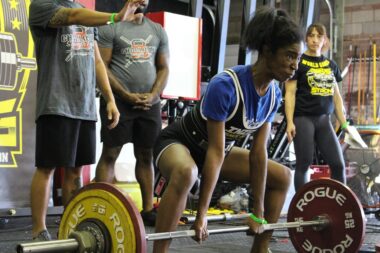
Another key lift in powerlifting is the deadlift, often regarded as the ultimate test of strength. This exercise engages multiple muscle groups, including the back, glutes, and hamstrings. To begin, approach the bar with your feet hip-width apart, and ensure that your shins are nearly touching the bar. Your hands should grip the bar just outside your knees, either with a double overhand grip or a mixed grip for added security. Engaging your core and maintaining a neutral spine is essential as you prepare to lift the bar. As you drive through your heels, thrust your hips forward while standing up, ensuring that the bar stays close to your body. This technique minimizes strain on your back. At the top position, fully extend your hips and knees, avoiding the tendency to lean back excessively. Lower the weight in a controlled motion by bending at the hips and knees simultaneously. Practicing the deadlift not only improves your strength but also enhances your overall powerlifting prowess. Always emphasize on gradual increases in weight to prevent injury while building your deadlift technique.
Common Mistakes to Avoid
As you advance in powerlifting, it’s essential to recognize common mistakes that can negatively impact your performance. One frequent issue occurs when lifters neglect their warm-up. Always warm up adequately before your training sessions; this prepares the muscles and reduces the risk of injury. Additionally, check your form frequently, particularly when encouraging heavier lifts. Deviating from proper technique can not only hinder progress but also expose you to potential injuries. Another mistake to avoid is not taking rest seriously; your body needs time to recover and rebuild. Ensure you’re incorporating rest days into your program and listening to your body when it signals fatigue. Staying hydrated is crucial as well—dehydration can impair strength performance considerably. Also, avoid extreme dieting while pursuing strength gains, as proper nutrition plays a vital role. A balanced diet rich in protein and nutrients enhances your lifting sessions. Last but not least, don’t skip leg day; many novice lifters do not adequately train their legs, limiting support for their overall lifting ability. Always focus on a balanced program to achieve the best results in your powerlifting journey.
In addition to mastering lifts and avoiding mistakes, proper nutrition is key to achieving success in powerlifting. Your body is a machine that requires the right fuel to perform optimally. Prioritize a diet rich in whole foods, including lean proteins, complex carbohydrates, and healthy fats. These nutrients ensure that your body has adequate energy to power through your workouts. You’ll want to focus on protein-rich foods which promote muscle recovery and growth after intense sessions. Sources include chicken, fish, tofu, and legumes. Pair your protein intake with carbohydrates post-workout to restore glycogen levels, such as sweet potatoes or whole grains. Hydration plays a crucial role in overall performance as well; aim to drink plenty of water throughout the day. Many lifters benefit from a balanced supplement regimen, including protein powder, creatine, and branched-chain amino acids. Individual metabolism and needs vary, so consider consulting with a nutritionist who specializes in sports nutrition. Tailoring your nutrition plan provides the fuel needed for continuous improvement and better performance in powerlifting. Remember, proper fueling supports your goals as much as your training does!
Tracking Progress and Setting Goals
To ensure continued success in powerlifting, it’s vital to track your progress and set achievable goals. Begin by establishing specific short-term and long-term objectives tailored to your performance. Short-term goals can be related to individual lifting sessions, such as increasing weight on a specific lift. Long-term goals might include achieving a certain total at a competition. Keeping a training log offers valuable insights into your progress and allows for adjustment in your program as needed. Record details such as the weight lifted, sets, repetitions, and perceived exertion levels. Establishing a progression plan can also enhance your training effectiveness. Strategies may include increasing weights gradually, adjusting sets and reps, or incorporating different variations of lifts to prevent plateaus. Celebrate your milestones, no matter how small, as they contribute to building motivation. Engaging in friendly challenges with training partners or participating in competitions can also elevate your performance. Remember to stay patient; gains will take time, and consistency is key. Regularly reviewing your progress helps in recognizing achievements and identifying areas for improvement in your powerlifting journey.
Finally, always prioritize safety and recovery in your powerlifting routine. Adequate rest and recovery are just as important as your workouts, allowing your muscles to repair and grow stronger. Sleep is often overlooked; aim for 7-9 hours of quality sleep each night to facilitate recovery processes. Active recovery techniques, such as light stretching, foam rolling, or low-intensity cardio, can also be beneficial on your rest days. Progressing in powerlifting should not come at the cost of your health. Regularly assess how your body feels to prevent overtraining and injuries. Incorporate deload weeks periodically, where you decrease volume to give your body a minimal break. Nutrition plays a substantial role during this phase, as adequate protein intake supports muscle recovery. Additionally, listen to your body’s cues; if something feels off, do not hesitate to consult a healthcare professional. Prioritizing safety and recovery will ultimately lead to better performance and a more sustainable lifting journey. Remember, you are in this for the long haul—dedicated training paired with proper recovery fosters lifelong health and strength. Stay strong, stay safe, and keep pushing your limits in the pursuit of excellence!