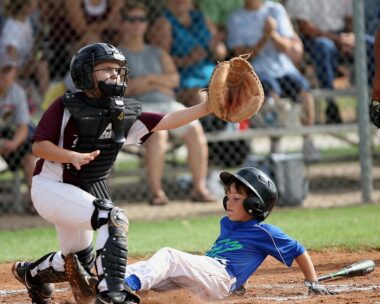

Exercises to Improve Wrist Mobility for Better Bat Control
Improving wrist mobility is essential for baseball players aiming to enhance their bat control. Optimal wrist flexibility can lead to better swing mechanics and improved batting performance. Several exercises target wrist mobility, focusing on increasing range of motion and overall strength. One effective drill is the wrist flexor stretch: extend one arm in front, palm up, and gently pull back on the fingers with the opposite hand. This exercise helps stretch the muscles along the forearm and wrist, improving flexibility. Stretches should be held for twenty to thirty seconds for maximum impact. Another critical exercise involves wrist rotations: hold a lightweight dumbbell or a water bottle, extending your arm to your side at a ninety-degree angle. Slowly rotate your wrist for several repetitions in both directions. This will strengthen the muscles and improve joint stability. Regularly incorporating these wrist mobility exercises into your routine is beneficial for overall performance. Consider adding them to your warm-up or cool-down sessions for the best results. Consistency is vital, and improvement takes time, so don’t rush the process but remain committed.
Another vital exercise is the wrist roller drill, which targets grip strength and wrist stability. To perform this drill, you’ll need a wrist roller device, which consists of a rod and a rope with a weight at the end. Stand straight, holding the wrist roller with both hands and arms straight in front of you. Slowly roll the weight up by rotating your wrists, and then lower it back down with control. This exercise engages both wrist flexors and extensors, contributing to enhanced mobility and strength. Aim for three sets of ten repetitions to build your endurance effectively. Additionally, consider integrating resistance bands for wrist flexion and extension drills. Secure a resistance band to a sturdy surface at waist height. Stand facing away from the band, holding the free end with one hand. With your elbow at your side, flex and extend your wrist against the band’s resistance. This exercise is excellent for increasing range of motion and strength simultaneously. Make sure to maintain proper form throughout the movements, ensuring your wrist is aligned with your forearm for optimal results.
A common mobility drill for baseball players is the forearm supination and pronation exercise. This exercise focuses on the rotational movements of the wrist that are essential when swinging a bat. To perform this exercise, hold a light dumbbell in one hand with your elbow at a ninety-degree angle. Begin by rotating your wrist so that your palm faces up (supination), then rotate it back to palm down (pronation). Aim for three sets of ten to fifteen repetitions for each arm. This exercise not only improves mobility but also aids in the development of wrist strength. Additionally, implementing wall wrist slides can be extremely beneficial. Stand facing a wall with your forearm against it, elbow at a ninety-degree angle. Slide your forearm up and down the wall without moving your upper arm. This drill promotes flexibility and strength in the shoulders and wrists. Try to perform three sets of ten repetitions for maximum mobility benefits. Incorporating these exercises regularly into your training regime will aid baseball players in achieving better bat control and overall performance during games.
Additional Drills for Wrist Mobility
To further enhance wrist mobility, players should also consider using a foam roller or lacrosse ball for self-myofascial release. These tools can help relieve tension build-ups within the forearm and wrist area. To use a foam roller, position it under your forearm on a flat surface, and gently roll over it, focusing on tender spots. This technique enhances circulation and mobility around the wrist joint, making it an excellent addition to your routine. Furthermore, try to incorporate yoga poses that promote wrist flexibility, such as downward-facing dog and plank. These poses engage the wrists in functional patterns while stretching and strengthening the surrounding structures. Engage in these poses for several breaths, focusing on relaxing the muscles and allowing gravity to enhance the stretch. Another excellent exercise is the finger extension with a rubber band. Simply wrap a rubber band around your fingers and open your hand, stretching the band. This simple drill targets the extensor muscles of your hands and wrists, promoting overall mobility. Regular practice of these drills can lead to significant improvements in your wrist mobility.
It is crucial for players to engage in proper warm-up and cool-down routines that incorporate wrist mobility drills. Warming up increases blood flow and elasticity within the muscles, making them less prone to injury when performing dynamic movements during training and games. Begin your warm-up with light dynamic stretching, including wrist circles and gentle stretches of the forearms. These movements activate the muscles and prepare them for further exertion. After your workout, cool down with static stretches focusing on the wrists, holding each stretch for thirty seconds or more. Resting and allowing recovery time is essential for muscle growth and flexibility improvement. Always listen to your body; if you feel pain beyond normal discomfort, stop and assess. Integrating these mobility exercises into your weekly training schedule will significantly enhance your performance at the plate. Additionally, consult with a coach or physical therapist to develop a personalized mobility routine that addresses your unique needs. Remember that consistency is key when working on mobility. Staying motivated and tracking progress can provide encouragement, allowing players to see improvements over time.
Ultimately, wrist mobility is an often-overlooked aspect of training. However, it plays a significant role in overall athletic performance, especially in precision sports like baseball. By focusing on enhancing wrist mobility, players can experience improved bat speed, control, and accuracy when hitting. Incorporating the exercises mentioned not only strengthens the wrists but also increases the range of motion necessary for executing effective swings. Moreover, engaging in specific mobility drills can help prevent injuries related to overuse or poor mechanics. Recognizing the importance of both strength and flexibility is essential for any baseball player’s success. Regular training over weeks and months will yield noticeable results, building confidence in their abilities on the field. Coaches should emphasize wrist mobility in their training plans and novice players must incorporate these exercises into their early training regimens to develop a solid foundation. Consistent effort in this area will pay dividends during competitive play. So, players, take the time to invest in your wrist mobility: it will be worth it when you experience the gains in bat control and overall gameplay.
Conclusion
In conclusion, enhancing wrist mobility is beneficial for all baseball players regardless of skill level. Training drills should focus on improving flexibility, strength, and overall wrist function to help achieve these goals. Incorporating a mix of stretches, resistance exercises, and warm-up routines can prove highly effective. It is essential to approach these mobility drills with consistency and commitment while allowing sufficient recovery time for the muscles to adapt and grow. Remember, building wrist strength and flexibility takes time and practice, so remain patient. Whether you are a seasoned player or new to the game, prioritizing wrist mobility will lead to improved bat speed, control, and overall performance during games. As you progress, keep tracking your results to motivate ongoing commitment to these exercises. Working towards achieving better bat control is within reach if you consistently implement these methods into your routine. Focus on integrating these elements into your weekly training plan to maximize improvements. Ultimately, a commitment to wrist mobility will result in measurable performance benefits, making it an invaluable investment in your athletic success.