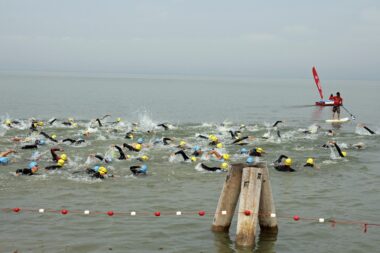

Transition Tips: Quickly Removing Your Wetsuit After Swimming
Transitioning from swimming to biking in triathlons can be challenging, especially when it comes to removing your wetsuit effectively. One of the most critical aspects of triathlon training is practicing this skill, as a smooth transition can save you precious minutes. Start by identifying the best way to loosen and remove your wetsuit quickly. After your swim, ensure you are calm and focused. Use your hands to pull down the zipper of the wetsuit, but don’t completely remove it yet. Leverage the momentum from your swim to stand tall, allowing gravity to help you. Prepare your transition area with a towel and your gear for the next leg. Position your feet on a mat or towel to ease the frustrating feeling of struggling to get the wetsuit off while balancing. Ensure that your bike shoes are easily accessible as well. Practice this sequence multiple times in training to build confidence. Remember that every second counts, so efficiency is key. With practice, you will learn tricks that work for you, making transitions smoother and more reliable, thus enhancing your overall performance during the race.
Another essential tip for removing your wetsuit quickly involves focusing on your legs. When you’ve completed the swim leg and climbed out of the water, take a moment to shake your legs out and regain your footing. This step is crucial, as wet and slippery legs can make it difficult to remove the wetsuit. If possible, try to sit down briefly on a low bench near your transition setup. This can create a stable surface for pulling off the suit. Gently roll the wetsuit down your legs, carefully guiding it over your ankles. If you’re using a full wetsuit, this process can feel cumbersome, so be patient. Once you reach your ankles, utilize your hands to help remove the suit completely from your feet. Remember to check for any straps or buckles that might interfere with the removal. As you practice, focus on refining this technique until you can do it swiftly and efficiently. Each practice session in transition adds additional layers of familiarity to this process, making the real race day feel more manageable and less stressful. Every athlete may develop personal techniques that reflect their unique shape and size, so discover what works best for you.
Utilize Lubricants for a Smoother Transition
Using lubricants can significantly enhance your wetsuit removal experience. Athlete-approved products like Body Glide can help minimize the friction between your skin and the wetsuit, allowing for easier removal. Applying a thin layer to areas with chafing potential like your neck, arms, and inner thighs can prevent sticking and increase comfort. Training with lubricant is essential to find the right amount that suits your skin without causing issues during competitive events. Always select a lubricant that’s safe for neoprene material to avoid any damage to your wetsuit. It’s beneficial to incorporate these products into your transition practice, cultivating an opportunity to assess how the lubricant reacts with your wetsuit and skin together. On race day, if you choose to utilize a lubricant, ensure you have it prepared in your transition area. Many triathletes prefer keeping it in sight for easy access while they’re transitioning. The last thing you want to experience is fumbling through your gear after a tough swim. Additionally, if you have coached sessions leading up to the event, let your coach know if you are using lubricants so they can provide tailored advice.
Another common method involves wearing a wetsuit that incorporates easier removal features. Many triathlon wetsuits feature lower cut ankles and a thinner neoprene around your legs to enhance ease during transitions. Choosing the right wetsuit can be a game-changer, giving you that additional factor needed in those crucial moments. When shopping for wetsuits, always try on different styles and see how it feels when transitioning. Flexible joints and swift removal features can improve your overall performance during the transitions between swimming, biking, and running. It’s a fantastic opportunity to learn about different materials, thicknesses, and cuts that might fit your needs as a triathlete. Pay attention to reviews and consult trainers about features to look for in neoprene suits designed for transitions. Your wetsuit should feel like a second skin, helping you swim effectively while being functional as you transition. Always complete your research before making a purchase, so you feel confident in your selection. Ultimately, a well-fitting wetsuit tailored to your goals and style may provide a distinct advantage while adding comfort to your experience.
Practice Makes Perfect
Consistent practice is fundamental to mastering your wetsuit removal strategy. Set aside dedicated training time to simulate race conditions, including the thrilling yet frantic moments of transitioning after swimming. At this stage, it becomes increasingly crucial to develop muscle memory. Each time you practice, visualize the steps you need to take as you approach the end of your swim, reminding yourself of your intended actions. Practicing these routines will build familiarity for your body, making race day much less daunting. It’s also valuable to time your transitions to identify areas that can be improved, enabling you to minimize any chances of error. Additionally, invite training partners to join your practice runs as they can provide constructive feedback and help you tweak the techniques. After every session, reflect on what works and which aspects could be refined—this reflection process is paramount for improvement. Countless triathletes learn through adapting their strategies over time, enhancing their skills overall. When your practice is consistent, including tested strategies, running through these scenarios will become a well-oiled machine on the race course.
Lastly, consider the mental preparation involved in transitioning smoothly during a triathlon. Mental rehearsal can be just as important as physical practice. Before your race, visualize every aspect of your swim and transition routine. Envision yourself reclining on the side of the pool and moving forward through the motions of removing your wetsuit with precision. By practicing mental imagery, you are creating neural pathways in your brain that can assist with performance on race day. Combine techniques like breathing exercises to ease anxiety and enhance focus, helping to maintain clarity even in competitive situations. Positive affirmations can promote self-belief leading to better outcomes. Remind yourself that preparation equals opportunity; be confident in the work you’ve put in leading up to the race. On race day, enabling your body to execute the practiced motions coupled with your mental preparation will enable you to transition effectively. Experience teaches resilience in unexpected situations. As you train regularly and mentally scrimmage the transition strategy, you will inevitably find a rhythm that resonates with your strengths and abilities during a triathlon event.
Conclusion: Embrace Training and Strategy
In conclusion, removing your wetsuit quickly after swimming is a skill that can be mastered with diligence, training, and the right strategies. Embrace the opportunities presented by incorporating lubricants, testing wetsuit features, and practicing consistently to emerge victorious in your transitions. The transition from swimming to biking in a triathlon can be a defining moment of your race—one that often determines your overall performance. By implementing the tips discussed throughout this article, you will diminish the risk of struggling during this crucial stage. Remember to focus on mental rehearsal and build your self-confidence each step of the way. In addition, use the knowledge gained from evaluating your practices to create actionable steps for your upcoming races. Take time to connect with fellow triathletes to share experiences and tips that may enhance your approach to wetsuit removals. Ultimately, ensuring each transition is seamless and efficient can lead not only to better race times but significantly enrich the overall experience of participating in a triathlon.
With continual improvement of your swimming skills and transition techniques, enhance your proficiency for race day. It’s a fantastic way to become an adaptable athlete with varying approaches to suit your unique style. Cultivating an understanding of personal strengths and weaknesses regarding wetsuit removal will ultimately refine your performance. Make it a point to continue learning and growing within the triathlon community, so you cultivate readiness and exceed your limitations during the competition. Your experience in practice will enable you to perform under pressure, utilizing every minute to ensure smooth transitions and optimal outcomes. The ideal wetsuit, combined with effective training and mental preparedness, can redefine your performance within triathlons. Each athlete possesses a distinctive journey toward their goals—embrace each race and refine these techniques for success.