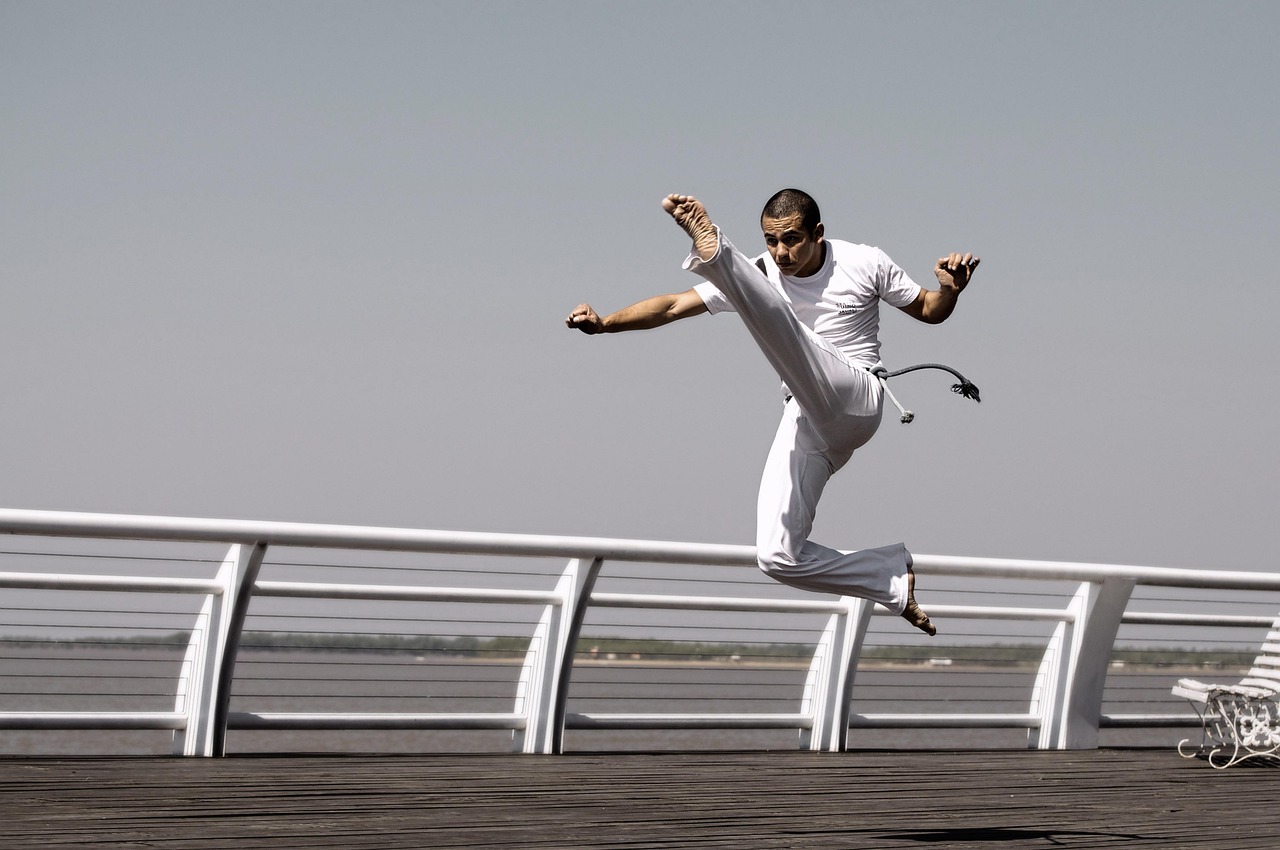

Using Capoeira’s Acrobatics to Turn Defense into Counterattack
Capoeira is a unique martial art combining elements of dance, acrobatics, and music. Originating from Brazil, it was developed by African slaves who used it for self-defense against oppressors. The playful, flowing movements of capoeira can effectively be used as a means of self-defense. Practitioners learn to execute evasive maneuvers, swift kicks, and intricate footwork that enable them to outmaneuver opponents. Unlike traditional martial arts, capoeira emphasizes fluidity and rhythm, allowing a defender to transition quickly into counterattacks. Students often practice these dynamic moves within a circle, known as a “roda,” where they face off with partners in a dance-like battle. This environment fosters creativity and spontaneity, essential qualities in self-defense situations. Capoeira is not just about attacking; it teaches practitioners to respond to threats while remaining aware of their surroundings. Furthermore, incorporating acrobatics, such as flips and spins, can create distance during an encounter. As the practice of capoeira continues to evolve, its application in self-defense contexts offers valuable strategies that can help individuals protect themselves effectively.
A significant aspect of capoeira is its focus on developing agility, balance, and coordination. These physical attributes are fundamental when responding to an aggressor. The acrobatic nature of capoeira challenges practitioners to improve their body control, making it easier to dodge incoming attacks. By mastering these movements, individuals can strike back with effective counters, transforming defense into offense. The practice also emphasizes the importance of footwork, enabling students to move swiftly in any direction. This allows them to evade strikes while simultaneously preparing to launch counterattacks. Additionally, a unique feature of capoeira is its emphasis on improvisation. Every practitioner develops their personal style, leading to unique responses to threats. This variability is crucial in self-defense situations where attackers can act unpredictably. Moreover, the camaraderie built within the capoeira community creates an environment that encourages learning through shared experiences. Each practitioner learns from their peers, which enhances their adaptability in various situations. All these elements combined not only make capoeira an effective self-defense technique but also contribute to the emotional and social well-being of its practitioners.
Understanding the Philosophy Behind Capoeira
Capoeira is not merely a physical activity; it is imbued with cultural significance. The art form incorporates rich Brazilian culture, history, and music, which is integral to its practice. The rhythm of the music provides the backdrop for movements, dictating the flow and intensity of capoeira. Understanding this philosophy enables practitioners to connect with their art on a deeper level. In self-defense situations, this connection can amplify effectiveness during engagements. The mental aspect of capoeira, such as remaining calm under pressure, is as important as the physical techniques. By staying composed, individuals can make better decisions during confrontations whether they choose to parry, evade, or counterattack. Capoeira teaches practitioners to be aware of their environment, recognizing potential threats before they escalate. Additionally, the social aspects promote respect and empathy amongst practitioners, values that can diffuse conflicts. This art form emphasizes the importance of knowing when to engage and when to retreat, allowing practitioners to foster a sense of understanding in their interactions with others. Overall, the philosophy underlying capoeira greatly enhances its application as a self-defense tool.
Incorporating acrobatic techniques into self-defense can yield surprising results. Moves like the “au” (a cartwheel) or “negativa” (a movement to ground) can be effectively employed to evade strikes, providing an opportunity for a counterattack. Such movements are visually impressive and can create confusion in an attacker, buying valuable time. Training in capoeira also instills a strong sense of discipline and confidence in practitioners. Knowing that they possess these unique skills can deter potential attackers, as confidence often translates into assertiveness. When confronted, individuals equipped with capoeira skills can project an air of self-assuredness that may dissuade aggressors from proceeding. Furthermore, consistent practice develops muscle memory, essential for effective self-defense. When faced with a threat, trained responses become instinctual, allowing practitioners to react without hesitation. The ability to flow from defense into counterattack becomes second nature. Overall, the integration of capoeira’s acrobatic elements not only equips practitioners with practical self-defense techniques but also nurtures their mental resilience, providing a holistic approach to safety and empowerment.
The Importance of Training and Conditioning
Training and conditioning are vital components of effective capoeira practice. The development of core strength is fundamental, given how much of capoeira relies on powerful movements and techniques. A strong core enables practitioners to perform advanced acrobatic moves with ease and precision. Additionally, regular practice helps build stamina, which is crucial during prolonged self-defense scenarios. Practitioners often engage in various exercises that enhance their flexibility, allowing them to execute high kicks and intricate maneuvers. As the body becomes more flexible, individuals can respond more fluidly to attacks while maintaining balance and poise. Moreover, conditioning reinforces the body’s resilience against impacts, a likely benefit in any altercation. It prepares individuals to withstand potential blows or falls without sustaining significant injuries. Mental training, such as visualization techniques, is equally important. Envisioning successful outcomes in defense scenarios reinforces confidence and readiness. By taking these aspects into consideration, one can effectively create a training regimen that enhances overall effectiveness in both capoeira and real-world defense situations. Capoeira’s holistic approach to physicality and psychological preparedness makes it particularly valuable in self-defense training.
One of the largest benefits of practicing capoeira for self-defense is the integration of community engagement. The supportive environment built around capoeira fosters unity among practitioners of all skill levels, encouraging collaboration and shared learning. This collaborative spirit is essential for developing practical self-defense skills, as practitioners often spar with partners of varying abilities. These interactions provide valuable insights into different techniques and responses to threats. Moreover, the inclusivity of capoeira allows individuals from diverse backgrounds to participate and contribute. This diversity enriches the learning experience, enabling practitioners to adopt methods and strategies that are not just effective but also culturally informed. Additionally, character-building skills such as discipline, respect, and patience are cultivated in this community. Practitioners learn to approach conflicts not just through physicality, but also understanding and communication. These skills can lead to a significant change in one’s approach to conflict resolution, making individuals more effective responders in real-life scenarios. By prioritizing community engagement and collaboration, capoeira ensures practitioners are not alone in their journey toward self-defense mastery.
Final Thoughts on Capoeira and Self-Defense
In conclusion, capoeira offers a dynamic and effective approach to self-defense through its unique blend of acrobatics, agility, and cultural significance. The acrobatic techniques provide innovative means to evade attacks and counter effectively, turning a potentially dangerous situation into a display of skill and creativity. As practitioners immerse themselves in the art, they not only gain physical capabilities but also develop mental resilience and confidence. The strong community aspects of capoeira further enhance the practice, allowing individuals to grow and learn together, promoting a sense of belonging. Capoeira equips individuals with tools necessary to defend themselves while fostering a mindset focused on respect and understanding. Ultimately, the art provides practitioners with a well-rounded perspective on self-defense, emphasizing not just physical confrontations but also the importance of mental preparedness and community engagement. Those interested in self-defense can greatly benefit from exploring capoeira as part of their training regimen. With the right approach, capoeira can be a transformative art form that empowers practitioners in every aspect of their lives.
Hyphenation is crucial in improving legibility during capoeira practice. As practitioners transition between movements, clear visual cues can aid in processing complex transitions into counterattacks. It also mitigates confusion during partner work, enhancing your training sessions. Accentuating movement techniques ensures that strength is maintained, even while executing intricate maneuvers. Furthermore, understanding each transition in performance is essential for maximizing efficiency when using capoeira in self-defense. Many benefits arise from the repeated practice of these techniques. Strengthening connections between mind and body contributes to overall martial effectiveness. By training in this manner, students naturally develop the capacity to instinctively react when confronted with threats. While embracing capoeira as a hobby or passion, individuals uncover profound self-awareness, cultivating an appreciation for discipline beyond the mat. Cultivating such strengths stems from identifying personal areas for improvement, while challenges faced during training empower practitioners to overcome external conflicts in daily life. Adopting a positive mindset is crucial to enfrentando any emotional barriers that may arise. It reinforces the importance of confidence not just in practice but also when faced with real-life confrontations. Hence, capoeira emerges as a formidable ally in self-defense matters, making it worthwhile for interested individuals to explore its benefits further.