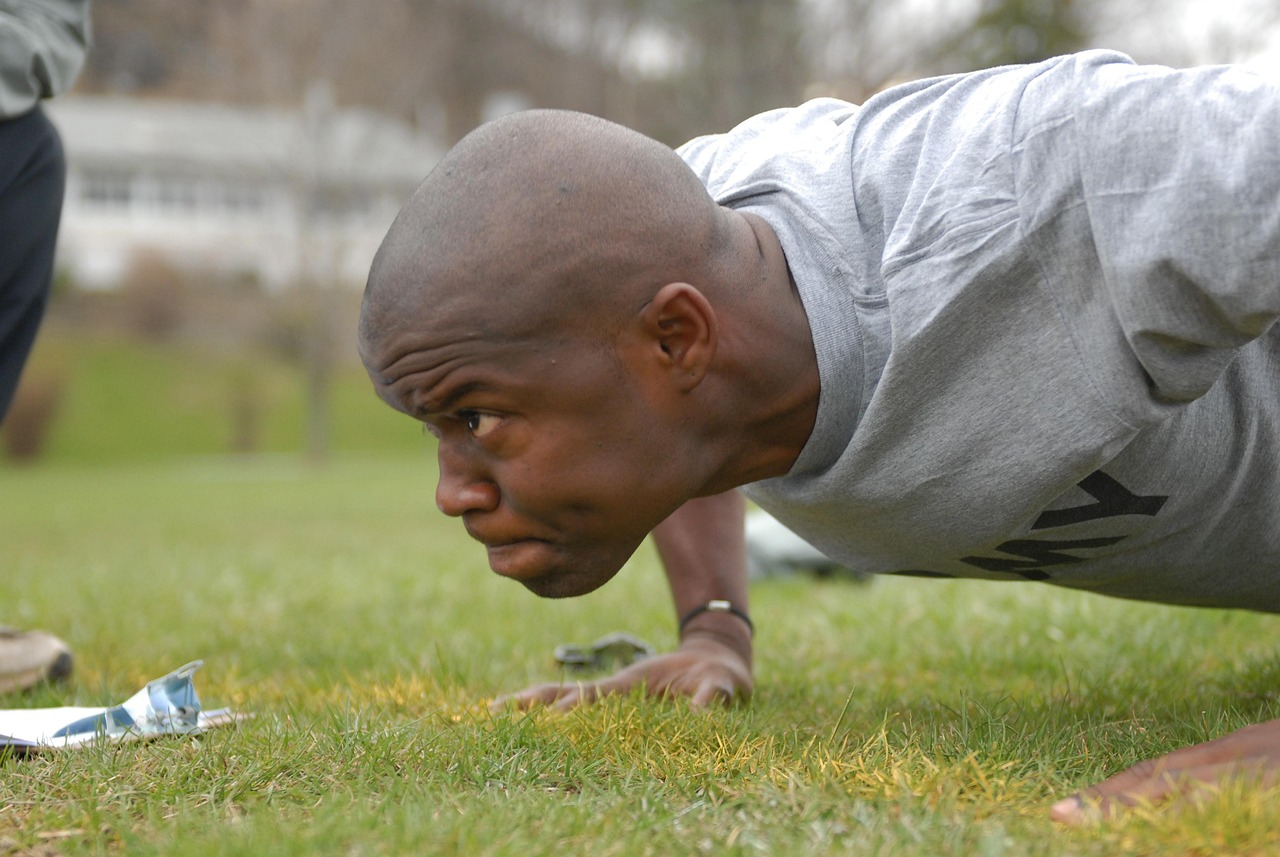

How to Progress Your Push-Ups: Bodyweight Variations
Push-ups are an iconic bodyweight exercise and a fundamental movement for building strength. To effectively progress your push-ups, you should consider incorporating various bodyweight variations. Each variation can help target different muscle groups and improve overall performance. Starting with the standard push-up, focus on maintaining proper form. Keep your body straight while lowering and raising yourself. As you master the basic version, explore alternatives such as incline push-ups, where your hands are elevated to reduce intensity. You can also try decline push-ups, placing your feet higher than your hands to increase resistance. Other variations include wide-grip push-ups, which target the chest, and diamond push-ups, aimed at the triceps. Remember, the goal is to maintain quality over quantity. Start slowly and listen to your body, ensuring you progress without risking injury. Additionally, varying the tempo of your push-ups can enhance muscle engagement. Slow down your descent or hold the position at the bottom for a few seconds. By integrating these methods, you will strengthen your upper body and prepare for advanced exercises. Consistency is key, so be sure to incorporate these variations into your routine.
Increasing the difficulty of push-ups can greatly enhance your workout experience. Once you feel comfortable with basic variations, consider adding explosive push-ups to your routine. These involve pushing off the ground powerfully enough for your hands to leave the floor. This variation not only builds strength but also boosts explosive muscle power. Another challenging alternative is the one-arm push-up, which requires significant core stability and upper-body strength. If you’re not ready for a full one-arm push-up, you can start with assisted versions, where one arm is on your lower back or elevated on a bench. For those seeking to further challenge themselves, explore plyometric push-ups. This technique adds a jumping motion, making it a dynamic exercise that improves both strength and agility. Alternatively, try the archer push-up, where you shift your weight to one side during the movement. This targets each side of the body more intensely. Ensure you maintain a stable core throughout any variation to prevent injury. Gradually integrate these exercises into your regimen while keeping a balanced approach to overall fitness, promoting endurance as well as strength.
Essential Tips for Bodyweight Variations
While exploring these push-up variations, it’s crucial to adhere to proper form. Quality should take precedence over the number of repetitions completed. Enhancing form is vital for effectively targeting muscles and preventing injury. Before performing push-ups, warm up your body adequately. Incorporate dynamic stretches focusing on the shoulders, chest, arms, and core. Focus on maintaining alignment throughout the movement, keeping your elbows close to your body. This alignment helps target the triceps more effectively. In addition, ensuring your wrists are aligned directly under your shoulders can help prevent any excessive strain. Taking short rests between sets is essential for recovery and strength building. Furthermore, remember to breathe properly; exhaling during the exertion phase and inhaling during lowering can improve cardiovascular efficiency. Keep a steady pace throughout, avoiding quick jerking motions. Progressing gradually is vital to ensure steady improvement; don’t rush to more complex exercises before your body is ready. Regularly log your progress; tracking numbers, sets, and how your body feels helps identify areas that require adjustments, ensuring a comprehensive approach to bodyweight training.
Incorporating different training styles can be beneficial for your evolution with push-ups. Circuit training, which often combines various bodyweight exercises, can add diversity and engagement to your routine. Pair push-ups with exercises targeting other areas, such as lunges or squats, to maintain an efficient workout session. High-Intensity Interval Training (HIIT) can also enhance your timeline by accelerating your heart rate while building strength. During HIIT, alternate between exercising at high intensity and short rest periods. Aim for durations like 20 seconds of active push-ups followed by 10 seconds of rest. This method can significantly improve cardiovascular endurance alongside muscular strength. As you move through different forms of training, be conscious of your muscle groups. Prioritize recovery by dedicating ample time for rest, especially after focusing on upper body workouts. Additionally, evaluate your nutrition; a balanced diet with sufficient protein intake can aid muscle reconstruction. Supplements might also support your goals, but always consult a healthcare provider first. Tracking your workouts with fitness apps or journals can help maintain motivation and enhance accountability in your strength training journey, ultimately helping you achieve your fitness aspirations.
Conclusion: Embracing Continuous Improvement
As you navigate through push-up variations and advancements, remember that progression is a journey. Consistency and patience are vital components when developing strength. Celebrate your achievements as you master each variation on your way to advanced push-ups. Don’t hesitate to revisit previous variants; often, this reinforces fundamentals and provides foundations for complex movements. Engaging in workouts with workout buddies can add a social aspect and encourage each participant to strive for more significant improvements. Challenge each other with different variations, increasing the level of difficulty and maintaining excitement in training. Additionally, consider joining fitness communities or online groups focusing on bodyweight training. You can share techniques, provide motivation, and learn from different perspectives while evolving your strategies. Resources such as instructional videos or online courses can enhance your understanding and execution of bodyweight exercises. Providing mutual support can foster a more profound commitment to your personal growth and fitness goals. Ultimately, every small incremental gain leads to significant long-term gains, resulting in durable strength and confidence within your body. Stay motivated, and embrace the ethos of continuous improvement in your push-up journey.
The integration of progressive overload principles can significantly enhance your push-up performance. It is crucial to challenge yourself consistently by gradually increasing the resistance or altering body angles during exercises. Additionally, switching between different variations to target various muscle groups will keep your routine fresh and effective. Performing push-ups at different tempos can also make a meaningful difference; practice slowing down on the way down and exploding upwards—all enhancing muscle activation. Incorporating resistance bands around your arms or back can further add challenge by providing additional tension. Leaning into your workout while paying attention to muscle fatigue is essential; it prompts strategic adjustments and informs your progression. In the arena of bodyweight training, listening to your body is paramount. If you feel fatigued or sore, take time off to recover effectively. Integrating mobility work into your routine ensures you maintain flexibility and joint health. Thus, dedicating even 10-15 minutes daily to stretch areas like the shoulders and wrists is beneficial. Never hesitate to seek feedback on your form from trained professionals or peers for additional insights on your technique. Ultimately, staying informed helps maintain safety and maximizes effectiveness over time.
Participating in structured challenges can also be an effective method to refine your push-up skills. Programs tailored to progression can offer timelines and structured workouts to boost endurance and strength systematically. Consistent challenge periods of 30 days can also foster motivation and focused training. Regularly switching challenges keeps the body adapting to progressive stress. When fatigue sets in, ensure to switch from high-intensity workouts to more moderate recovery sessions. Rest and recovery are fundamental to muscle growth and strength gain. Monitoring your physical responses can guide your decisions upon whether to increase workouts or take necessary breaks. Moreover, exploring various push-up adaptations like clapping push-ups can enhance fun and excitement in your routine. Pushing forward in strength training requires exploration and innovation; feel free to adjust workouts to align with your fitness journey. Listen to your body, and prioritize recovery. Whether focusing on endurance, strength, or agility, variations should align with ultimate personal goals. Ultimately, this comprehensive approach will keep your push-up journey engaging while steadily climbing toward improved performance.
The integration of progressive overload principles can significantly enhance your push-up performance. It is crucial to challenge yourself consistently by gradually increasing the resistance or altering body angles during exercises. Additionally, switching between different variations to target various muscle groups will keep your routine fresh and effective. Performing push-ups at different tempos can also make a meaningful difference; practice slowing down on the way down and exploding upwards—all enhancing muscle activation. Incorporating resistance bands around your arms or back can further add challenge by providing additional tension. Leaning into your workout while paying attention to muscle fatigue is essential; it prompts strategic adjustments and informs your progression. In the arena of bodyweight training, listening to your body is paramount. If you feel fatigued or sore, take time off to recover effectively. Integrating mobility work into your routine ensures you maintain flexibility and joint health. Thus, dedicating even 10-15 minutes daily to stretch areas like the shoulders and wrists is beneficial. Never hesitate to seek feedback on your form from trained professionals or peers for additional insights on your technique. Ultimately, staying informed helps maintain safety and maximizes effectiveness over time.