
Yoga Poses for Posture Improvement You Can Do at Home
Maintaining good posture is crucial for overall health and well-being. Poor posture can lead to various health issues, including back pain, neck strain, and decreased mobility. Incorporating yoga poses into your daily routine can be an effective way to improve posture. Yoga not only enhances flexibility but also strengthens muscles that support correct alignment. It encourages body awareness, allowing you to recognize and correct slouching habits. In this post, we will explore several yoga poses specifically designed to improve your posture while allowing you to work on them comfortably at home. These exercises can be easily adapted to fit all levels of practice, whether you are a beginner or advanced yogi. Establishing a consistent routine will yield the best results. For each pose listed, it’s essential to focus on proper technique and breathing. Take your time to master each position, holding each stretch to allow your body to adapt fully. The main objective is to release tension and encourage proper spinal alignment, leading to a more confident stance as well. Let’s dive into the transformative world of yoga for posture improvement!
Mountain Pose (Tadasana)
The Mountain Pose, or Tadasana, is one of the foundational yoga poses that benefits posture. Stand tall with your feet together, arms resting at your sides. Distributing your weight evenly between both feet, gently engage your thighs to lift your knees. Draw your belly in toward your spine and allow your shoulders to relax away from your ears. Take deep breaths, feeling your chest open and expanding with each inhalation. As you stand taller, draw your chin slightly in, aligning it with your neck. This grounding pose cultivates a sense of stability and strength within the body, effectively improving posture. Hold Mountain Pose for at least one minute, focusing on the breadth of your breath and maintaining a steady gaze ahead. By integrating Tadasana into your daily yoga practice, you develop a greater awareness of your alignment and posture throughout the day. Whenever you find yourself drifting into poor posture, briefly return to this pose to realign your body and reconnect with the present. It serves as a gentle reminder for both your body and mind as you work towards better posture.
The Cat-Cow stretch is another essential pose that fosters better posture and spinal health. Start in a tabletop position on your hands and knees, ensuring your wrists align with your shoulders, and your knees align under your hips. Inhale as you arch your back, allowing your belly to drop towards the floor for the Cow position. Lift your head and tailbone towards the ceiling. As you exhale, round your back, pulling your navel toward your spine and tucking your chin to your chest for the Cat position. This alternation helps to improve the flexibility of your spine while also promoting a stronger core. Cycle through this flow for several repetitions, linking your breath with each movement. Not only does this stretch relieve tension in the back and neck, but it invites mindfulness into your day. Performing this simple sequence regularly can significantly enhance your awareness of your spine’s position and its alignment. Make it a habit to integrate the Cat-Cow stretch into your warm-up before engaging in more demanding yoga poses or daily activities, ensuring a more conscious approach to your movements.
Child’s Pose (Balasana)
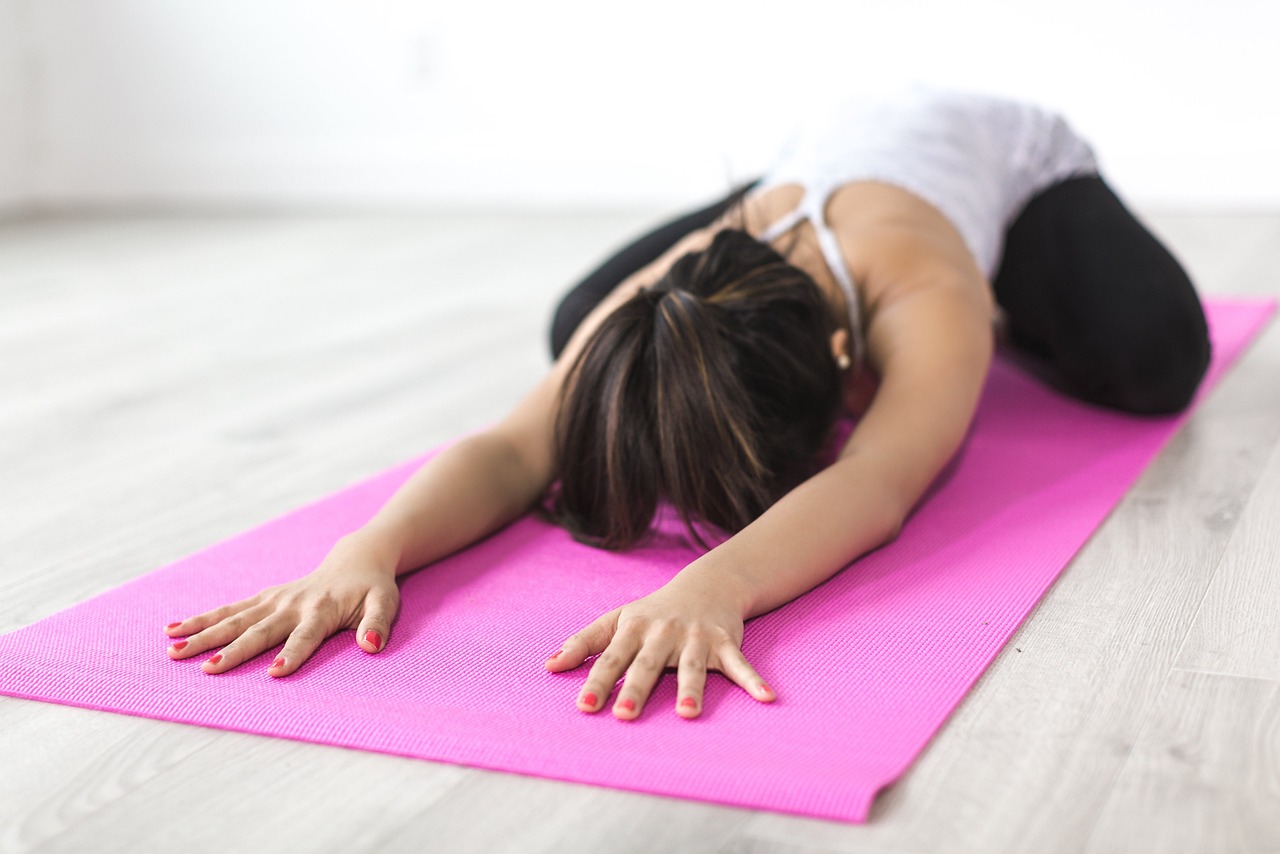
Child’s Pose, or Balasana, is a wonderful restorative pose that encourages relaxation while also aiding in posture improvement. To begin, kneel on the floor, touching your big toes together while sitting back on your heels. Slowly lower your torso down, stretching your arms forward on the mat or resting them alongside your body. As you breathe deeply, allow your forehead to rest on the ground, releasing tension in your back and neck. This gentle folding position promotes relaxation and stretches the spine, allowing it to lengthen. Child’s Pose also encourages mindfulness, enabling you to focus on your breath and ground yourself. Hold this pose for anywhere from one to five minutes, depending on your comfort level. It can be beneficial to return to this pose during your practice to reset and re-energize your body. Moreover, it strengthens your hip flexors and stretches your spine throughout your practice, facilitating improved posture. Use Child’s Pose as a moment to check in with yourself throughout the day and breathe deeply, promoting a state of overall wellness.
Cobra Pose (Bhujangasana) is an excellent pose that strengthens the spine, enhances flexibility, and opens the chest, all contributing to improved posture. Lie face down on your mat, stretching your legs back, feet hip-width apart. Place your palms under your shoulders, fingers spread wide. As you inhale, gently raise your chest off the ground while keeping your hips and legs grounded. Ensure to keep your elbows close to your sides while your shoulders relax away from your ears. This position encourages an arch in your back, promoting spinal extension. Cobra Pose not only builds back strength but also stretches the shoulders, chest, and abdomen, countering the effects of slouching. Hold the pose while breathing deeply for 15-30 seconds, gradually increasing the duration as your strength improves. Incorporating this pose into your fitness regimen can drastically reduce back pain caused by poor posture. It serves as a reminder to open up the chest and breathe fully, bringing awareness to your alignment. To maximize benefits, practice Cobra Pose regularly, creating a strong foundation for better posture and body awareness.
Bridge Pose (Setu Bandhasana)
Bridge Pose, or Setu Bandhasana, is an empowering pose that simultaneously opens the chest and strengthens the back body. Start by lying on your back with your knees bent, feet hip-width apart, and flat on the mat. Your arms should rest alongside your body. As you inhale, press your feet into the earth, lifting your hips towards the ceiling. Ensure to engage your glutes, feeling the lengthening of your spine as you create space. Your shoulders should remain flat on the ground away from your ears, promoting neck relaxation. Hold this pose for 30 seconds to one minute, breathing steadily and deeply. This exercise not only builds strength in the glutes and lower back but also encourages an opening in the thoracic spine, vital for better posture. Additionally, the Bridge pose counteracts the tension induced by prolonged sitting. It can also be a fantastic pose to unwind after a long day. Incorporate Bridge Pose after your yoga routine or periodically throughout the day, especially when you feel tension accumulating in your lower back.
Finally, the Plank Pose is a powerful posture that improves core stability, essential for supporting good posture. Begin in a push-up position with your hands directly under your shoulders. Your body should form a straight line from your head to your heels. Engage your core, keeping your hips level with your shoulders while avoiding sagging or arching your back. Breathe steadily as you maintain this alignment, holding the position for 20-60 seconds. This foundational pose not only strengthens the shoulders, arms, and spine but also improving overall core engagement. As your core strengthens, you will notice a positive impact on your posture throughout daily activities. Regular practice of Plank Pose can significantly enhance your body’s ability to maintain upright posture during various movements. Challenge yourself by varying the duration and intensity of this pose based on your fitness level. Incorporating modifications, such as dropping to your knees, can be beneficial for beginners. By focusing on core strength and body awareness through Plank Pose, you pave the way for improved posture and overall well-being.
Conclusion
In conclusion, incorporating yoga poses into your daily routine can greatly enhance posture and overall body awareness. Each of the poses discussed here offers unique benefits for spinal alignment and core stability. Practicing these techniques regularly will not only invigorate your mind and body, but it will also establish a powerful foundation for better posture in your everyday life. Start with the basics and gradually venture into more challenging poses as you develop strength and flexibility. Pay attention to your breath and form, ensuring you maintain the integrity of each posture. Consistency is key in experiencing long-lasting results in your posture improvement journey. Moreover, as you adopt these practices, you will find a newfound sense of self-awareness and confidence that accompanies better posture. Create a daily yoga routine that emphasizes these poses or integrate them into your existing fitness regimen. Remember that small increments of practice are just as valuable as longer sessions. Embrace the journey and enjoy the process of bettering yourself through yoga. Improved posture represents not only physical benefits but also mental clarity and enhanced overall health.