
The History and Evolution of Team Tug of War
Tug of war has existed for millennia, showcasing the love for competition that unites humans. Its roots trace back to ancient civilizations, where it held cultural significance. Often associated with rituals, contests in tug of war provided not just entertainment but also a test of strength. Ancient Egyptians depicted tug of war in hieroglyphics, illustrating its prominence. In Ireland and the Far East, variations developed as communities embraced this challenging sport. Each region infused its cultural practices into the game, making it a tapestry of traditions. As societies evolved, so too did the sport, from leisurely pastimes to organized competitions. Teams began to formalize, establishing alliances that added a strategic element to gameplay. The desire for camaraderie and teamwork flourished, wherein each participant played a vital role. The game fostered unity among rival factions, reflecting the spirit of competition. By the 19th century, tug of war gained traction as an organized sport at fairs and festivals, signaling the entry into modern competition. Enthusiasts rallied, forming clubs and associations that established regulations.
As tug of war gained popularity, governing bodies emerged to create standardized rules. The requirement for official referees and regulated event formats added professionalism to the sport. Nations began establishing their teams, leading to international competitions such as the World Tug of War Championships, first held in the 1980s. Competitors from various countries showcased their unique styles, contributing to the evolution and diversification of tactics. Equipment also saw improvements, as teams invested in better ropes designed for optimal grip and minimal slippage. The connection between teams strengthened, balancing teamwork with individual prowess. Audience interest soared, drawing crowds to events. Tug of war became a staple at athletic meets, further emphasizing its role in fostering community spirit. Schools began including the sport in physical education programs, encouraging teamwork among younger generations. The game’s ability to teach valuable lessons in cooperation and perseverance resonated widely. By the late 20th century, tug of war transitioned into a recognized sport, adeptly merging tradition with modernity. The growth of media coverage and sponsorships propelled the sport into the mainstream, enhancing its appeal.
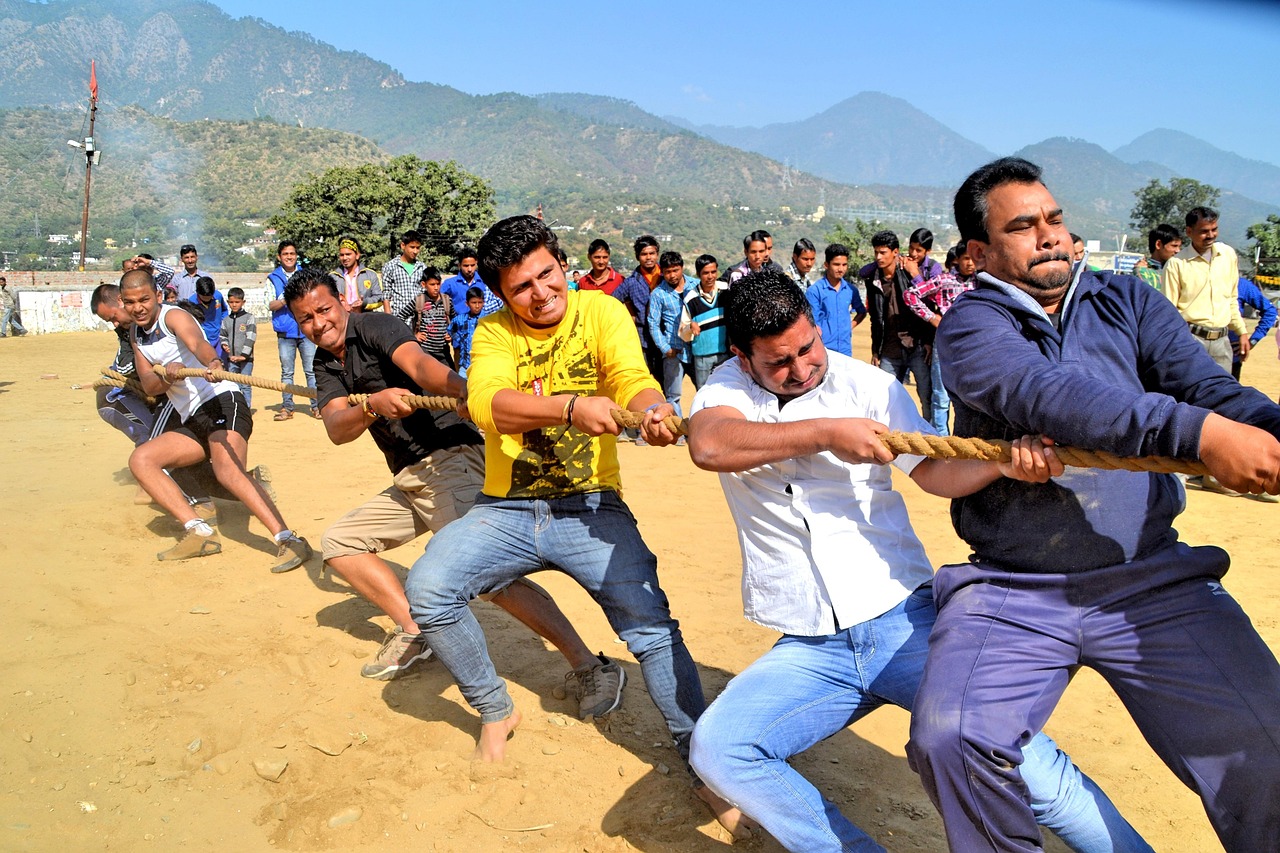
Tug of war today features distinct styles, such as indoor and outdoor competitions, each demanding different skills. Indoor tug consolidates agility and grip strength, while outdoor versions challenge endurance on various terrains. Teams focus on tactical formations, positioning members for optimal leverage and power. Calculation and strategy play pivotal roles, often determining outcomes against physically stronger opponents. The introduction of weight divisions ensures fairness, allowing teams to compete on equal footing. Essential to these competitions are the designated roles: the anchor, who bears the brunt of team strength, while pullers generate momentum. The psychology of tug of war often reflects battle strategies, where mental fortitude proves essential. Teams not only train physically but also hone their mental conditioning to outlast rivals. Techniques from other sports like wrestling and rowing can enhance performance, marrying elements of endurance with power. Coaches increasingly look at biomechanics, refining techniques for better results. In recent years, technology has augmented training methods, allowing teams to analyze performance through data interpretation. Championships now draw international attention, showcasing the sport on a global stage while promoting athleticism.
Modern Competitions and Associations
Modern tug of war competitions showcase athleticism and teamwork, with associations actively promoting the sport. The World Tug of War Federation (TWIF) governs regulations, ensuring fairness and safety across international events. The Olympics recognizing tug of war as an official sport in the early 1900s added credibility, though this was short-lived. Nonetheless, it paved the way for organized tournaments globally. Countries retain passionate rivalries, with national teams training rigorously in preparation for annual championships. These events draw spectators eagerly anticipating displays of strategy, strength, and discipline. Tug of war encourages inclusivity, with categories for various age groups and skill levels, engaging everyone from children to senior athletes. Community-based programs empower local clubs, fostering grassroots participation. Workshops and training camps nurture talent, transforming enthusiastic participants into skilled competitors. Schools have embraced the sport, incorporating it into extracurricular activities. This not only promotes physical fitness but also vital social skills. The collaborative effort required in tug of war unites diverse communities, transcending barriers and fostering friendships. National and international organizations continually seek ways to enhance participation, ensuring tug of war remains alive.
The rise of technology has played a role in the evolution of tug of war training. Online platforms now deliver training videos, strategies, and even virtual coaching, broadening access to expertise. Teams harness social media to document their journeys, sharing successes and challenges with dedicated followers. This increased visibility helps attract newcomers to the sport while reviving interest among enthusiasts. Furthermore, streaming competitions live amplifies audience engagement, drawing viewers from around the globe. The digital age has thus transformed tug of war from an isolated activity into a community experience shared by countless fans. Collaborations with influencers and athletes further amplify its reach, inspiring a new generation to participate. Schools and local clubs are encouraged to embrace these trends, integrating technology into their practices. Initiatives aiming to celebrate tug of war heritage while innovating modern practices ensure the sport’s sustainability. Workshops that incorporate technology assist athletes in refining skills and tactics. Seasoned participants mentor newcomers, establishing lasting connections in community-based programs. Overall, the sport now incorporates modern techniques while retaining the essence of tradition deeply rooted in its past.
The Cultural Impact of Tug of War
Tug of war’s evolution intertwines with cultural identity and communal values throughout history. Societies have historically participated in the sport, forging bonds through friendly rivalry. Events serve as social gatherings, where clashing factions showcase strength and unity concurrently. This underlines tug of war’s dynamic role in weaving community narratives. Festivals often herald tournaments, celebrating partnership among teams while instilling pride. For instance, tug of war events during traditional celebrations like harvest festivals exemplify the solidarity of laborers. Across cultures, each variation informs social customs, such as traditional attire that may accompany local tournaments. Performance elements like chants invigorate teams while enhancing audience interaction, reinforcing communal identity. This emotional investment transcends mere competition, as teams exemplify local pride and resilience. Furthermore, educational institutions leverage this cultural significance, using tug of war to teach cooperative skills within students. With diverse backgrounds, participants glean insights into social dynamics, promoting inclusivity. Global events encourage cross-cultural exchange, showcasing how different regions interpret the same game uniquely. As tug of war thrives in this context, it plays a vital role in preserving cultural legacies.
Looking forward, the future of team tug of war blends tradition with the promise of expansion. Initiatives aiming for sustainability ensure that this ancient sport remains relevant and engaging. With an increasing focus on health and fitness, tug of war is positioned to attract those seeking team-based activities. Outreach programs targeting underrepresented groups work tirelessly to introduce the sport to diverse communities, a commitment to inclusivity. Social responsibility emerges as a focus, encouraging awareness around teamwork principles, discipline, and resilience. As national organizations strengthen ties globally, tug of war garners international recognition, potentially leading to reintroduction into the Olympics. Collaborations with existing sports associations aim to create promotional campaigns geared toward increasing participation. With technology facilitating training and engagement, the possibility of virtual competitions becomes real. The continued evolution of equipment will cater to a variety of participants, enhancing accessibility for everyone. Emerging fitness trends blending tug of war with modern exercises further popularize this team sport. Ultimately, tug of war’s resilience lies in its ability to adapt, evolve, and unite individuals through shared goals and spirited challenges, assuring its enduring legacy.