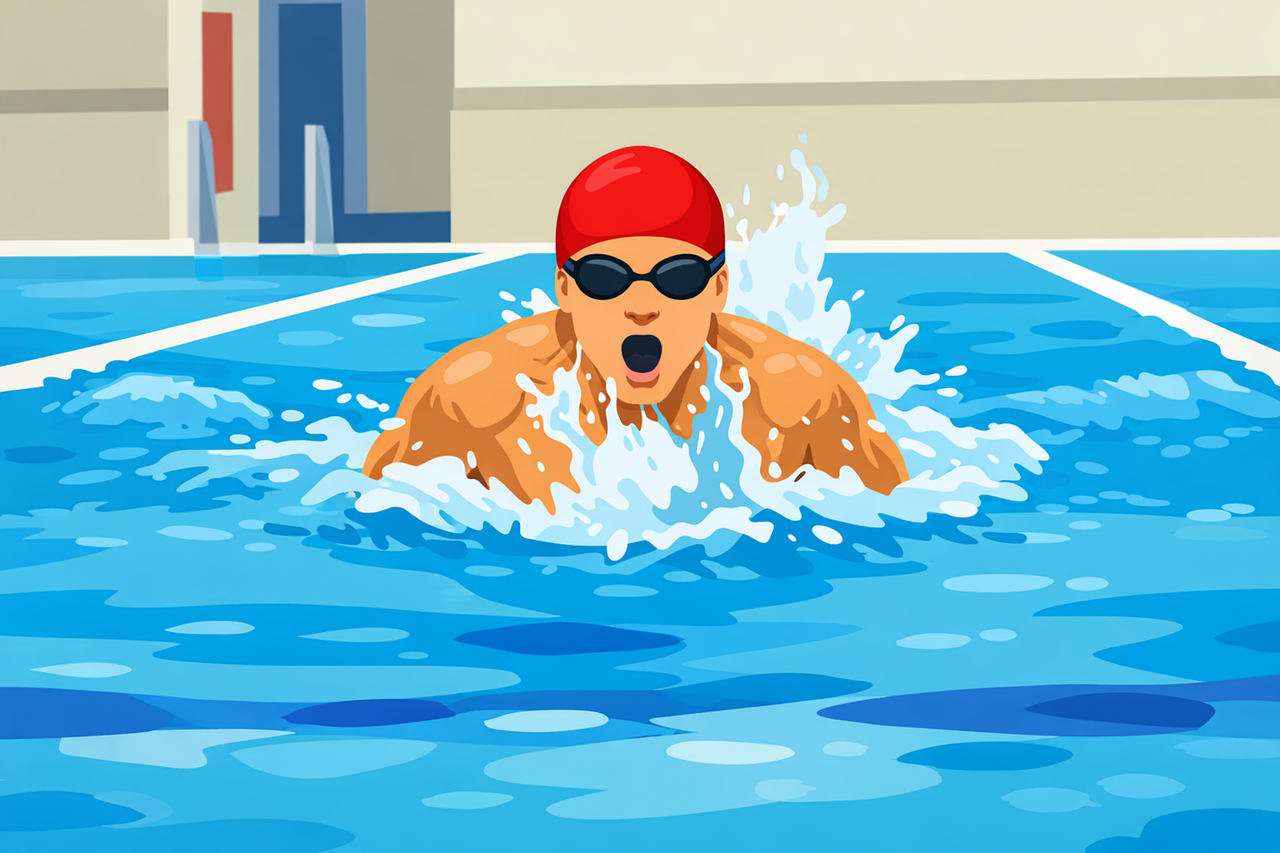

Improving Your Breaststroke with Targeted Workouts
The breaststroke is a unique swimming technique that requires proper coordination and timing. Mastering this stroke is essential for competitive swimmers and fitness enthusiasts alike. By implementing focused workouts specifically designed for breaststroke improvement, you can enhance your efficiency in the water. Key aspects of the stroke include a powerful kick, an effective pull, and a streamlined position in the water. To achieve this, consider integrating strength training exercises targeted at the muscles involved in swimming. Additionally, proper flexibility plays a crucial role in maximizing your stroke performance, allowing you to achieve a fuller range of motion. Nutrition also contributes significantly to overall performance; consider a balanced diet rich in proteins and healthy fats to support muscle recovery. Pair your workouts with proper hydration to keep your body functioning at its best. Taking the time to refine each component of the breaststroke will yield noticeable improvements in your overall speed. Training regularly while keeping these aspects in mind will help you become a more proficient swimmer. Embrace the challenge, and soon you’ll notice the difference as you glide through the water.
Incorporating drills into your training regimen can dramatically enhance your breaststroke technique. Standard drills such as “three kicks and a pull” allow you to focus on kicking while maintaining the timing required for the pull phase. Start by breaking down the stroke into its components; this will enable you to work on each aspect independently. Another effective drill is the “standing breaststroke” which emphasizes the importance of the hand entry and catch position. Practicing this drill can improve your awareness of how your hands interact with the water during your pull. Combine these drills with underwater practice to enhance your comfort level with breath control. Breathing technique is essential; strive for a quick inhale and a smooth exhale while maintaining your stroke rhythm. Furthermore, in-water strength exercises, such as resistance swimming with a pull buoy, can amplify the training effect. Increasing resistance during your workouts will facilitate muscle growth and boost your overall strength. Lastly, consistent practice, coupled with a focus on technique, will lead to gradual improvements. Also, be sure to track your progress and adjust your workouts accordingly to avoid plateaus.
Strength and Conditioning for Breaststroke
Strength training complements your swimming workouts and is vital for a powerful breaststroke. Exercises that target the chest, back, and legs enhance your physical performance in the water. Resistance training should ideally include exercises such as bench presses, lat pulldowns, and squats. Bench presses help build upper body strength necessary for powerful pulls through the water. Similarly, lat pulldowns focus on the back muscles and improve the catch phase of the stroke. Meanwhile, squats target your leg muscles, key for generating power from the kick. Use proper form during these exercises to prevent injury and maximize your training efficiency. Additionally, core strength is crucial for maintaining body alignment while swimming, and exercises such as planks or medicine ball workouts can improve your stability. Allow time for recovery and listen to your body; overtraining can lead to burnout and reduced performance. A well-rounded strength training plan will make a significant difference in your swimming results. Also, consider consulting with a fitness trainer who understands swimming-specific exercises to get further guidance on refining your strength workouts.
Improving your breaststroke also involves refining your breathing technique. Many swimmers struggle to maintain a consistent breathing pattern without disrupting their stroke rhythm. To practice, begin by inhaling when your arms are extended and your head is in the water. This isn’t just about getting air; it’s also about maintaining the streamlined position of your body. After inhaling, exhale through your mouth or nose while your head is back in the water to allow for a seamless transition. Consider timing your breath with your kicks to optimize your rhythm; the best time to inhale is during the glide phase after your pull. Breath control is essential, and it might help to practice breath-holding exercises during your workouts, to increase lung capacity. Moreover, pay attention to your head position; keeping it low reduces drag and stabilizes your stroke. With consistent practice and patience, your breathing will become more automatic, allowing you to focus on other aspects of your swimming. Performance in swimming is also about confidence; trust in your training, and the improvements will come.
Flexibility and Mobility for the Breaststroke
Flexibility greatly influences your capacity to execute a powerful and efficient breaststroke. A lack of flexibility can lead to restricted movement during swimming, ultimately affecting your performance. Regularly stretching the muscles around your shoulders, chest, and legs will prevent tightness and promote a full range of motion. Consider incorporating daily stretching routines to enhance your body’s elasticity. Target areas such as the hip flexors and shoulders, by performing stretches that encourage extensibility. A common stretch is the doorway stretch for your chest; it helps open up the front of your body. Additionally, you can perform seated leg stretches to work on your hamstring flexibility, essential for a strong kick. Combine static stretches with dynamic movements; exercises like arm circles or leg swings can improve mobility and warm up your muscles before swimming. Yoga can also be an excellent addition to your training routine; its focus on balance and flexibility can greatly benefit your swimming performance. Incorporate mobility exercises into your warm-up routine to prepare your body for intensive swimming sessions. Remember, improved flexibility translates to better strokes and overall efficiency in the water.
A significant element for swimming improvement lies in setting achievable goals. By defining short-term and long-term goals, you will maintain motivation and assess your progress effectively. Start with small, incremental improvements in your breaststroke and gradually move to larger targets. For instance, set weekly milestones for improving your stroke time or distance swim. Track your progress using a swim log or app to collect data on your various workouts. Consider participating in timed swims every month to gauge performance improvements over the long haul. Furthermore, joining a swim team or taking lessons can provide accountability and valuable feedback. Constructive critiques from experienced swimmers or instructors can greatly enhance your training route. Connecting with a community can inspire and motivate you to push past challenges. Remember to celebrate your accomplishments along the way; every small victory builds confidence and momentum. Stay versatile with your goals; as you progress, adjust your targets to continually challenge yourself. Lastly, be patient and persistent in your pursuits; transforming your breaststroke performance takes time and hard work.
Conclusion: Commitment to Improvement
Improving your breaststroke requires dedication and consistent training focused on technique and physical fitness. By integrating targeted workouts, strength training, and maintaining flexibility, you can significantly enhance your swimming efficiency. Emphasizing breathing techniques allows for a streamlined approach during swimming, which is crucial for performance. Always remember that results may take time, so patience and commitment are essential for long-term improvement. Regularly assess your progress while maintaining flexibility in your training routines. Set achievable goals, and don’t hesitate to adjust them as you continue to grow as a swimmer. Engaging with a supportive swimming community can also provide additional motivation and resource sharing. The path to enhancing your breaststroke skills involves much more than merely swimming laps; it requires a comprehensive approach that includes physical, mental, and emotional dedication. Embrace the journey of improvement, celebrating the small wins along the way, and don’t forget to enjoy the experience of becoming a more competent swimmer. Remember, every stroke, kick and breath you take in the water is another step towards achieving excellence in the breaststroke.
Nutrition also plays an important role in optimizing your swimming performance. A well-balanced diet rich in proteins, fats, and carbohydrates will support your overall performance and recovery. Staying hydrated is equally important as fluids aid in muscle function and overall energy. Make a habit of drinking water before, during, and after your workouts. Additionally, consider incorporating snacks such as energy bars, nuts, or fruit for sustained energy levels. Proper pre- and post-training meals will nourish your body and accelerate recovery. Consuming healthy foods with sufficient nutrients will fuel your body efficiently, ensuring that you have the energy needed to perform and excel in your workouts. It’s also essential to consult with a nutritionist who understands your training philosophies to optimally tailor your diet. Focusing on not just what you eat, but also when you eat can significantly impact your performance. Eating at regular intervals helps maintain blood sugar levels, promoting consistent energy throughout your training sessions. Taking your nutrition seriously will contribute directly to enhancing your performance in the water. Finally, always listen to your body and adjust accordingly; each swimmer has unique dietary needs depending on training intensity.