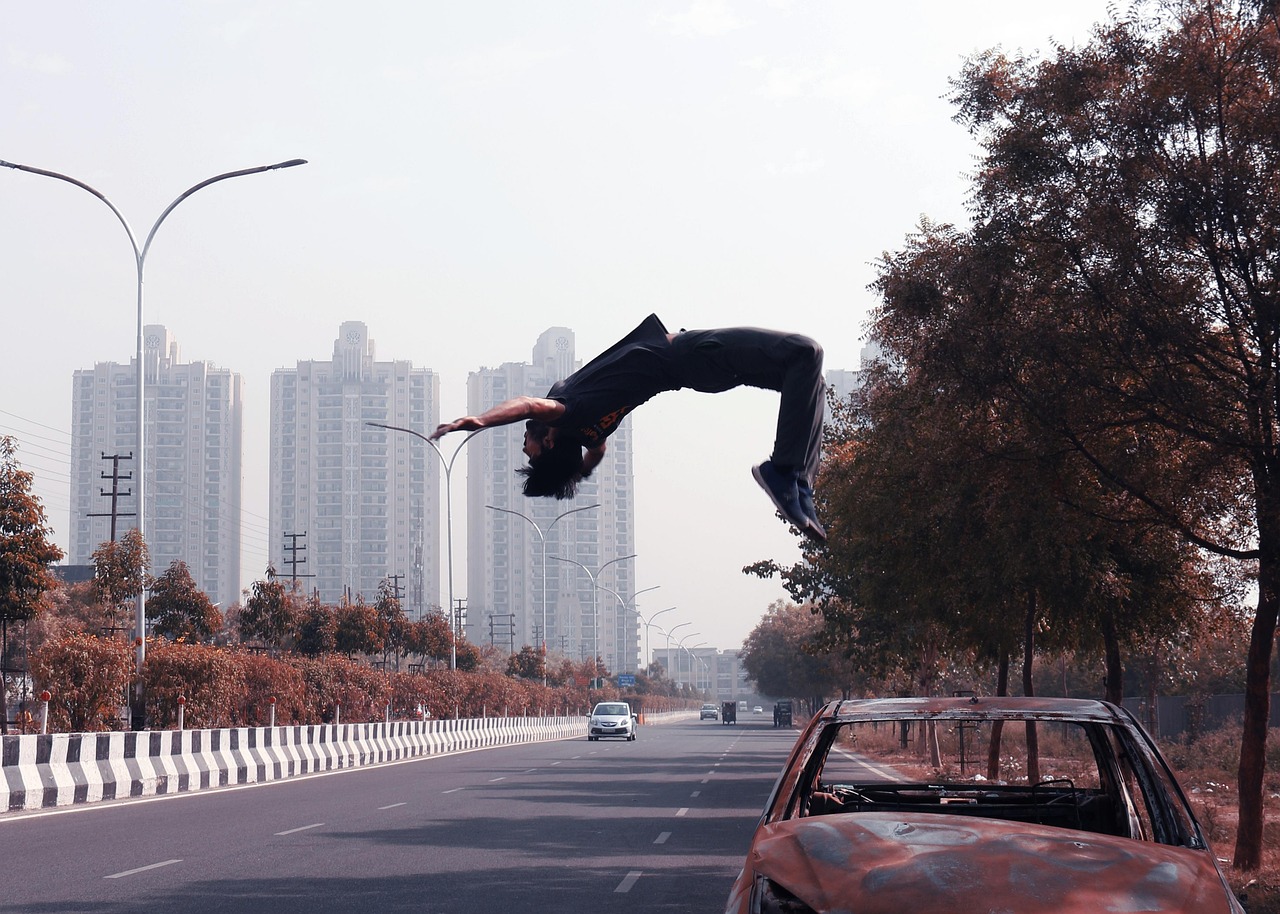

Using Bodyweight Exercises to Increase Parkour Strength
Parkour is a demanding physical discipline that requires strength, agility, and coordination. To enhance performance in parkour, focusing on bodyweight exercises is essential. Bodyweight workouts improve strength specific to parkour movements such as vaults, jumps, and climbs. Additionally, they promote greater body awareness, allowing practitioners to control their movements better while in motion. Key bodyweight exercises include push-ups, pull-ups, squats, and planks. These exercises can be done anywhere, making them ideal for parkour training. A structured workout routine will contribute significantly to overall strength and conditioning, which leads to smoother performance in various parkour environments. Increasing strength through bodyweight routines requires consistency and patience. As your strength develops, you will find it easier to execute complex maneuvers. Furthermore, focusing on core stability is paramount, as it directly affects your ability to land accurately and maintain balance. Incorporating explosive movements, such as jump squats, improves your power, which is vital for overcoming obstacles. Utilizing a variety of exercises keeps your workouts fresh and prevents plateaus, pushing your limits further in your parkour journey.
In addition to traditional strength exercises, incorporating dynamic and plyometric movements into your training can further enhance your parkour skills. Plyometric exercises, such as box jumps and burpees, train your muscles to exert maximal force in short intervals, improving explosiveness. This type of training is crucial for parkour athletes who need to launch themselves over obstacles quickly. Targeting different muscle groups with these exercises ensures balanced development, reducing the risk of injury. Mobility and flexibility are equally important in parkour. Incorporating dynamic stretching helps maintain joint health and enhances performance. Invest time in strengthening your hip flexors, hamstrings, and calves, as they play a significant role in jumping and landing mechanics. Aim for a holistic approach; training solely for strength may inhibit agility and speed. Circuit training combining strength and agility drills is an effective method for simulating parkour movements. Additionally, utilizing resistance bands or weights during bodyweight exercises can intensify your workouts. The idea is to progressively overload your muscles to promote growth. Adapting your exercises based on your parkour goals and personal capabilities ensures you’re building the strength needed for the challenges ahead.
The Importance of Core Strength
Having a strong core is critical for parkour practitioners, as your core muscles stabilize your movements and help you maintain balance. Exercises such as planks, leg raises, and Russian twists effectively build core strength. These exercises engage multiple muscle groups, promoting overall stability and control in your jumps and landings. A stable core also helps in reducing the risk of injuries, making it easier to absorb impact during high-intensity training. Work on your core strength regularly, incorporating variations of these exercises to keep the routine challenging. Remember, the key is to focus on maintaining proper form and breathing throughout each exercise. Strengthening your core positively impacts your performance in parkour; the more stable you are, the more control you’ll have during jumps and flips. Additionally, improving your core contributes to better posture, helping you maintain proper alignment while navigating obstacles. This thorough attention to core engagement will ensure your movements are fluid and efficient. As you develop this strength, you’ll notice an increase in your confidence when attempting new tricks or challenging routes. Integrating core-specific regimes into your training ensures you’re cultivating a solid foundation for all parkour activities.
Progress tracking is essential when embarking on a bodyweight exercise regime for parkour strength. Keeping a journal or using an app can help monitor your workouts and gains. Record your exercises, sets, reps, and progress achieved over time. Evaluating this data allows for adjustments in your training routine to maximize results. Celebrate small victories, as these reminders keep you motivated during the challenging stages of training. Moreover, set achievable goals, such as increasing the number of pull-ups or achieving better control in landings. This strategy keeps you focused and fosters a sense of accomplishment as you progress. It is also important to combine strength training with endurance training for optimal performance. Increasing your cardiovascular fitness helps prevent fatigue while practicing parkour techniques. Incorporate running, cycling, or swimming into your training regimen to build stamina. Furthermore, prioritize proper nutrition to fuel your body and aid recovery. Consuming balanced meals full of protein, healthy fats, and carbohydrates supports muscle repair and promotes strength gain. Aiming for a well-rounded diet ensures your body is prepared to perform at its best in parkour.
Recovery and Rest Days
Recovery is just as crucial as the training itself. Allowing your muscles to rest and repair prevents overtraining and injury while ensuring you’re ready for intense workouts. Incorporate rest days into your training schedule, allowing your body time to adapt to the stresses imposed by bodyweight exercises. On these days, consider engaging in active recovery, such as light walking, yoga, or stretching. These activities can aid circulation, promoting the healing process without straining your muscles. Pay attention to your body’s signals; if you’re feeling exhausted, allow more time for recovery. Adequate sleep is also fundamental in the recovery equation, as it directly affects your performance and overall well-being. During sleep, your body undergoes vital repair processes that optimize muscle strength and recovery. In addition, supplementing your routine with techniques like foam rolling and massage can further enhance recovery. These methods alleviate tightness and soreness in muscles, ensuring you’re prepared for subsequent training sessions. Be patient and consistent in your approach to recovery, understanding that a well-rested body performs better in parkour maneuvers. Always prioritize your well-being in the pursuit of achieving your parkour goals.
Nutrition plays a significant role in optimizing parkour performance and recovery. A well-balanced diet ensures that your body receives the necessary nutrients to sustain high-intensity training. Focus on whole foods, including lean proteins, whole grains, fruits, and vegetables to provide lasting energy. Adequate hydration is equally essential; ensure you’re consuming enough water before, during, and after workouts. Staying hydrated improves your performance, enhances endurance, and speeds up recovery between training sessions. Moreover, consider fueling your workouts with pre- and post-training nutrition strategies. Consuming a balanced meal or snack 30 minutes before exercise provides your body with the required energy to power through intense sessions. After training, replenishing your body with protein and carbohydrates accelerates recovery and muscle repair. Experiment with different meals to find what best fuels your workouts. Additionally, listening to your body is crucial; if you’re feeling fatigued or your performance declines, it may indicate a need for nutritional adjustments. Lastly, remember that consistency in both your training and nutrition habits will lead to long-term success in parkour strength and conditioning.
Integrating Bodyweight Training into Your Routine
To successfully integrate bodyweight exercises into your parkour training routine, consider establishing a structured weekly plan. Begin with a balanced approach that incorporates both strength and agility-focused workouts. Aim for four to five days of training each week, varying the focus each day to prevent fatigue and promote all-around development. Pair strength workouts with functional movements that mimic parkour skills for optimal carryover. For instance, alternating upper and lower body workouts ensures each muscle group gets adequate attention, allowing for targeted recovery. Incorporate skills practice into your routine, dedicating time to specific parkour moves or techniques after strength sessions. This combination reinforces neural pathways while building strength. Additionally, consider leveraging your environment in your training. Find opportunities to practice techniques on parkour-specific structures, parks, or urban obstacles available to you. This enhances your skill application in real-world scenarios, building confidence and competence. Remember to periodically reassess and modify your training objectives to reflect your progress and prevent stagnation. With a structured and adaptive approach, incorporating bodyweight exercises can lead to remarkable improvements in your parkour performance over time.
Lastly, fostering a supportive community can enhance your motivation and commitment to your training. Engage with local parkour groups, online forums, or social media communities to connect with like-minded individuals. Sharing goals, challenges, and successes with others encourages accountability while making learning more enjoyable. Collaborating with fellow parkour enthusiasts may lead to discovering new techniques, exercises, or insights that enrich your overall training experience. Furthermore, consider finding a training partner; this not only provides motivation but can aid in spotting and improving your technique. Practicing with others can increase your safety when attempting new moves, as they can offer constructive feedback or catch you if you fall. Joining parkour classes can also enhance your experience by providing professional guidance. In a class environment, you’ll have the opportunity to receive tailored feedback and motivate each other toward common parkour objectives. The sense of camaraderie and support will undoubtedly bolster your strength and conditioning journey, contributing to your success in parkour. Remember, parkour is not just about individual progress; it’s also about the community that supports you every step of the way.