
Plyometric Exercises to Boost Parkour Agility
Plyometric exercises are an essential component of strength and conditioning for parkour. These dynamic movements focus on developing explosive power and improving agility. These exercises can help parkour practitioners enhance their ability to execute jumps, vaults, and other movements with greater efficiency. A strong foundation in plyometrics can lead to improved performance and reduced injury risks. Some of the primary benefits of incorporating plyometrics include increased muscle strength, as these exercises heavily engage fast-twitch muscle fibers. This is crucial for parkour athletes who rely on speed and explosive movements to navigate urban environments. Additionally, plyometric training promotes better coordination, balance, and spatial awareness. By mastering these skills, practitioners can perform more complex moves, such as flips or precise landings, with confidence. Furthermore, plyometric exercises can be easily modified to accommodate different skill levels, making them accessible to beginners and experienced athletes alike. Overall, focusing on plyometrics in your training regimen will significantly enhance your parkour abilities and overall fitness levels.
One of the most effective plyometric exercises for parkour enthusiasts is the box jump. This movement involves jumping onto a sturdy platform, usually a box or a step. To perform a box jump, a practitioner stands in front of the box, squats down slightly, and then jumps explosively onto the platform. This exercise targets the legs, specifically the quadriceps, hamstrings, and calves, while also engaging the core for stability. As practitioners become more comfortable with the box jump, they can increase the height of the box, gradually challenging themselves to leap higher. Additionally, incorporating variations such as lateral box jumps can diversify training and work different muscle groups. Box jumps help improve vertical leap capabilities, essential for executing higher parkour maneuvers. Moreover, the explosive nature of the jump contributes to improving foot speed and reaction time, which are crucial for parkour athletes when navigating obstacles. When properly executed, box jumps can effectively increase one’s overall power and endurance in parkour.
Advanced Plyometric Techniques
Another effective plyometric exercise for building agility and strength in parkour is the depth jump. This advanced technique focuses on explosive power generated from a drop. To perform a depth jump, the athlete stands on an elevated surface, steps off, and when landing, immediately jumps upward. This movement mimics the natural mechanics of parkour, where practitioners often transition from a fall into a jump. Mastering the depth jump can significantly improve an athlete’s ability to respond to ground reaction forces, enhancing their overall jumping efficiency. Practitioners should start with a lower height to establish control and technique before increasing the height. Proper technique is crucial to minimize injury risk; landing softly is essential. Depth jumps not only increase strength but also enhance motor skills and body awareness. By developing these aspects, athletes can perform dynamic movements more fluidly, leading to more successful parkour performances. Incorporating depth jumps in training sessions can provide a higher training stimulus, pushing athletes towards their peak conditioning.
Incorporating agility ladders is a fantastic way to supplement your plyometric training. Agility ladder drills involve moving through a series of rungs in various patterns. This activity enhances coordination, foot speed, and body awareness, all vital for effective parkour performance. Players can start by running through simple patterns, gradually increasing complexity as they improve. These drills promote quick, light feet and help develop the lateral movement that is often needed in parkour environments. One common drill is the lateral shuffle, where the practitioner moves side-to-side quickly. Another excellent exercise is the in-and-out drill, focusing on quick foot placement. Besides enhancing speed, agility drills can aid weight management and cardiovascular endurance, which is important for parkour training. As an athlete runs through these drills, they should concentrate on maintaining optimal form and balance while transitioning between different movements. Consistent practice with an agility ladder can result in faster reaction times and improved foot placement skills, making it a valuable addition to plyometric training for parkour enthusiasts.
Benefits of Strength Cultivation
Single-leg bounding is another advanced plyometric exercise particularly beneficial for parkour practitioners. This movement replicates the dynamics of taking long strides and jumping in parkour. To execute single-leg bounding, the athlete begins by hopping forward off one foot and attempting to cover as much distance as possible. This exercise greatly enhances leg strength, coordination, and balance. Practicing single-leg bounds can improve the explosive power needed for parkour jumps and vaults. As practitioners grow comfortable with the initial bounds, they should aim to increase distance and speed, incorporating variations like lateral and backward bounds for comprehensive training. This exercise also contributes to strengthening the stabilizing muscles, preventing injuries from sudden movements. Furthermore, mastering single-leg bounding may lead to enhanced agility when navigating obstacles and changing directions during parkour runs. Strengthening each leg individually will promote balanced muscle development and prevent overexertion of one side, which is crucial in movement sports like parkour.
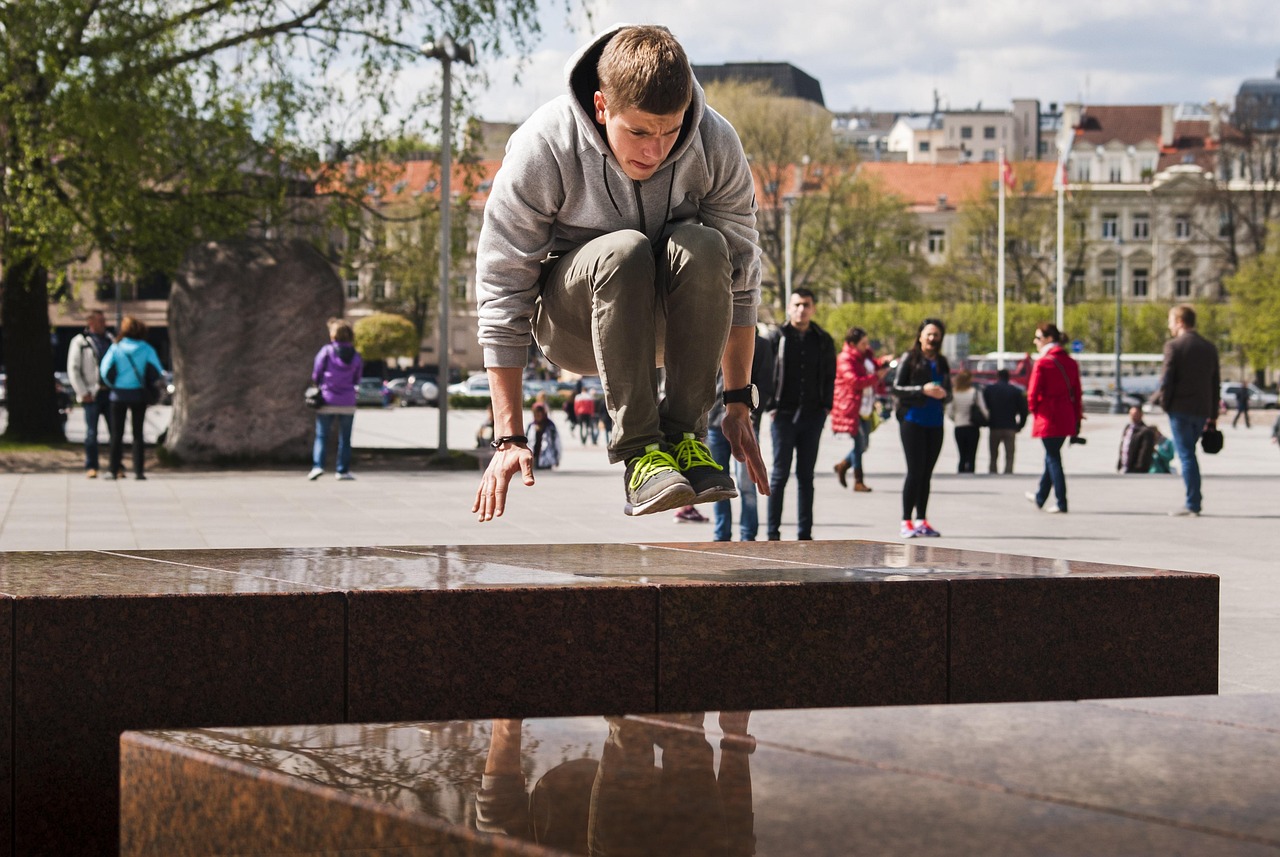
Another impactful plyometric exercise for enhancing parkour agility is the tuck jump. This exercise focuses on explosive vertical jumps that require bringing the knees toward the chest. To perform a tuck jump, practitioners should start in a squat position and jump upward, pulling their knees up as high as possible. This movement is effective for building explosive strength in the legs and engaging the core. Tuck jumps also improve overall body coordination since the athlete must synchronize their legs and arms to maintain balance while in the air. As practitioners develop proficiency, they can introduce variations like performing multiple tuck jumps in succession or incorporating a 180-degree turn. Performing tuck jumps enhances not just vertical jump capabilities but also the ability to quickly shift weight and direction, vital for executing complex parkour movements. The rhythmic nature of tuck jumps also promotes cardiovascular endurance, allowing athletes to maintain high energy levels during training or performance. Incorporating tuck jumps can contribute significantly to overall parkour agility regimen.
Conclusion and Integrating Plyometrics
Integrating these plyometric exercises into your training routine can drastically increase agility and strength for parkour. By focusing on a variety of movements, practitioners can work towards enhancing their power, balance, and overall athleticism. Each exercise, from box jumps to tuck jumps, targets essential aspects of parkour performance. To achieve maximum benefits, athletes should ensure proper technique during each exercise while also maintaining a consistent training schedule. Moreover, as skills improve, practitioners can increase the difficulty of their workouts. For optimal results, consider incorporating plyometric training into your weekly routine. Building a solid foundation in these exercises enhances performance during parkour runs and develops crucial body awareness, resulting in safer and more controlled movements. Ultimately, safety should always be a priority. All exercises should be performed within one’s limits, gradually increasing complexity and intensity to mitigate injury risks. As athletes progress, they will notice significant improvements in their agility, allowing them to explore and navigate urban environments with confidence while showcasing their parkour skills. Harnessing the power of plyometrics can transform your parkour journey.
Building strength and agility through focused plyometric exercises is essential for progressing in parkour. Skipping steps gradually and prioritizing proper form contributes to both performance and injury prevention. As athletes become accustomed to these exercises, they will find themselves increasingly confident in executing dynamic movements. With practice, these plyometric exercises will significantly increase their performance levels, leading to exciting new possibilities in their parkour training sessions. By understanding the mechanics behind plyometrics and using them to their advantage, practitioners will meet their goals while striving for improvement. As a result, engaging with these explosive exercises will yield enhanced physical outcomes, showcasing the merits of a dedicated strength and conditioning approach to parkour.