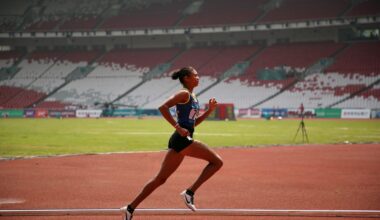

The Relationship Between Biomechanics and Muscle Fatigue in Sports Performance
Biomechanics studies the forces acting on and within the human body during various physical activities. Understanding biomechanics is crucial for optimizing athletic performance and minimizing injuries. Muscle fatigue plays a critical role in sports performance, affecting an athlete’s strength, endurance, and ability to maintain effective biomechanics. Fatigue leads to reduced muscle activation and coordination, diminishing the efficiency of movement patterns. Athletes must therefore comprehend how biomechanical factors influence muscle fatigue during sports. Various elements contribute to muscle fatigue, including metabolic changes, neuromuscular function, and biomechanical efficiency. As fatigue sets in, muscle fibers may not generate the required force for optimal performance, leading to suboptimal biomechanics. Engaging in proper training regimens can help athletes learn how to manage fatigue and mitigate its effects on performance. Moreover, fatigue can alter joint angles, leading to inefficient movement and increased injury risk. Thus, understanding the interplay between biomechanics, muscle fatigue, and sports performance is essential. This knowledge can enhance training methodologies, improve recovery techniques, and ultimately boost athletic success.
Understanding Muscle Fatigue
Muscle fatigue occurs when there is a decline in the muscle’s ability to generate force during prolonged physical activity. This decline is influenced by factors such as energy depletion, accumulation of lactic acid, and inefficient neuromuscular communication. Each of these factors has distinct implications for an athlete’s performance. Athletes experiencing muscle fatigue may exhibit altered movement patterns that compromise their biomechanical efficiency. This shift can lead to either acute injuries or chronic issues over time, demonstrating the necessity of addressing muscle fatigue in training regimens. Additionally, biomechanical analyses help identify the onset of fatigue through performance metrics, such as changes in speed, power output, and movement symmetry. When muscle fatigue alters an athlete’s movement patterns, it can result in unequal load distribution across joints and muscles, increasing the risk of injuries. To counter these effects, effective training programs focus on both biomechanical strength and muscular endurance. This dual approach empowers athletes to withstand fatigue without compromising their technique, thereby fostering better athletic performance. Education on the biomechanical aspects of fatigue can assist athletes in developing strategies to delay its onset.
Research in biomechanics has shed light on the intricate connection between muscle fatigue, movement efficiency, and biomechanics. Fatigue significantly affects how athletes perform biomechanically, particularly during high-intensity and prolonged activities. When muscles fatigue, it alters their contractile properties, leading to decreased force generation capacity and slower reactive times. These performance decrements can compromise technical execution in sports, where precise biomechanical alignment is critical for performance. Understanding the mechanisms behind muscle fatigue allows coaches and athletes to create tailored training programs. Such programs focus on periods of intense exertion, followed by active recovery to reinforce muscle strength and stability. Additionally, biomechanical assessments can highlight changes in joint angles and movement techniques occurring during fatigue. These insights are essential in tailoring training strategies that enhance performance. Integrating recovery strategies through nutrition, hydration, and physiological rest can help mitigate the detrimental effects of fatigue on biomechanics. By using performance metrics, coaches can monitor fatigue levels during activities and adjust training accordingly. As a result, athletes can sustain optimal performance while reducing injury risk caused by muscle fatigue.
Biomechanical Interventions
Implementing biomechanical interventions can greatly assist in managing muscle fatigue effectively. Various strategies aim to enhance athletes’ understanding of their own biomechanical patterns, thereby helping them maintain performance levels as fatigue sets in. Among these strategies, corrective exercise and technique adjustments can significantly improve performance output by keeping biomechanics optimized even under fatigue. Studies have shown that focusing on specific movement mechanics can enhance motor learning, allowing for more efficient movement patterns. Furthermore, employing strength training that mimics sport-specific movements helps in building resilience against fatigue. Enhancing joint stability, balance, and proprioception can equip athletes to maintain better technique throughout their performance. Additionally, wearable technology provides real-time data on biomechanics, enabling athletes to make immediate adjustments. As biomechanics evolves with technological advancements, athletes gain better insights into their performance metrics. This data-driven approach allows for continual refinement of training interventions during practice and competition. Moreover, psychomotor skills training can enhance athletes’ ability to respond effectively under fatigue, fostering mental resilience and improved performance when it counts. Ultimately, understanding and applying biomechanical interventions can optimize athletic potential.
Maintenance of proper biomechanics during fatigued states is essential for athletes in achieving peak performance. Fatigue management includes utilizing specialized training focusing on endurance and biomechanical efficiency, not just strength or power. Athletes often develop compensatory movement patterns as they tire, which can adversely affect their performance and risk of injury. Coaches can mitigate this risk through monitored training that incorporates both biomechanical analysis and strength training. Integrated training sessions should engage specific muscle groups through targeted exercises, helping retain efficient movement patterns. Understanding how fatigue interacts with biomechanics informs trainers on creating specific drills that bolster biomechanical control. Utilizing video analysis to provide visual feedback can help athletes identify and correct suboptimal techniques. Simulated fatigue protocols during practice sessions can help athletes adapt their strategies to prevent performance decay. As fatigue affects cognitive functions, mental training also aligns with biomechanical practices to maintain focus. Continuous education surrounding muscle fatigue and biomechanics enhances athletes’ self-awareness during training and competition. With the proper knowledge and tools, athletes can optimize their performance despite the challenges presented by fatigue. This holistic approach nurtures long-term success in sports.
Coaching Strategies
To effectively address the relationship between biomechanics and muscle fatigue, coaches play a pivotal role in developing strategies that prioritize performance sustainability. Coaching should include biomechanical principles that guide athletes in optimizing their techniques. Facilitating workshops that educate athletes on biomechanics supports a greater understanding of movement efficiency and can reduce injury risks. Coaches should also consider individual variability; what works for one athlete may not work for another. Tailoring training programs to suit individual needs can significantly improve performance and minimize fatigue. Integrating recovery methods such as mobility sessions, stretching, and mental visualization can help athletes maintain peak performance even in fatigued states. Coaches should emphasize the importance of biomechanics in their coaching philosophy, as a solid understanding leads to better self-monitoring by athletes. Including regular biomechanical assessments allows for timely adjustments according to changes in performance. Furthermore, fostering an environment that values open communication enables athletes to express fatigue levels accurately. This proactive approach empowers them to take responsibility for their performance while armed with biomechanical knowledge, ultimately enriching their sports experience.
The Future of Biomechanics in Sports
The future of biomechanics in sports aims to enhance understanding and management of muscle fatigue among athletes. Innovations in technology such as motion capture systems and advanced simulation tools are shaping this future. These tools offer deeper insights into an athlete’s mechanics, allowing for precise measurements of how fatigue impacts performance. Collaborational efforts between biomechanical researchers and sports practitioners can generate novel training methodologies built on sound empirical evidence. Emphasizing neuromuscular efficiency and biomechanical strength could reshape athletic training. Furthermore, merging science with practice opens avenues for personalized training regimens tailored to individual athlete’s biomechanical profiles and fatigue responses. As wearable technology continues to evolve, real-time data will become increasingly vital in identifying fatigue onset and implementing corrective measures swiftly. These developments will not only improve performance but also foster greater longevity in athletes’ careers by mitigating injury risks associated with poor biomechanics under fatigue. Through interdisciplinary collaboration and technological advancement, future research will likely unlock new dimensions in sports performance and recovery strategies. Embracing this evolving relationship between biomechanics, muscle fatigue, and sports performance holds great potential for fostering athletic excellence.