
Top 10 Pool Swimming Workouts for Triathlon Training Success
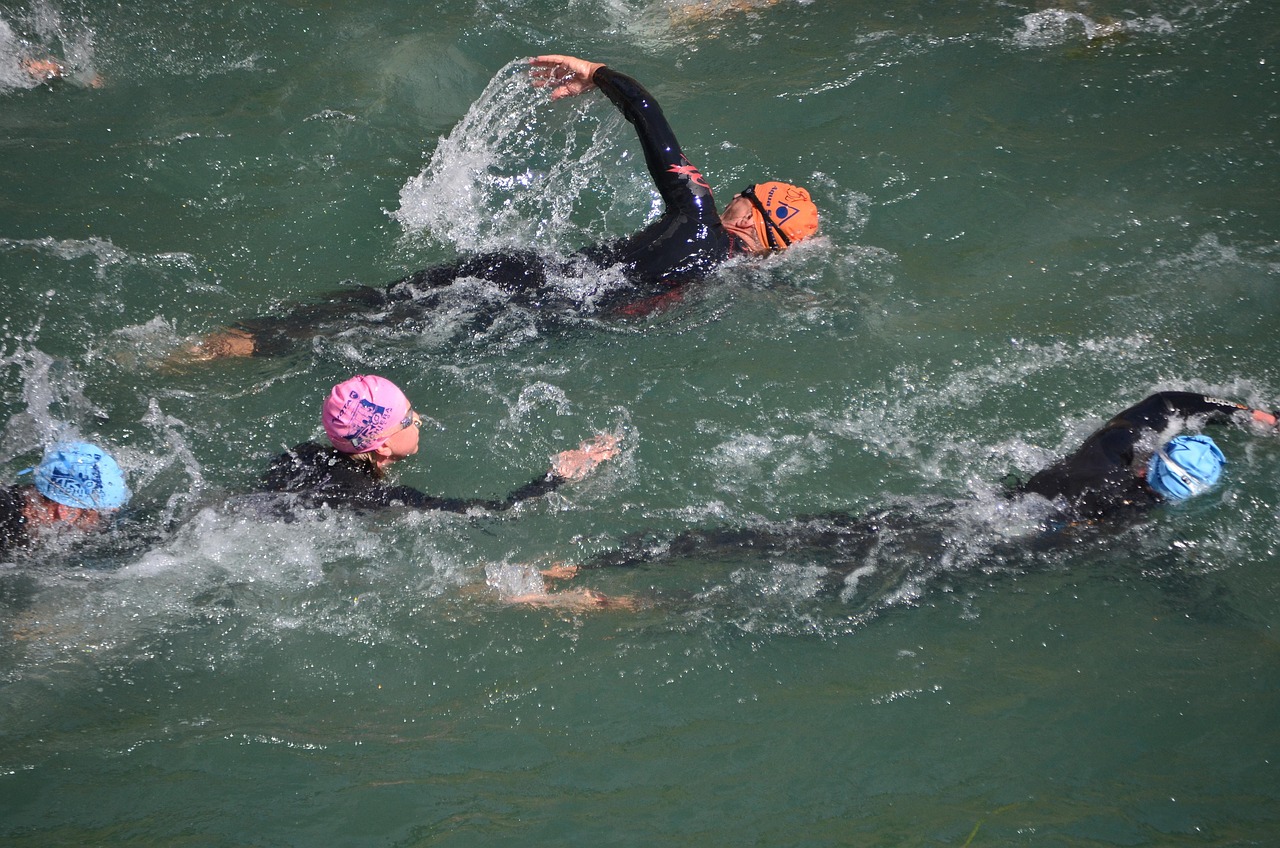
Swimming is a crucial part of triathlon training. It helps build endurance and allows athletes to improve their technique. Structured pool workouts can significantly enhance your performance through a focus on interval training, technique drills, and endurance sets. Incorporating variety in swimming workouts keeps the training process engaging. In this article, we will explore ten of the most effective pool workouts aimed at enhancing swim performance for triathlon races. These workouts are designed to build speed, stamina, and efficiency in the water. By mixing up the distance and intensity of your swims, you can break through plateaus and continue to progress. Additionally, working with drills focused on specific aspects of your stroke can improve your overall swimming mechanics. The workouts will cater to swimmers of different skill levels, ensuring that everyone can find something useful. As always, it is important to include warm-up and cool-down periods in your training sessions for optimal recovery and injury prevention. Let’s dive into the workouts that can help make your triathlon training successful!
1. Basic Endurance Swim
This workout emphasizes steady swimming for developing endurance. Start by warming up with a few laps to get your body acclimated. Then, aim to swim continuously for 1500 meters at a moderate pace. Take breaks as needed but try to minimize the time spent resting. This steady effort helps build a strong aerobic base, essential for long-distance races. If you find the distance challenging, break it down as needed into smaller sets, such as 5 x 300 meters. Maintain a focus on your stroke technique during this workout. It’s critical to practice breathing bilaterally, as this skill enhances your efficiency in open water. Keep an even effort throughout the swim to improve your endurance. Incorporate the use of swim aids like paddles or a pull buoy to focus on your arm technique. Additionally, try to include variations by altering your pace during certain portions of the workout. This can help simulate race conditions and improve your ability to manage effort levels throughout your event. Ensure you also schedule recovery days to allow your body adequate time to repair.
2. Interval Training
Interval training in the pool can significantly boost speed and stamina. Start this session with a proper warm-up to prepare your body for harder efforts. Afterward, swim 10 x 100 meters at a fast pace, taking 15 to 30 seconds of rest between each interval. This format enhances your anaerobic capacity and teaches your body to recover quickly. Focus on maintaining consistent times for all 100 meters; this helps develop pacing strategies that are vital during triathlons. You might also include a 500-meter cooldown after the main set to aid recovery. For variation, you can adjust the distance and rest times. For instance, switch to 5 x 200 meters with a longer rest. Mixing shorter intervals with longer efforts can help simulate different race strategies and conditions. Always track your times to assess improvement and adjust the workout intensity accordingly. Furthermore, include drills within your intervals such as catch-up or fingertip drag to improve stroke efficiency. These adjustments can greatly enhance your performance when it counts on race day!
3. Drill-Focused Workout
This workout concentrates on improving your swimming technique through various drills. Begin with a swim warm-up to activate your muscles. After the warm-up, spend time on specific drills that target your weaknesses, such as catch-up drill, single-arm swimming, or kickboard drills. Spend about 20 minutes rotating through these drills, focusing on body position, breathing, and arm mechanics. Aim for 4 x 50 meters of each drill, taking a brief rest between sets. Incorporating drills not only enhances your overall technique but builds new muscle memory that is crucial for your development. Drills can also break the monotony of traditional swimming workouts, keeping you engaged and focused. To cultivate strength, consider adding resistance tools like paddles during some of the drill sets. This added resistance will increase your power in the water and boost your endurance. After completing the drills, follow up with a 200-meter swim to integrate what you’ve practiced. Lastly, remember the importance of consistent practice; improving your swimming technique takes dedication and regular assessment of your progress.
4. Speed Sets
Speed sets are crucial for training your ability to swim faster over shorter distances. Start with a warm-up focusing on stretching and ensuring your muscles are ready for bursts of speed. After warming up, swim 6 x 50 meters at maximum effort, allowing for a 45-second rest between each. This workout not only builds speed but also prepares you for the fast-paced segments of a triathlon. Focus on your efficiency while sprinting; the faster you swim, the more technique becomes critical. Incorporate sprint sets that have varying distances, such as 100 meters, with each set progressively increasing in intensity. Try to maintain a consistent speed and develop a strong kick, as this will speed you through the water. After completing speed sets, allow ample cool-down time; a 300-meter easy swim helps facilitate recovery. Adjust your rest intervals and distances based on your current fitness level, ensuring the workout remains challenging yet achievable. Include some race pace practice in these sets to simulate event conditions and strategies effectively!
5. Pull Buoy Workout
The pull buoy workout is an effective way to isolate your upper body, improving your arm strength and technique. By placing a pull buoy between your legs, you can focus on your stroke mechanics without the worry of kicking. Start with a warm-up before entering the main set, swimming 4 x 200 meters with a continuous effort. Focus on engaging your core, keeping your body streamlined. Take about 15 seconds of rest between sets to maintain your form. As you swim, concentrate on your catch phase and arm recovery, which are essential for strong stroke mechanics. Consider integrating some drills, like the single-arm pull or alternating sides, to enhance comfort in your stroke. This workout is beneficial for triathletes to develop a strong pull if struggling with the leg fatigue during longer swims. Follow up with a 100-meter cooldown to gradually bring your heart rate down. This workout can also help in mastering breathing techniques while you maintain a buoyant position, vital for triathlon swimming success!
6. Negative Split Swimming
Negative split swimming involves intentionally swimming the second half of your workout faster than the first half. This method teaches pacing and energy management, both vital for triathletes. Warm up with easy swimming for about 300 meters. Following the warm-up, swim 4 x 300 meters, focusing on swimming the second 150 meters faster than the first. This strategy builds endurance while also teaching proper pacing for competitive events. It will enable you to learn how to gauge your energy levels and utilize your speed effectively during races. Reflecting on the times will help identify how well you managed your pacing strategy. Gradually increase the pace of your second halves by feeling comfortable as you become more experienced. Afterward, conclude with a gentle 200-meter swim for cooldown. Incorporating this type of workout will sharpen your ability to finish strong during triathlons. Balance your training regimen by including negative splits, which will offer variety alongside endurance-focused sessions. This flexibility increases your confidence, enabling you to tackle your triathlon swims effectively!
7. Mixed Stroke Workout
Engaging in a mixed stroke workout helps improve versatility and strength in the water. After your warm-up, swim a distance of approximately 1000 meters, alternating between various strokes such as freestyle, backstroke, breaststroke, and butterfly. This variety develops muscle memory across all swimming disciplines and promotes a balanced strength throughout. Include drills when transitioning between strokes to refine your technique; focusing on specific stroke mechanics for each. For instance, you could swim 4 x 100 meters of freestyle, switch to backstroke, then 4 x 50 meters of butterfly. This approach keeps your swimming routine fresh and improves lung capacity and overall performance. It also helps prevent repetitive strain injuries and keeps you engaged in training. Assess your times across different strokes to track improvement and adapt your training plans accordingly. Finishing with a gentle 200-meter cooldown will assist in muscle recovery. Emphasizing mixed-stroke practice helps develop versatility essential for triathlon events, as you may encounter changes in the water or be required to adapt your tactics swiftly.