
Balance and Coordination Challenges in Different Martial Arts Styles
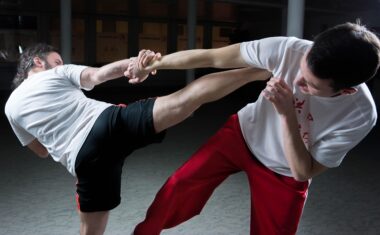
Martial arts encompass a range of disciplines that emphasize balance and coordination, critical components for improving overall performance. Styles such as Karate, Taekwondo, and Brazilian Jiu-Jitsu challenge practitioners to develop their balance under pressure. Each martial art introduces distinct techniques and movements, which necessitate a focus on correct posture and weight distribution. For instance, in Karate, executing a flying kick requires not only strength but also harmony between speed and balance. Taekwondo practitioners often face similar challenges, as they execute fast-paced spinning kicks that require exceptional coordination. Moreover, Brazilian Jiu-Jitsu practitioners must maintain balance while grappling, ensuring they can transition seamlessly across numerous positions. The primary challenge across all martial arts is the understanding of one’s center of gravity, which can vary with different techniques. Each practitioner faces tailored obstacles based on their chosen style. Recognizing these challenges helps martial artists enhance their balance and coordination skills, leading to improved performance in various combat scenarios. For those interested in exploring these techniques further, resources and specialized training can be found through various martial arts schools and online platforms.
One important aspect of balance in martial arts is the adaptation to different surfaces and environments. As martial artists train, they often find themselves practicing on various surfaces such as concrete, tatami mats, or grass. Each surface presents its own unique challenges for maintaining balance. For example, training on a slippery surface can significantly affect a practitioner’s ability to perform techniques effectively. In contrast, a soft mat may provide additional support but can also hinder balance if one becomes too reliant on that cushioning. Additionally, environmental factors such as wind or uneven terrain can further complicate a martial artist’s training. Adapting to these variations is crucial for developing resilience and proper technique. Different martial arts require unique footwork patterns that cater to their specific demands. Practicing movement drills, stances, and shifts aids in developing an athlete’s coordination. Moreover, cross-training in different styles enhances one’s overall balance and adaptability. By exposing oneself to a variety of conditions, martial artists can prepare for unpredictable scenarios in real-world applications and competitions. Therefore, it is essential for practitioners to regularly practice across various environments.
Technical Movements in Different Martial Arts
Another significant challenge within martial arts stems from the technical movements required. Techniques specific to each style demand intense focus and precision, requiring considerable coordination. For instance, in Kung Fu, the intricate footwork and hand techniques necessitate harmonious movements that involve balance and intensity. Practitioners must also consider body rotation and alignment during each strike. Similarly, in Capoeira, a blend of martial arts and dance, balance is paramount. The fluid movements showcase how well balance and rhythm can coexist, demonstrating that martial arts require not just athletic skill but also artistic expression. Maintaining balance amidst complex movements emphasizes the connection between physical skill and mental focus. Practicing these techniques fosters muscle memory, enhancing coordination over time. Moreover, diverse training styles can emphasize balance from different angles, such as using wooden beams or balance boards to challenge stability. Integrating these tools into training regimens can elevate a martial artist’s ability to maintain balance amidst changing environments and techniques. By incorporating diverse methods, practitioners of various martial arts styles can improve their overall balancing skills while achieving mastery in their discipline.
The role of breathing techniques cannot be overlooked when discussing balance and coordination in martial arts. Many styles incorporate specific breathing methods to stabilize the core, enhancing balance. Techniques like ”Tanden” breathing in Aikido or ”Chi breathing” in Tai Chi are designed to center the practitioner. By focusing on breath, martial artists can reduce anxiety, promoting a state of calmness that supports mindfulness. This calmness helps athletes maintain their center of gravity while executing techniques. Furthermore, the physical act of regulating breath encourages upright posture, ensuring that movements are smooth and controlled. Breathing methods integrate with other elements of training by creating a synergy between body and mind, enhancing performance further in challenging situations. In events such as sparring or competition, maintaining control over one’s breathing impacts focus and the ability to react effectively. Techniques practiced alone or during sparring sessions can help build a routine that incorporates effective breathing. In addition to improving balance, breathing practices may also enhance coordination through increased awareness of body movement. Committing to these exercises reinforces the fundamental concepts of balance, contributing to overall excellence in martial arts.
Exercises to Enhance Balance and Coordination
To improve balance and coordination, martial artists can engage in several beneficial exercises. Training regimens focusing on flexibility, core strengthening, and stability enhance these essential skills across various disciplines. For example, exercises such as single-leg stands, yoga poses, and stability ball workouts challenge one’s ability to maintain equilibrium. These exercises foster core strength, which is crucial for balance maintenance during techniques. Additionally, incorporating plyometric drills can heighten coordination as they require rapid response movements. Such drills may include jump squats, lateral hops, and other explosive movements designed to improve agility and speed. Furthermore, practicing dynamic stretches increases flexibility while enhancing muscle-complex coordination. Another vital exercise is shadow boxing, allowing practitioners to practice techniques solo while self-monitoring balance and form. Shadow boxing integrates footwork and technique application without the need for a partner, building familiarity and enhancing proficiency in coordination. Regularly engaging in these exercises creates a foundation that supports martial artists as they face various challenges. Committing to a routine that emphasizes balance and coordination develops a foundation for success in martial arts and physical activities beyond.
In conclusion, balance and coordination remain fundamental skills critical for success in martial arts. Different styles present unique challenges that require adaptability and resilience. Each discipline has specific movements, surfaces, and breathing techniques contributing to overall balance. Practitioners must understand their center of gravity while fine-tuning their techniques to the demands of their chosen martial art. Engaging in varied exercises focused on strength and agility complements the practice of these skills, reinforcing the core elements necessary for success. Furthermore, a commitment to cross-training and conditioning can significantly enhance a martial artist’s abilities. Through the mastery of balance and coordination, students not only improve their technical performance but also increase their confidence in real-life scenarios. It is essential for martial artists of all levels to continuously strive for balance, both physically and mentally. Thus, exploring different styles, embracing consistent practice, and utilizing varied training techniques are crucial for personal growth and mastery. Ultimately, balance and coordination are pivotal not just in martial arts but in many physical realms, making ongoing improvements a worthy pursuit for all martial artists.
Final Thoughts on Martial Arts Training
To truly benefit from martial arts training, practitioners must embrace a holistic approach that incorporates balance and coordination into every aspect of their practice. By understanding the unique challenges posed by different styles, athletes can tailor their training to meet these demands effectively. Exploring diverse environments and surfaces can prepare martial artists for real-world applications, while enriching their overall experience. Additionally, engaging in supplementary exercises can enhance both physical capabilities and mental focus, leading to meaningful improvements. As martial artists work toward refining their techniques and building their strength, they also cultivate a deeper understanding of how to maintain their center of gravity. Practitioners should remember that achieving balance and coordination is a lifelong process, emphasizing the importance of patience and consistency. The rewards of dedicated training extend far beyond martial arts, positively impacting overall fitness and well-being. Therefore, individuals of all backgrounds and skill levels are encouraged to pursue ongoing learning in this area. By appreciating the journey, martial artists can find fulfillment and growth through their experiences, as they continue to challenge themselves.
The Future of Balance and Coordination in Martial Arts
As martial arts continue to evolve, the significance of balance and coordination will only grow. Innovations in training methodologies and technology provide newfound opportunities for practitioners to enhance their skills effectively. Virtual training platforms, wearable tech, and interactive training devices aid in analyzing movement patterns and improving balance through real-time feedback. Such advancements empower martial artists to refine their techniques more rapidly and accurately. All martial artists, regardless of their chosen style, can benefit from these technological integrations. From precise performance tracking to video analysis, digital tools create unique opportunities for learning and development. In addition, emerging trends such as mindfulness and meditation practices further emphasize the importance of mental focus in achieving balance. Martial artists are encouraged to explore these techniques to strengthen their connection between physical and mental capabilities. Ultimately, embracing change and adapting to new learning methods will fortify the inherent values of balance and coordination in martial arts. By valuing the fusion of traditional practices and modern techniques, martial artists can cultivate the essential skills needed for continued growth and success.