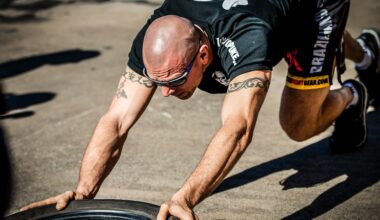

Functional Training to Increase Cycling Core Endurance
Functional training is invaluable for cyclists because it addresses the specific demands of cycling, particularly focusing on improving core endurance. As cyclists, maintaining stability and power transfer while pedaling relies heavily on a strong core. Essential exercises such as planks, Russian twists, and medicine ball throws enhance the muscles in your abdomen, back, and hips. These exercises not only lend strength but also improve posture on the bike, which can increase performance during long rides. Adding variety through dynamic movements mimics the natural motions of cycling, thereby enhancing muscular coordination and endurance. Moreover, a well-structured functional training program involves strength, flexibility, and balance exercises, which are crucial for injury prevention and longevity in the sport. Core-focused conditioning routines can be tailored to individual needs, ensuring that cyclists build stamina in a way that complements their cycling regimen. It’s vital to integrate these workouts into a regular training schedule because they can help to combat fatigue in longer rides. Ultimately, enhancing core strength will result in better endurance and efficiency, making functional training essential for every committed cyclist.
The Importance of Core Strength in Cycling
The core muscles play a paramount role in cycling, influencing both power output and endurance. A cyclist’s ability to maintain a proper riding position is deeply rooted in core stability, which directly affects performance. When the core is weak, cyclists often experience difficulties producing power efficiently, leading to faster fatigue during rides. Moreover, weak core strength can lead to poor posture, resulting in discomfort and possible injuries over time. Through functional training exercises like bridges, single-leg deadlifts, and stability ball workouts, cyclists can specifically target and strengthen these essential muscles. Focusing on dynamic core stability helps in transferring energy from the lower body while providing the necessary stability to counterbalance external forces encountered on the road or trail. Incorporating these targeted exercises can also enhance proprioception, which is critical for cyclists when navigating uneven terrain. To ensure progression and continual gains, mixing different intensity levels and types of core workouts is advisable. The cumulative effect of improved core strength is evident in increased durability, allowing cyclists to ride longer at higher intensities without succumbing to exhaustion. Consequently, core strength is vital for overall cycling performance.
When designing a training program, it’s crucial to understand how the core interacts with the rest of the body. Cyclists should integrate functional exercises that engage multiple muscle groups simultaneously, ensuring a balanced approach. Incorporating movements like kettlebell swings or squat to rotation variations enhances not just core strength but also the strength of the lower limbs. Additionally, integrating resistance bands or stability equipment can provide varying degrees of challenge, effectively breaking stagnation and spurring adaptation. Prioritize exercises that promote anti-rotational movements since these actions strengthen core control, very important for maintaining stability while pedaling. Balancing various training modalities, such as pilates or yoga, can foster increased flexibility alongside strength improvements. Beyond strength, functional training enhances endurance by improving the cyclist’s overall body economy. This efficiency allows cyclists to perform at higher levels without undue fatigue. Consistency and gradual progression will maximize the results obtained through functional training. Ensuring adequate recovery and nutrition further supports the growth and retention of core strength. Ultimately, the convergence of strength, endurance, and recovery through functional training will establish a cyclist’s capability to endure longer, more challenging rides.
Core Endurance Exercises Tailored for Cyclists
To specifically target the core, cyclists should incorporate a variety of movements that focus on building endurance over time. Exercises like side planks increase lateral stability, crucial when navigating corners or descents. Additionally, incorporating compound movements, such as push-ups or iron cross, can build upper body stability, which also contributes to core engagement. It’s beneficial to train for endurance by performing sets of these exercises at a lower resistance but for higher repetitions, which helps develop muscular stamina. Moreover, specific agility drills, like cone drills or ladder drills, can promote core engagement essential for balance and coordination on the bike. Integrate these exercises into a circuit format to enhance overall cardiovascular fitness along with core strength. For best results, perform these exercises two to three times per week, focusing on form over quantity. Moreover, varying rep schemes can help in preventing adaptation and continue improvements in core endurance. Always remember to warm up effectively and cool down after workouts to maintain muscle health and prevent injuries. Consistently practicing these core endurance exercises can vastly improve cycling performance, translating into longer, more enjoyable rides.
Incorporating functional training into your cycling routine requires a mindful approach to ensure that you target the right muscle groups effectively. Before engaging in any exercise, perform a dynamic warm-up to prepare your muscles and joints. This may include leg swings, arm circles, and light cardio activities such as jogging or cycling for a few minutes. During training sessions, focus on gaining proper alignment and posture; alignment can significantly influence the effectiveness of core training. Utilize mirrors or record yourself during workouts to analyze and adjust your form as necessary. Set achievable goals over time, such as increasing repetitions or resistance, to maintain motivation and track progress. Combining strength training with supplemental endurance workouts—such as long steady rides—will foster better adaptation and conditioning. After workouts, prioritize stretching and flexibility exercises that can aid recovery and improve overall mobility. Hydration and nutrition—focusing on protein-rich meals—will support muscle repair and growth post-training. As cyclists engage in functional training, they must listen to their bodies, adjusting the intensity and volume of workouts according to how they feel. Adopting this careful strategy allows cyclists to build core endurance effectively.
Nutrition for Core Endurance
Nutrition plays a pivotal role in supporting core endurance for cyclists engaged in functional training. Maintaining energy levels throughout workouts necessitates a balanced intake of carbohydrates, proteins, and healthy fats. Consume complex carbohydrates from sources like whole grains, fruits, and vegetables to fuel workouts effectively. On exercise days, ideal timing for meals should coincide with training sessions to maintain optimal energy. Pre-workout meals might include easily digestible foods, like bananas or oatmeal, while post-workout meals should emphasize protein intake to facilitate muscle recovery. Furthermore, hydration cannot be overlooked—a well-hydrated body performs significantly better. Drinking water before, during, and after training sessions is crucial, as dehydration can lead to reduced performance and recovery times. Cyclists can enhance nutrient absorption through well-timed snacks, such as protein shakes or energy bars, particularly following high-effort workouts required for core training. Consulting a sports nutritionist can provide personalized dietary plans tailored to your specific demands. By establishing a structured nutrition plan alongside functional training, cyclists can optimize their performance, ensuring core endurance becomes more robust and effective for sustained cycling activities. This holistic approach forms the key part of a cyclist’s training regimen.
As cyclists embark on their journey of enhancing core endurance through functional training, setting sustainable, realistic goals is crucial. Begin by assessing current fitness levels to establish a tailored training plan that builds upon your existing abilities. Focus on gradually increasing intensity and complexity in core workouts without overwhelming injuries. This tailored approach can include varying training sessions, incorporating both strength and endurance exercises that allow enough recovery time for the core muscles to repair and grow. Consistent cycling sessions aligned with functional training will yield noticeable improvements in performance and fatigue management. Enroll in workshops or training classes that provide guidance and accountability, fostering a sense of community and motivation. Furthermore, consider journaling your journey to track transformations and maintain focus on achieving desired milestones. Embrace the need for patience and restraint, especially when progressing through challenging exercises or workouts. Learning to pace oneself can prevent burnout while ensuring consistent gains in core endurance. Remember, every cyclist, regardless of their experience, can benefit from enhancing core strength. Thus, cultivating this strength not only enhances cycling performance but ultimately makes cycling more enjoyable.
In conclusion, functional training is an essential component for cyclists aiming to significantly increase their core endurance. By prioritizing core strength through targeted exercises, cyclists can enhance their overall stability, power, and endurance during rides. The gradual integration of these workouts into regular cycling routines will ensure that improvements become evident over time. Establishing a balanced nutrition and hydration plan will support this physical training, optimizing the results achieved through functional training. Furthermore, focusing on endurance exercises tailored to cycling can prevent injuries, improve posture, and lead to enhanced performance. An ongoing commitment to progressively build core strength will eventually translate into remarkable gains on the bike, enabling cyclists to conquer longer rides with ease. Sharing experiences with fellow cyclists can also motivate individuals to remain dedicated to their training plans. Overall, the synergy between functional training, nutrition, and progressive implementation creates a robust foundation for cycling success. Developing core endurance through targeted training can truly redefine one’s cycling experience. Therefore, cyclists should embrace the principles of functional training to maximize efficiency and enjoyment while riding, ultimately achieving their fitness and cycling goals.