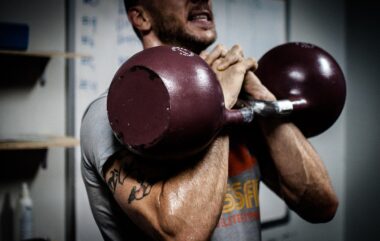

How Kettlebell Deadlifts Improve Posture and Core Strength
Kettlebell deadlifts are an effective exercise for enhancing both posture and core strength. When performed correctly, kettlebell deadlifts engage multiple muscle groups, especially the hamstrings, glutes, lower back, and core. By focusing on proper form, individuals can maximize the benefits of this exercise while minimizing the risk of injury. With kettlebell deadlifts, the weight is positioned closer to the body, allowing for a more natural lift that encourages proper spinal alignment. This helps combat slouching, a common issue in today’s sedentary lifestyle. Ultimately, building a strong foundation with kettlebell deadlifts can lead not only to improved performance in other exercises but also better postural endurance throughout daily activities. Moreover, as strength increases, athletes often find that their balance and stability improve as well. To further enhance these benefits, pairing kettlebell exercises with mobility and flexibility practices can create a well-rounded fitness routine. Mobile joints and flexible muscles synergize with strength training to create well-rounded athleticism and a healthier physique. Start incorporating kettlebell deadlifts today and feel the change.
Kettlebell deadlifts are also beneficial for core stabilization. The core is integral to nearly every movement we perform, providing the necessary strength to support our limbs and maintain balance. Engaging the core while performing kettlebell deadlifts enhances muscle activation, leading to improved strength in the abdominals and obliques. This engagement not only stabilizes the spine but also improves body mechanics in daily tasks. Regularly practicing kettlebell deadlifts helps build a solid core, which can aid in injury prevention. Additionally, stronger core muscles facilitate better performance in a variety of athletic tasks, from running to lifting heavier weights. As the support structure for the spine, a robust core assists with maintaining neutral spinal position, which is crucial for effective exercise execution and improved posture. An activated core provides stability and control, ensuring that the body moves efficiently during dynamic activities. Furthermore, the movement pattern of the deadlift mimics lifting scenarios used in real life, training the body to handle movements more safely in everyday situations. This translates to greater overall physical performance and dynamic capabilities.
Incorporating kettlebell deadlifts into your fitness routine can greatly impact your posture. Many individuals suffer from poor posture resulting from sedentary jobs, leading to back pain and discomfort. Kettlebell deadlifts strengthen essential stabilizing muscles, helping correct imbalances that contribute to poor alignment. As you build strength through consistent practice, your body learns to maintain proper posture more naturally. This is particularly beneficial as good posture enhances confidence and even changes how you are perceived by others. With better posture, the body functions more efficiently, enabling improved breathing, circulation, and digestion. Moreover, developing a habit of maintaining an upright position slows down fatigue and encourages a more energetic lifestyle. To gain the most from kettlebell deadlifts, integrating them with other postural alignment exercises can create a comprehensive approach to physical wellness. Activities such as yoga or Pilates work hand in hand with strength conditioning, fostering flexibility and muscular control. Challenge yourself to adopt these techniques as part of your fitness journey and witness a refinement of your movement patterns and overall health. Progress will not only be visible in the mirror but also in your everyday activities.
Another significant benefit of kettlebell deadlifts is their impact on functional strength. Functional strength refers to the ability to perform everyday tasks efficiently, making it essential for maintaining independence as we age. Kettlebell deadlifts replicate natural lifting motions, which helps train the body for common activities like lifting groceries or moving furniture. Developing functional strength through this exercise empowers individuals to engage more confidently in daily chores and recreational activities. The strength gained from kettlebell deadlifts also contributes to better balance, enabling you to navigate various environments without fear of falling or injury. This is particularly crucial for older adults or those recovering from injury. Additionally, kettlebell training naturally engages stabilizing muscles, improving proprioception – the body’s ability to sense its position in space. Enhanced proprioception translates into quicker muscle responses and greater agility. This multifunctional training establishes a strong foundation for participation in more complex movements required in sports or high-intensity workouts. Ultimately, kettlebell deadlifts serve as a fundamental exercise that benefits overall fitness and functional performance, promoting a proactive approach to health.
Many Kettlebell enthusiasts appreciate the versatility of this tool and the deadlift exercise alike. Kettlebells come in various weights, allowing beginners to start at a manageable level while progressively challenging themselves as they gain strength. This adaptability makes kettlebell deadlifts suitable for individuals of all fitness levels, from novices to seasoned athletes. By adjusting the weight of the kettlebell, users can implement cycles of overload, a principle necessary for continual muscle development. Moreover, as one adapts to the deadlift, incorporating different styles, such as single-arm or sumo deadlifts, can further enhance engagement. Each variation adjusts the muscles in new ways, offering a comprehensive workout that targets areas often overlooked in traditional routines. Learning how to adapt different weights and techniques ensures the kettlebell deadlift remains challenging and effective over time. It’s essential to maintain proper form no matter the adaptation, so starting with lighter weights is advisable to establish a strong base. Embrace the challenge of kettlebell deadlifts; your body will thank you for the strength and alignment gained through mindful practice.
Safety and Technique
As with any exercise, mastering the correct technique for kettlebell deadlifts is vital to avoid injury. Begin by warming up, ensuring that your muscles are ready to perform the movements safely. Proper deadlift form starts with the correct stance, feet shoulder-width apart, and the kettlebell positioned in front of the body. Engage your core and lower into the squat, keeping the chest lifted and back flat. This alignment protects the lower back during the lift. When gripping the kettlebell, use both hands, allowing the arms to hang naturally. Drive through the heels and stand tall, fully extending the hips and knees at the top before returning to the start position. Focus on controlling the movement rather than rushing, which improves both engagement and technique. Breathing should be steady throughout; exhale while lifting and inhale on the descent. Ensuring that you keep your weight balanced is essential for maintaining stability throughout. If unsure about your form, consider working with a certified trainer or utilizing video resources. Prioritizing safety allows for maximum effectiveness in achieving the benefits of kettlebell deadlifts.
In conclusion, kettlebell deadlifts offer numerous advantages for posture, core strength, and functional capacity. For individuals looking to enhance their overall fitness, incorporating this versatile exercise into regular routines is highly recommended. Not only does the strength derived from kettlebell deadlifts translate to improved physical capabilities, but the posture benefits also enhance everyday confidence and body mechanics. As you embark on this journey, remember that consistency is key for seeing progress, so strive to create a well-rounded workout that includes strength, flexibility, and mobility components. Staying mindful of form and actively engaging in technique adjustments lead to safer, more efficient workouts. Be sure to include various kettlebell exercises alongside deadlifts to challenge different muscle groups and keep your fitness program engaging. With time, commitment, and patience, the results from kettlebell training will shine through in both performance and resilience. Enjoy the journey towards better posture and a stronger core. Your body will undoubtedly respond positively to this transformative training approach, setting the stage for lasting health and wellness.