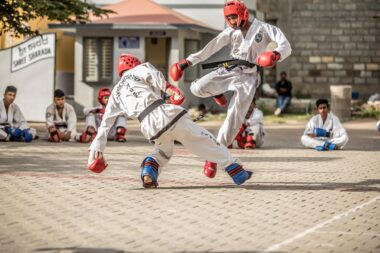

The Importance of Core Strength in Taekwondo Kicks
In Taekwondo, mastering techniques hinges on developing a strong core. Core strength not only enhances balance but also improves kicking power. A solid core provides the stability required to execute diverse kicks with precision. Every kick, whether it’s a front kick or a spinning kick, relies on this strength. Without a robust core, executing these techniques often leads to diminished performance. Therefore, practitioners must engage specific core exercises regularly to ensure their ability to kick effectively. The body works as an integrated unit; when the core is weak, other muscle groups must compensate, leading to fatigue and potential injury. Furthermore, training core muscles can enhance agility, reaction time, and overall physical conditioning. This means more effective sparring sessions and better self-defense capabilities. It involves stability, strength, and precision intertwined. Emphasizing core strength contributes significantly to overall martial arts proficiency. For best results, initiate your training regimen with a focus on core development to establish a strong foundation. Subsequently, integrate this into your Taekwondo practice for better execution of kicks, ensuring refined technique and heightened efficiency in movement.
The role of core strength in Taekwondo kick execution is paramount. Kicks such as the roundhouse and sidekick benefit greatly from a fortified core. Each kick demands core engagement to maintain balance and control. Beginners often underestimate this aspect, which can lead to ineffective techniques. When focusing on core workouts, specific exercises like planks and Russian twists provide tremendous advantages. These exercises work different muscle groups while improving overall stability. A strong core enables practitioners to generate more power during kicks, leading to greater impact. Enhanced power doesn’t just come from the legs; a significant portion originates from the core. Moreover, proper posture while executing kicks ensures that energy efficiently transfers, minimizing waste. Students should recognize that core stability is foundational to their progression in Taekwondo. Consistent training is essential; even advanced students can enhance their capabilities by focusing on core strength. As a result, they can develop more advanced techniques over time. Instructors should incorporate dedicated core workouts into regular training sessions, facilitating a well-rounded practice. Furthermore, creating a balance between strength and flexibility leads to improved overall performance.
Balance is crucial when performing Taekwondo kicks, and core strength greatly contributes to it. A well-developed core ensures stability, allowing for flawless kick execution. Without it, practitioners may struggle with alignment, which can negatively influence their technique. This balance is particularly vital during the execution of fast combinations, where quick transitions between techniques occur frequently. Strengthening the core stabilizes the hips, enabling consistent movement patterns. In Taekwondo, establishing control over every action is essential, and this stems from a solid core foundation. As martial artists progress through their training, improvement in core strength translates directly to their kicking abilities. It not only enhances performance but also aids in injury prevention. A strong core acts as a shield against falls and awkward landings. Instructors often emphasize core exercises, but students need to understand their importance. Regular practice not only leads to better kicks but also greater confidence in sparring. Additionally, the resilience gained from core strength can make practitioners feel more secure in their techniques. Therefore, committing to core workouts significantly benefits Taekwondo practitioners in their journey toward mastery.
Building Core Strength through Exercises
To build core strength for Taekwondo effectively, practitioners should focus on various exercises explicitly targeting the core muscles. Begin with basic exercises such as crunches and leg raises, which engage abdominal muscles. As strength improves, incorporate more advanced movements, like hanging leg raises or medicine ball rotations, to challenge stability and coordination. Strength training should also include planks and side planks to enhance endurance in core muscles. Flexibility exercises, including yoga or pilates, complement these strengthening routines, enhancing overall core performance. It’s advisable to maintain a training schedule, ideally dedicating at least two to three days per week for core workouts. Implementing intervals can keep routines engaging and dynamic. Furthermore, core workouts should not feel isolated from Taekwondo practice. Students can benefit from integrating core exercises into warm-ups or cooldowns after classes. This inclusion fosters a holistic approach, making the connection between strength and technique explicit. Cross-training with sports like gymnastics or dance can provide alternative core-strengthening opportunities. As core strength develops, practitioners will notice enhanced kick precision, leading to improved effectiveness in sparring sessions.
The core also significantly impacts breathing, which is vital during Taekwondo training and matches. Proper breathing techniques can enhance stamina and performance, especially during prolonged sparring sessions. Core muscles assist in stabilizing the torso during controlled breathing. Improved core strength allows for deeper breaths, increasing oxygen delivery to working muscles. This aspect of fitness is often overlooked but plays a crucial role in maintaining energy levels throughout training. The connection between core strength and controlled breathing is evident during challenges with stamina management. Fighters cannot afford to become fatigued; thus, training the core helps combat physical exhaustion. Furthermore, mindful breathing techniques can enhance focus and concentration during intense sparring or competitions. Engaging the core allows for better posture, reducing strain on joints while executing high kicks or rapid combinations. This protection contributes to reducing injuries, promoting longevity in the practice. Additionally, proper cardiovascular conditioning paired with a strong core creates a formidable competitor. Taekwondo practitioners committed to their performance should prioritize enhancing core strength for optimal breathing techniques. Ultimately, commitment to training leads to profitable returns in fitness and technique.
In summary, the significance of core strength in Taekwondo can never be overstated. It serves as the bedrock upon which kicks are executed effectively and safely. Practitioners are encouraged to take this aspect of training seriously rather than viewing it as merely supplementary. The road to improved kicking abilities lies within a robust and reliable core. Adopting an integrated approach — where core strength, proper technique, and flexibility intertwine — ensures ongoing development. As students evolve through their Taekwondo journey, they will uncover new opportunities for growth in their skills. Consistent dedication to core training paves the way for long-term benefits, marking their progress in martial arts. Taekwondo emphasizes a disciplined approach to training, and core development follows this principle. This becomes particularly useful in tournament scenarios, where performance matters most. The ability to execute flawless kicks can make the difference between winning and losing. Encouraging a culture of core strength training within schools fosters a supportive environment for athletes to thrive. Ultimately, Taekwondo practitioners who prioritize their core will discover enhanced performance, greater agility, and increased confidence throughout their training.
Final Thoughts on Core Strength
As Taekwondo practitioners move forward in their training, the emphasis on core strength should grow progressively more significant. Ignoring this critical aspect can hinder overall performance and development within martial arts. Core training should not be a one-time effort; it demands ongoing commitment and diligence. Instructors and students alike must recognize its relevance to all kicking techniques, enabling a comprehensive understanding of skill. Therefore, each training session is an opportunity to integrate core workouts seamlessly. Building this strength contributes globally to martial arts proficiency and longevity. Whether in competitions or casual training, a strong core allows practitioners to reach their full potential. Consider the competitive advantage this training provides and adopt habits that promote continual core development. The results are clear: practitioners with superior core strength are typically more efficient in kick execution while showcasing overall balance and agility. Ultimately, the focus on core strength enhances the entire experience of Taekwondo training. With persistence, those practitioners committed to improving their core will undoubtedly reap the rewards in their martial arts journey.)
Engaging in core strength training serves as an investment in a Taekwondo practitioner’s future performance. Equipped with this knowledge, practitioners are better prepared to approach personal training regimens with a renewed mindset. Accepting the challenge and staying committed will foster remarkable improvements. As students grasp the influence of core strength on their abilities, they’ll be more inclined to prioritize it. Lessons learned in Taekwondo extend beyond mere techniques; they embody discipline, perseverance, and dedication. Each practitioner should strive to cultivate their core, embracing this journey with enthusiasm and determination. The takeaway is simple: a strong core leads to stronger kicks, better control, and improved agility. It enhances overall performance and fosters a profound appreciation for the art of Taekwondo itself. In conclusion, take charge of your training by embracing core-strength principles, forging a path to lasting success within Taekwondo.